(Solution) CIPD Oakwood International 3CO01 Business, culture and change in context
Solution
Task – Questions
| (AC1.1) Examine (TWO) the key external influences that impact on business environments.
If you use a source then short references should be added into your narrative below. Please remember to only list your long references in the reference box provided at the end of this section. Word count: Approximately 250 words
|
| The internal business environment is young, dynamic and competitive due to diffusion of various factors such as increase in technology, changes in the economy and others. It means that, by applying tools like PESTLE, an organisation is aware of these influences and can adjust strategies to stay relevant (Battista, 2024). We have already seen at my organisation Emirates that HR has a central responsibility for noting such external changes and for aligning people strategies to these.
Technological Advances Technological Advances Rate of technological advancement is one of the most important drivers of organisations. At Emirates, status-quo disruptive practises like AI and machine learning have transformed customer experience and business processes. For instance, AI is applied to help customers through chatbots 24/7, and big data that allows companies to provide tailored solutions, and to arrange optimal routes for delivery. However, these advances require the progressive enhancement of the workers involved in this industry. Emirates’ HR team understood future technological trends to enhance the gaps through PESTLE analysis to MAP people strategies with organisational objectives. Pathak (2020) affirms that to meet ever-changing technology dynamics, HR strategies should adopt environmental scanning. Economic Conditions The economic factors are underlying factors within the Emirates operations due to the fact that the aviation business depends on the economic indicators. Due to escalating fuel costs and inflation in the country, operational costs have gone high and the organisation has had to acquire cost effective aircraft and flight routes. The Economic factors are conducted for every organisation on a regular basis through PESTLE analysis to find the right trend ahead to align the strategies of an organisation; similarly, through such an analysis, Emirates identifies the economic trends as Battista mentions, 2024.
|
| (AC1.2) Discuss organisational goals and why it is important for organisations to plan.
If you use a source then short references should be added into your narrative below. Please remember to only list your long references in the reference box provided at the end of this section. Word count: Approximately 300 words
|
| Business Goal
A business goal is an intended end product that an organisation seeks to attain under a given period (Orgvue, 2023). Mingling the organisation’s future direction that one can identify the particular activities that must be completed and resources, which are necessary to achieve it. By making them guarantee that all applied efforts are aligned with the organisation’s goal, they foster cooperation and convergence. From Orgvue (2023) it is understood that, strategic objectives are long term ambitions which provide a sustainable development map. The Main Goal of Emirates The main strategic objectives of Emirates include the growth of the airlines company as one of the top providers of air transportation and creating excellent customer value. That is why it aims at introducing new services, increasing its base of clients, and optimising all processes connected with its work. Importance of Planning To this end, planning is critical for Emirates, as it helps achieve this goal by allowing the company to determine potential problems, efficiently deploy its resources, and maintain competitiveness in the highly competitive industry. If there is no order, then the organisation becomes inefficient, tasks are not correctly allocated, and there are missed opportunities. For instance, lack of strategic responses for market changes or emergence of new technologies would mean that customer satisfaction and the organisation’s market share would decline. By so doing, Emirates is able to set specific targets that ensure plans are in harmony with the main objective of the firm. How the Goal is Achieved In order to accomplish its objective, Emirates employs key strategies, for instance, purchasing modern aeroplanes, employing information technologies in customer service and training workers from time to time (K et al., 2024). These measures are backed up through elaborate planning processes which include market analysis, programme defining and reviewing of achievements. Therefore, Emirates sustains its competitiveness hence fulfilling its commitment towards offering global standards aviation services.
|
| (AC1.3) Discuss the products and/or services the organisation delivers, including who the main customers are.
If you use a source then short references should be added into your narrative below. Please remember to only list your long references in the reference box provided at the end of this section. Word count: Approximately 250 words
|
| Products and Services Offered by Emirates
Currently, Emirates is in the list of world’s best air travel service providers that covers a wide list of destinations in six continents (Emirates, 2024). These cover full service, business travel, and leisure travel, which caters for the many classes of travellers. Emirates is also known for its superior services on-board including; food, entertainment and comfort during flight. Further it carries out its cargo services through Emirates SkyCargo, it also involves transportation for trade across the world. As it will be depicted in the following figure, the USP for the organisation is luxury, efficiency and innovation in the travel experience. Main Customers of Emirates Consequently, the main customers of Emirates can be positioned in various segments. Based on a demographic perspective, the company mainly focuses on the middle – to high-income earners who are between 25 and 60 years of age. This includes corporate traveller who want to avoid unnecessary complications in their travelling and the leisure traveller who would want only the best from their travelling (Emirates, 2024). Location wise, its customers are widespread, stretching in Europe, Asia and the Middle East and others. Frequency Based segmentation targets loyal and hard working customers who have seen Emirates as a quality, and reliable airline company. Other important group is business to business customers especially in the provision of cargo services. The most important purchase drivers are the quest for higher value offerings, time saving and connectivity to numerous locations (Armstrong and Taylor, 2020). Customers also point to Emirates’ well-established brand image, and the Skywards customer loyalty schemes that incentivise travel. It is based on such customer needs and preferences that Emirates upholds delivery of relevant experiences that help maintain its dominant market position.
|
| (AC1.4) Review the range of technology available within the people profession, including how it can be utilised to improve working practices and collaboration.
If you use a source then short references should be added into your narrative below. Please remember to only list your long references in the reference box provided at the end of this section. Word count: Approximately 300 words
|
| File Sharing Technology
The ability to share files and documents, in Microsoft OneDrive and Google Drive are some of the major useful tools in the people profession. They help organisations provide protection to important pieces of evidence that are useful in policy reviews, employee data and training manuals. For instance, the integration of Microsoft OneDrive with other Office 365 applications makes it easy for the HR teams to ease their work in circulation of performance appraisal, policy among others. From a collaboration point of view, it has features as document collaboration where several people can access a document during working on it (CIPD, 2020). For instance, when it comes to storage of recruitment documents, recruiters and hiring managers can use SharePoint to access up-to-date documents for subsequent use owing to collaborative working areas. However, these tools rely on regular use, and strong IT security measures to guarantee data privacy that can at times be an issue within organisations with limited digital readiness. Video Conferencing Picture, video and tele conferencing by platforms such as Zoom or Microsoft Teams have become the new normal in communication within the HR department (Karl, Peluchette and Aghakhani, 2022). They are required for carrying out remote interviews or conducting online training, and also coordinating online team conferences. These technologies improve working practises as they help make communication more flexible and cheap while eliminating face to face interactions. As an example, Microsoft Teams links with the scheduling and cooperation solutions which guarantees that a meeting’s organisation and the subsequent follow-up is streamlined. As for Interdisciplinary cooperation, the system facilitates cross-division discussions meaning that decisions can be made more effectively (CIPD, 2020). y. Option such as screen sharing and breakout rooms enhance the engagement during conversations such as employee orientation, leadership seminars among others. However, some of the challenges faced include; screen fatigue and technical challenges which might affect the effectiveness of the use of the widgets if over relied on or used in wrong manner.
|
| (AC2.1) Define workplace culture in organisational settings and the importance of fostering positive approaches towards it.
If you use a source then short references should be added into your narrative below. Please remember to only list your long references in the reference box provided at the end of this section. Word count: Approximately 300 words
|
| Defining Organisational Culture
Organisational culture is defined as the sum of ideas, perceptions and behaviour patterns instilled in an organisation’s stakeholders.
Importance of Fostering a Positive Workplace Culture Building the right culture within the workplace needs to be done properly in order for the organisational outcomes to improve. A strong culture can take employees on board towards the organisation’s goal and objectives thereby making them active cheerleaders. According to CIPD, organisational culture also affects performance, employee health, and talent acquisition (CIPD, 2023).For instance, in Emirates, the provision of an employee development culture and accommodation will assist in promoting positive culture expectations from fresh talent and increase the retention rates. Trust within and between different organisational departments promotes cooperation resulting to improved performance. Furthermore, organisational culture should fit its context, promote innovation, adaptability and especially a pro-change environment in today’s fast-changing business environments. People will go the extra mile, work hard and produce high quality work where they feel wanted and have a strong perception of the organisation’s objectives. Research shows that POS has a direct, positive correlation with customers’ satisfaction, and organisational growth over time leading to increased employee morale (CIPD, 2024).
|
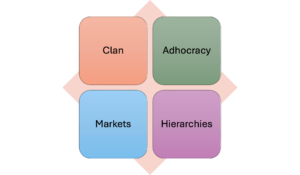 It is a ‘culture’ and as such controls the day-to-day practises carried out in the organisation. CIPD puts culture as the total of attitudes, beliefs and contained behaviours referring to an organisation (CIPD, 2023). Positive organisational culture as a valuable resource enhances the organisation unity, collaboration and purposefulness. For instance, Emirates encourages an organisational culture that focuses on customers through service delivery standards and employees. However, the culture of a tech startup may be different, they strive to be innovative meaning that creativity or flexibility in an organisation is a must in an organisation.
| (AC2.2) Explain how organisations are whole systems, and how work and actions as a people professional could impact elsewhere in the organisation.
If you use a source then short references should be added into your narrative below. Please remember to only list your long references in the reference box provided at the end of this section. Word count: Approximately 300 words
|
Please click the following icon to access this assessment in full