(Solution) 3C004 Task five Questions
Solution
| (AC6.1) Explain why learning and development activities are of benefit to individuals and organisations.
If you use a source then short references should be added into your narrative below. Please remember to only list your long references in the reference box provided at the end of this section. Word count: Approximately 250 words |
| Benefit to Individuals
Graduate trainees get the necessary knowledge and skills that are required in their departments through learning and development programs. At Inter Luxe Hotel Group, trainings are well-organised and trainees are provided with knowledge and skills related to the hospitality industry including customer service and operations. Further, L&D activities build better behaviours that are useful in responding to dynamic issues affecting the hospitality industry (CIPD, 2024a). For example, it is possible to use role-playing to help trainees learn how to listen and understand guests’ problems as well as how to respond empathetically. In addition, communication workshops enhance individual and team engagement that is crucial for the hotel’s service delivery culture. This builds confidences and enables individuals to perform their tasks efficiently. Benefit to the Organisation The learning and development activities bring great benefits to Inter Luxe Hotel by promoting efficiency and teamwork. Improved cooperation and communication within the workforce result in a unified organisational culture, which in turn encourages cooperation between different departments (Shaw, 2022). For example, the team-building activities foster healthy relations which are essential in ensuring that diversified teams deliver quality guest experiences. In addition, L&D helps in talent management by identifying and developing leadership potentials in employees in line with the organisational vision. This helps to minimise turnover by developing a pool of competent employees who are ready to take up leadership positions. Furthermore, the development of specific training needs helps to improve organisational procedures, service delivery and minimise on mistakes (CIPD, 2019).
|
| (AC6.2) Describe different types of learning needs and reasons why they arise for individuals and organisations.
If you use a source then short references should be added into your narrative below. Please remember to only list your long references in the reference box provided at the end of this section. Word count: Approximately 250 words |
| Learning Needs for Individuals
Learning sales techniques: There may be a need to enhance the trainees’ knowledge in customer relation, negotiation, and persuasion skills in sales. This is to address the practical sales skills gap which could constrain the achievement of revenue and customers satisfaction. When these skills are improved, the trainees will be more capable of addressing the needs of the guests as well as increasing the profitability of the hotel. Training on new technology: Since the hotel business is constantly developing, future professionals should learn new property management systems and booking technologies for efficient work. This need arises due to gaps in technical skills required to operate the new systems, effectiveness and minimising on errors in bookings and guests management (CIPD, 2020b). Learning Needs for Inter Luxe Hotel Training on newly implemented organisational systems: When Inter Luxe Hotel is adopting new technologies like online reservation systems, it means that the employees have to be put through a training program so that they are able to operate these systems effectively. This need results from inadequate technological skills, the need to enhance efficiency and services, and to sustain competition in the market (Mohdzaini, 2021). Training on new government environmental policy: Inter Luxe Hotel may require employees to be updated on the new government guidelines that are in place, for instance, sustainability and waste management. These needs result from the changes in the legal system and the hotel’s need to adhere to the law in order to avoid legal consequences.
|
(AC6.3) Summarise different face-to-face and blended learning and development approaches including:
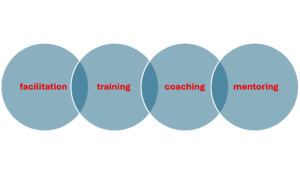 • training • coaching • mentoring. Facilitation This is identified as a learner-centric process followed in learning by engaging a facilitator (Zhu et al., 2023). The facilitator guide in stimulating introspection and safety to share experience For Inter Luxe Hotel case study, when they need to transition, they could use this approach for improving team-work and interpersonal development for their employees. Coaching A coach is involved who possess the ability to support employees towards performance improvement. A coach develop the process followed to capitalise on talents, manage challenges and set strategy. This lead to improvement of communication and successful career development (Maamari et al., 2022). Executive coaching can be preferred in Inter Luxe Hotel to enhance productivity of staff and career development. Training Taking part in workshops, seminars and courses lead to achievement of formal L&D. A learner exposure is to understand strategies to improve performance. The priority is to technical skills, using services, compliance with set legislations and setting goals. In Inter Luxe Hotel, training can be used to improve the employees’ technical skills in using a new property management system. These will entail providing employees with the tools and knowledge through workshops and seminars to enforce proper booking management so as to enhance hotel service delivery. Mentoring A mentor is involved to guide, advice and support mentees to improve professionally and build their personalised skills (Susanto & Sawitri, 2022). They emphasise on developing good relations and to mentor the rest. Prospecting on career growth, leadership development and acquisition of appropriate knowledge is attained. The strengths of this entail appropriate environment set for iterative learning. At Inter Luxe Hotel, the mentoring can be applied to help the graduate trainees in their career path. Senior managers can share knowledge about leadership, assisting the mentees in their development within the hotel. If you use a source then short references should be added into your narrative below. Please remember to only list your long references in the reference box provided at the end of this section. Word count: Approximately 300 words |
| Facilitation
This is identified as a learner-centric process followed in learning by engaging a facilitator (Zhu et al., 2023). The facilitator guide in stimulating introspection and safety to share experience For Inter Luxe Hotel case study, when they need to transition, they could use this approach for improving team-work and interpersonal development for their employees. Coaching A coach is involved who possess the ability to support employees towards performance improvement. A coach develop the process followed to capitalise on talents, manage challenges and set strategy. This lead to improvement of communication and successful career development (Maamari et al., 2022). Executive coaching can be preferred in Inter Luxe Hotel to enhance productivity of staff and career development. Training Taking part in workshops, seminars and courses lead to achievement of formal L&D. A learner exposure is to understand strategies to improve performance. The priority is to technical skills, using services, compliance with set legislations and setting goals. In Inter Luxe Hotel, training can be used to improve the employees’ technical skills in using a new property management system. These will entail providing employees with the tools and knowledge through workshops and seminars to enforce proper booking management so as to enhance hotel service delivery. Mentoring A mentor is involved to guide, advice and support mentees to improve professionally and build their personalised skills (Susanto & Sawitri, 2022). They emphasise on developing good relations and to mentor the rest. Prospecting on career growth, leadership development and acquisition of appropriate knowledge is attained. The strengths of this entail appropriate environment set for iterative learning. At Inter Luxe Hotel, the mentoring can be applied to help the graduate trainees in their career path. Senior managers can share knowledge about leadership, assisting the mentees in their development within the hotel.
|
| (AC6.4) Explain how individual requirements and preferences must be accommodated in the design and delivery of learning and development.
If you use a source then short references should be added into your narrative below. Please remember to only list your long references in the reference box provided at the end of this section. Word count: Approximately 250 words |
Please click the following icon to access this assessment in full