(Solution) CIPD New Brief 5CO02 Evidence-based practice
Solution
Task one – Questions
Q1. Evaluate the concept of evidence-based practice (EBP) and provide two examples of where Technivara could use it to ensure sound decision-making in people practice. (AC 1.1)
Meaning– As part of decision making, Evidence Based Practice (EBP) guide application of evidence, expert input and stakeholders’ recommendations. According to CIPD (2025), it successfully enhances data collection from different sources in a business environment. The data collected relate to metrics (e.g. turnover, absenteeism), peer-reviewed content, two-way feedback and professional’s input. The outcome is coming up with a sound, balance and rational-based decision. When EBP is embraced, entire assumptions or out-of date are avoided hence credibility and relevance of the results.
In Technivara for instance, this would guide initiating policies and procedures to manage the issue of turnover which is significantly affecting them. This is for success in leveraging in competitive advantage in their industry.
Evaluation
EBP is a relevant tool guiding organisations in coming up with an appropriate and relevant decision. According to CIPD (2025a), this is while eliminating any biasness or guessing.
Critical thinking– As part of evaluation, this guide people practice professionals in analysis of any predictions, noting evident biasness and considering alternatives.
The strength of critical thinking is being objective with mistakes eliminated. A drawback of critical thinking includes time-intensive and slowing decision making which ought to be with urgency.
Data-based Analysis– In EBP evaluation, this is relevant for ensuring that they appropriately use the HR metrics. The effectiveness is enhanced retention, presenteeism increased and productive.
The strengths include granting measurable data on appropriateness (CIPD, 2023). This is with drawback including over-emphasising on quantitative data and failing in use assumptions and views of respondents.
Generally, in Technivara, using EBP ensure a balance strategy integrating evidence and professional data for effective decision making amongst people professionals.
Application in Technivara
Recruitment and Selection– Critical thinking can be used in recruitment where potential future profitability and market dominance identify on the number of recruits to be engaged. Also, the skills-opportunities mismatch would be analysed critically for enhancing success of recruitment.
In Technivara, similar to CIPD (2025b), this eliminate embrace of conventional resourcing approaches and ensure appropriate skills are recruited. Future success of the organisation is in areas of medicine, automobiles, technology and electronic.
Workforce Planning– According to CIPD (2025c), this is “instrumental business practice aligning changes in organisation needs with people strategy”. Therefore, when critical thinking is embraced, it is possible making appropriate judgement, decisions and solving complex challenges.
In Technivara, they currently encounter challenges with turnover. Hence, as identified in Daengneam et al. (2025), using critical thinking and data-based analytics ensure that they acquisition of best talents and their career growth continuous. This would both eliminate risks of biasness and out of date initiatives for aligning people strategies for continuous organisation operations.
Q2. Evaluate one appropriate analysis tool and one appropriate analysis method that Technivara might apply to recognise and diagnose issues, challenges, and opportunities. (AC 1.2
Analysis Tool- SWOT Analysis
In Technivara context, the use of this tool is appropriate. An abbreviation of Strengths, Weaknesses, opportunities and Threats ensures that they analyse both the internal and external factors influencing the organisation operations.
According to Benzaghta et al. (2021), the use of the tool guide Technivara to note and diagnose;
- Issues
- Challenges
- Opportunities
The opportunities for example would be noted to include good organisation reputation and sustainability in their development. This is with the issues noted as including depending on old and paper-based data to make core organisation decisions. The opportunities would be identified as market expansion in their business environment and talent markets. Also, competitiveness in the business environment with ineffective workforce planning is a major issue.
Generally, Technivara using SWOT would ensure it is balance and involve both internal and external insights allowing decision making establish what to improve and leverage on competitiveness.
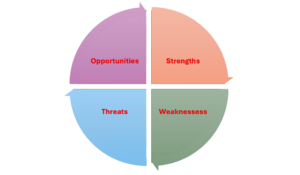
For drawbacks/disadvantages, the factors are very simple and subject-based linked with views and insights of the researcher. With less reliability on data for evidence-based, findings end up having vagueness and biasness lacking capacity for identifying evident issues (Siddiqui, 2021).
SWOT Analysis would also contribute to Technivara failing in prioritising core aspects which harden how decisions are made. Also, in the organisation, using SWOT analysis and different data-based and elaborate hence organisation best aligning people practice approaches for long-term basis.
Analysis Method- Interviews
For Technivara context, using the interviews since they facilitate detailed exploring of identified issues, challenges and opportunities of the individuals (Knott et al., 2022).
Interviews offer an opportunity of direct engagement with staff and management, hence recognising issues. The examples of issues for Technivara include being frustrated owing to existence of conventional paper use and miscommunication issues.
For Challenges, similar to Islam and Aldaihani (2022) recommendation, they offer opportunity for people in explaining origin of different challenges including immense turnover and disengaged. Interviews are normally open-ended and as such there are follow-up questions revealing issues impacting performance. This is with clear problems noted with appropriate recommendations for their mitigation.
Further, the interviews are appropriate for noting opportunities. For example, Technivara employees would rely on interviews for making recommendations on creativity inclusive of embrace of digitised people practice systems or career growth for supporting their development.
The collected qualitative data hence guide prompt enhancement and sustainable approaches which is a major strength/advantage.
For disadvantages/limitations, they include immense time being used and significant amount of financial support required. Further, according to CIPD (2017), interviewees would fail to give unbiased responses or an open-based communication specifically when there is no assurance of confident data.
In Technivara case, the interviews are essential to plan and pursued in a consistent manner for achieving richness and evidence-based data.
Q3. Explain the main principles of critical thinking including how these might apply to your own and others’ ideas to assist objective and rational debate at Technivara (AC 1.3)
Critical Thinking Principles
In modern organisations, in order to get reasonable and well-aligned decision, critical thinking assist to analyse, evaluate and question available content (REF).
The principles include;
- Clarity
- Logical
- Objectivity
- Evidence-based reasoning
Clarity– This principle is defined as CIPD (2019) as clearly and non-ambiguously presenting information in a relevant manner. In Technivara case, the evidence would have a direct link with challenges impacting their operations.
Logic– As identified in Vartiak et al. (2023), this principle identifies being reasonable and consistency with any bias or contra-indications eliminated. In Technivara, being logical means often ignoring the majority and going for the right thing.
Objectivity– This is identified as eliminating any biasness or emotional trends. This is to be open-minded and integrate all views, assumptions to make the final/last decisions.
Evidence-based reasoning– According to CIPD (2020), this entails the embrace credibility of data or factual information contrary to intuitiveness independently.
In conclusion, all the identified principles are encouraging systematically and well-balance making of decisions, lowering opportunity for judging poorly and hence accuracy, transparency and fairness in making decisions.
Critical Thinking in Own Ideas
In Technivara, my idea would include to digitise their operations and introduce AI. Tis call for being clear, explain in-depth, practically in digitisation for eliminating confusions.
I would start with providing data such as Office for National Statistics (ONS) to note 80% of successful organisations have 90% digitised all their operations. This has positively contributed to supporting the recommendation.
By being logical, I would outline on the systems direct impact on noted weak areas including delay in capture of employee’s information. Being objective would mean I am acknowledging entire communication and points of views successfully. In summary, all the identified principles to capture the entire data.
Cumulatively, the identified principles ensure credibility of my idea, evidence and persuasiveness. This is to enhance objectivity of debating, lowering risks encountered in making decisions and impacted by conventional practice.
Critical Thinking in Others’ Ideas
In Technivara, others include Bill ad board of management who would consider retaining the already existing conventional systems.
As part of the using the principles, I would make sure they are actively debating for enhancing objectivity and constructiveness of entire insights.
Also, by being open-minded, I would have to listen with care and appreciate that over the years, the organisation has been stable and progressing. This is with an effective communication being in place owing to elimination of challenges.
By embracing effective evidence-supported reasoning, a comparative analysis of performance results of contemporary initiatives in same entities. This is at the same time noting Technivara chances which avoid change process. This strategy makes sure their input to the process are appreciated, fairness in their scrutiny and rationality in debating.
Q4. Explain two decision-making processes that Technivara could apply to ensure that effective outcomes are achieved. (AC 1.4)
Decision Matrix
I order to make decisions objectively; this tool can be used which focuses on comparing different options as highlighted in a weighted criteria scores. In Technivara for instance, CIPD (2025d) identify the tool as relevant for evaluating the success of digitisation of people professionals’ operations.
Actively, Technivara would highlight all choices which can include;
- Investing in an AI-Empowered people practice systems
- Outsourced people practice roles
- Enhancement of the current systems in use by the organisation by partially digitising them
In each of the potential choices, the criterion used to evaluate them would include their price of acquisition, how efficient they are, process of implementing, acceptability amongst employees and sustainable level.
The different options rating are made as part of the criteria with highly rated factor such as being sustainable gaining prominence hence considered. This would be identified as the appropriate evidence-based decision.
The strengths of the approach include reducing biasness and being transparent in making decisions. As identified in CIPD (2024), it ensure Technivara leaders are in a position of balancing conventional and modern change process.
For demerits/disadvantages, decisions which are made are of immense quality with the best criterion. When they are not appropriate, the evidence would not be appropriate. Also, they are majorly characterised with subjectivity.
In Technivara case, decision matrix are logical for informing strategically investing on best people practice function.
De Bono 6 Thinking Hats
This strategy is embraced in making decisions by encouraging examination of problems in context of 6 varying contexts (Manesis et al., 2022). A summary of these are illustrated herein;
Figure 1: Components of the 6 Thinking Hats
Source: Summarised from (Manesis et al., 2022)
one of the area this tool can be embraced is debating on how to update their systems through digitisation as part of Technivara.
The Blue Hat represent the process followed in digitisation. This would start with needs analysis to align organisation needs and the new system to be embraced. This is followed by White Hat representing Facts which evidence supporting the digitisation process with success. This is with the entire facts put into account on basis of the facts and information in place. The red hat, informed by feelings, intuitiveness, with limited reasons offered, failure in embracing change would be noted.
The Green Hat which evidence on creativity recommend the different technologies for digitisation including Artificial Intelligence (AI), accessing systems and the Yellow Hat informing the different benefits by sticking with digitisation in Technivara. The Black Hat would evidence on what need to guide caution by evidencing challenges, weak areas and risks from digitisation process.
For strengths/advantages, it is uniform, detailed thoughts with Bill conventional practice support and contemporary digitisation prioritised.
The disadvantages/drawbacks entail immense time used and disciplined in ensuring all players address functions in each hat. For Technivara, Elsayed and Abbas (2021), note provision of appropriate system for decisions making rationally, inclusively and future-based.
Q5. Assess two different ethical perspectives including how these could be used at Technivara to inform and influence decision-making. (AC 1.5)
Utilitarianism
For this ethical perspective, Häyry (2021) identify it as detailing “most gain to the highest number of individuals”. An evaluation of the entire decisions is in line with their outcomes and the scope of maximising entire well-being scope.
The identified perspective is relevant for decision making in the current digitisation process in Technivara. In particular, as they are introducing the digitisation process, there would be short-term based costs and capacity development recommended. In long-term results, these would include efficiency and effectiveness of the systems. This is with mistakes lowered, data-based decisions and good experience in Technivara stakeholders.
The strengths of Utilitarianism include immense benefits in regard to performance improvement with the employees lowering how they have frustrations with the current out of date system.
Another strength in Technivara using utilitarianism include ensuring that the various people practice approaches are relevant to most of the employees and not less players top ranking.
Embrace of Utilitarianism is for the large scaled organisations owing to their fairness and long-term based achievements. This is with drawbacks including ignoring the minorities specifically for the staff who cannot work well upon digitisation. Besides, according to Karni and Weymark (2024), it offer practicality to shape ethics, make evidence supported decision facilitating Technivara development and satisfied.
Altruism
This is an ethical strategy prioritising on executing what is of most appropriate interest to them without prioritising on other individuals points of view (Caviola et al., 2021).
In Technivara, using Altruism imply decisions making are intended in safeguarding and optimum gains to clients, employees, board of directors, and Bill irrespective of their appropriateness to the general organisation gain. According to Häyry (2021), the appropriateness of altruism is to prioritise on welfare of the different stakeholders in times of digitisation.
For instance, as Technivara is transitioning towards digitisation of their operations, their leadership and management would prioritise on support advanced to staff through capacity development opportunities, coaching and mentoring and flexible adjustments.
The strengths/advantages of Altruism include genuineness in prioritising on all stakeholders contrary to having to view them as hindrances of the change. Another strength is altruism informing policy work on fairness in working, number of hours active at work and career growth facilitation. Cumulatively with wellbeing strategies, feeling a positive appreciation of the employees would be evident. This is supported by Karni and Weymark (2024) noting trust-based relations as initiated, loyal teams and appropriate organisation culture hence increasing how engaged and retaining highly qualified staff.
For drawbacks/limitations, it reduce speed of making decisions as needs of the rest are prioritised. Also, gaining in short-term basis is not possible as it is more futuristic.
Q6. Appraise two different ways that Technivara could measure financial and non-financial
performance, providing one example of each. (AC 3.1)
Financial Measures (Return on Investment-ROI)–
Please click the following icon to access this assessment in full