(Solution) CIPD 50S02 Advances in Digital Learning and Development
Solution
Task One- Written Responses to Questions
Question 1: AC1.1: Development of technology, along with digital collaboration
Digital tools and platforms that facilitate training, sharing knowledge, and skill building are called technology in learning and development (L&D) (Overton, 2024). Digital collaboration refers to collaboration via use of online platforms like Microsoft Teams, Zoom, or Slack. The last five years have witnessed a fast rate of technological growth that has altered the way organisations design and deliver the learning experiences around the world.
Impacts on Design
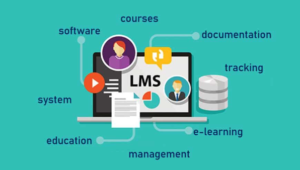
L&D design has been revolutionised by technology by using data to personalise and be flexible. Learning Management Systems (LMS) and AI-based analytics have become available to enable designers to customize training programs according to the needs and performance statistics of learners.
Digital authoring programs, such as the Articulate 360, can be used to create a scenario-based, interactive module that is more engaging to the learner (Gartner, 2025). Learning has been streamlined to match the speed and demands of the workplace because of the emergence of microlearning, small lessons. Also, design through shared platforms and work through joint digital platforms enables multiple stakeholders to co-create content beyond their physical location, which is relevant and consistent at the team level. It has developed a flexible, learner-focused design experience that encourages inclusiveness and accessibility via multimedia and mobile friendly designs.
Impacts on Delivery
Online collaboration tools have transformed the delivery by providing hybrid and distance learning. It has become global with virtual classrooms and webinars, which are available in such platforms as Zoom and save time and costs (Earon, 2022). The cloud based technologies enable real time updates and availability of the content everywhere. Social learning systems like Yammer and LinkedIn Learning promote peer-to-peer interaction, discussion and exchange of knowledge outside the formal settings. Virtual reality (VR) and gamification applications in delivery result in improved engagement because of the experiential learning (Kabiga, 2024). Nonetheless, this should be facilitated effectively and digitally literate so that the participation can be active and screen fatigue can be reduced.
Overall, the flexibility, interactivity, and accessibility of L&D as well as the design or delivery have been facilitated by the advances in technological and digital collaboration, making it more learner-centered and inclusive and data-driven, respectively. However, these changes have resulted in continuous, connected and responsive learning responding to changing business and workforce demands despite the challenges such as digital overload.
Question 2: AC 1.2: one risk and challenge technology-based learning and development poses for organisations and learners
Technology learning and development (L&D) is the application of digital technology, platforms and web-based systems to provide training and develop employee capabilities. Although this is more flexible and scalable it also poses risks and challenges to both organisations and learners. These should be adequately addressed so as to achieve effective outcomes of learning and sustainable improvement in performance.
For Organisations
Risk: Data Security and Privacy:
Among the most critical risks in organisations is the risk of sensitive data of employees being exposed online in learning platforms (Huang et al,. 2020). Saving any progress, assessments, and feedback of learners in the clouds may expose organisations to data attacks. The risk is high due to the fact that the consequences of a data breach are not limited to financial fines and legal implications under GDPR but a long-term negative reputation and decreased trust of organisational systems by the employees. This is being addressed through enforcement of robust cybersecurity policies, encryption of data and adherence to data protection laws like GDPR. Risks are also reduced by conducting regular security audits and applying secure Single Sign-On (SSO) systems (CICA, 2024).
Challenges: Interaction and Technological Compatibility:
Organisations are usually confronted by the difficulty of using new learning technologies with existing HR or IT systems. Poor user experience and the occurrence of data silos may be as a result of compatibility problems (Kumar, 2023). The compatibility problems may make it expensive, slow down system adoption, decrease the accuracy of the data, frustrate the employees and eventually make the overall performance of the learning initiatives less effective. To counter this, most organisations embrace interoperable LMS platforms and invest in IT infrastructure that is capable of supporting APIs and system integration. Training the staff and engaging IT teams in early L&D planning will guarantee the easier transitions and the greatest ROI of technologies.
For Learners
Risk – Digital Fatigue:
Digital fatigue, loss of motivation, and burnout in learners can be a result of constant exposure to screen-based learning (Ibrahim et al. 2025).Digital fatigue minimizes the engagement, knowledge retention, stress levels, motivation levels and can severely diminish the effectiveness of the technology-based learning programm. In response to this, L&D teams are integrating blended learning strategies that have online, self-paced, and face to face components. Breaks, interaction tools, and mobile microlearning modules are useful in keeping the engagement and well-being, though.
Challenge – Digital Skills Gap:
Most learners find it hard to operate the new tools and platforms and this poses a learning obstacle (Zou et al, 2025). Low digital skills decrease confidence, decrease learning rate, decrease involvement, cause disparities among learners and decrease effective use of technology based development opportunities. Organisations are responding to this through offering pre-learning technology orientations, development of user-friendly interfaces, technical support. The digital competency gaps can also be bridged with the help of mentorship and peer-learning programs to make sure that the inclusivity and the confidence of the learners in the ability to use the new systems efficiently.
To conclude, the advantages of technology-based L&D are immeasurable, with data breaches and digital fatigue being the most significant risks, as well as integration and skills issues. These can be countered by the organisations and learners by using strong security, blended learning, compatibility and ongoing digital upskilling- whereby technology improves the learning process and does not inhibit it.
Question 3: AC 1.3: Impact of emerging learning technologies on the role of the L&D professional
New digital tools and innovations (artificial intelligence (AI), virtual reality (VR), and adaptive learning systems) that are changing the design, delivery, and evaluation of learning are referred to as emerging learning technologies.
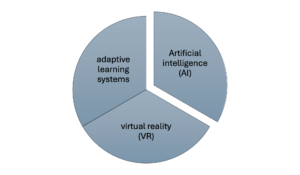
These technologies have greatly impacted and transformed the profession of Learning and Development (L&D) professionals, requiring new competencies, approaches, and attitudes to be able to stay functional and future-proof.
Change of Trainer to Digital Learning Designer.
The L&D professionals traditionally
Please click the following icon to access this assessment in full