(Solution) CIPD Level 7 7HR03 Evaluating the Concept of Universal Benefits
Solution
Evaluating the Concept of Universal Benefits
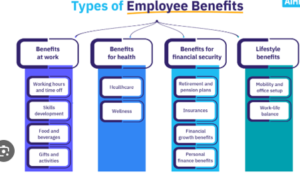
Balkin & Werner (2023) define universal benefits as benefits which are provided to all employees, such as regular pay rises, job security and health schemes, regardless of their role, seniority or personal circumstances. These universal benefits are not discriminatory to any employee on the grounds of either their gender or skills. The employes are benefitting mainly from the universal rewards since they are not discriminatory to the employees due to possession of protected characteristics. Perkins et al. (2021) assert that employing this approach enables organisations to ensure fairness and consistency, promoting equality among all individuals in the organisation. The predictability and simplicity of universal benefits is one of the primary advantages of this type of program. With all employees receiving the same package, administrative efficiency is improved and HR complexity and costs reduced (Reed et al., 2023). This structure also enables a strong employer brand by making employees believe the organisation is fair and transparent. It also ensures labour law and industry standard compliance, and reduces likelihood of disputes pertaining to benefit allocations (Sheppard-Jones et al., 2021). In addition, universal benefits can also be an effective way of boosting employee morale and engagement, especially if they include provisions like healthcare, pensions, and paid leave. Knowing that the organisation provides comprehensive support makes employees feel valued (Sokolov & Zavyalova, 2020). Additionally, it can be immensely useful in industries where job demands are similar for majority of employees, including aviation where workers face uniform challenges like irregular working hours (Dang et al., 2021).
However, one disadvantage of universal benefits is the lack of flexibility. A standardised package cannot accommodate various employees’ financial, family, and career-related preferences and needs (Andriani, 2022). For instance, younger employees may prefer professional development subsidies over enhanced pension contributions, whereas older employees may prioritise retirement benefits. An additional limitation is that universal benefits may not be competitive in attracting top talent. Fenny et al. (2021) mention that if competitors are able to customise benefits, Riyadh Air runs the risk of losing capable staff to companies that have customised their compensation plans. Also, inefficiencies occurs when employees are not taking full advantage of the benefits that are provided, resulting in wasted resources (Kant & Asefa, 2022). Rigid universal systems may not meet diverse needs of Riyadh Air, with diverse employees such as pilots, cabin crew, engineers, and administrative staff, all with diverse tasks and preferences. Overall, universal benefits are easy to administer and promote equality, but they may not offer the personalisation required to boost retention and employee satisfaction (Perkins et al., 2021).
Evaluating the Concept of Flexible Cafeteria Style Benefits
Cafeteria benefits system enables employees to customise their compensation packages by choosing benefits that match their individual needs (Bal & Izak, 2020). It provides several choices such as salary trade-offs for additional leave, healthcare benefits, childcare support, and retirement contributions. One key advantage of cafeteria benefits system is that it suits different workforce needs (Shiri et al., 2022). Different stages of life enable different employees to prioritise what is important to them, improving job satisfaction and retention. For instance, a younger employee may request student loan repayment assistance, whereas an employee with a family may ask for childcare support. With this approach, Riyadh Air would be more competitive in attracting and retaining top talent. Increased perceived value is another strength (Au et al., 2019). When employees can customise their benefits, they feel more drawn to the company, which in turn increases their level of motivation and retention. According to Ferdous et al. (2021), this model also enhances the financial well-being of employees as they are able to channel resources to where they need them rather than receiving benefits they do not need. Furthermore, flexible benefits strengthen the employer branding and make Riyadh Air as an employee-centric organisation (Querbach et al., 2022). Companies that offer personalised compensation experience higher employee retention rates because it makes employees feel like their employer understands and is supporting their individualistic needs.
However, this model poses challenges as well. One disadvantage is that it increases administrative complexity and costs (Kossek & Kelliher, 2022). To effectively manage a flexible benefits program, HR systems need to be robust, being able to track individual choices, compliance and offer employee support. This can be resource intensive, especially for Riyadh Air, which is a large and diverse organisation (Jensen et al., 2021). Moreover, flexible benefits need communication and financial literacy. If employees cannot get information to make informed choices, they may be dissatisfied if they find out later that they chose a less desirable package (Biasi & Sarsons, 2021). Finally, the approach may create perceived inequalities within the company, where those who choose better feel they receive greater value than others (He et al., 2021).
Recommendation on Which Approach Would be Most Suited to Riyadh Air
A suitable system for Riyadh Air would be a hybrid benefits system integrating both universal and flexible elements. Universal benefits ensure baseline fairness and compliance, while flexible benefits enable personalisation
Please click the following icon to access this project in full