(Solution) New Level 7 7C003- Personal Effectiveness, Ethics and Business Acumen
Solution
AC 1.3 Self-evaluate personal integrity and professional courage in relation to ethical practice .(1,074 Words)
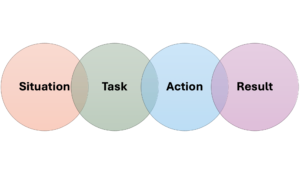
Task
Action
Result
Situation
In early 2023, I found myself in an ethical dilemma in my organization around gender equity. There was a campaign that was trying to increase the involvement of females in the workforce. Management, however, was worried about tailoring training for women to create a balance. A people practice professional was put in a sensitive position where I needed to promote equality without going at key stakeholders’ heads. My integrity and professional courage were tried when facing the promotion of diversity and inclusion as ethical imperatives in our organizational framework.
Task
I was responsible for championing an inclusive approach to connect the dots with the organization’s values and uphold professional integrity. I was told to develop an equitable strategy that would get executive buy-in but would not undermine ethical standards. It included crafting a plan to achieve gender parity while providing leadership with an understanding of why such an investment constituted a long-term benefit. I also had to contend with alternate views, negotiate persuasively, and move leaders toward an inclusive agenda. As they worked to balance these tasks, they still had to prove themselves highly transparent, highly integrity, and professionally courageous.
Action
I started by presenting data-driven, showing the gaps, and explaining why a more inclusive workforce would be a more significant ROI. Based on my understanding of ethical HR practices, I stressed the focus on fairness and meritocracy, which were used in place of the paid internship. Through collaborative sessions, I advocated for women’s training programs and presented success case studies from similar organizations. I led influence by bringing allies’ leadership on board and included employee voices in the proposal. I still maintained an ethical position: decisions must be inclusive and just. Using the CIPD professional map, I applied the principle of professional courage and influence to take responsibility to steer my actions (CIPD, 2023).
Result
The leadership team approved a training and mentorship program for female employees. This resulted in over 50 women upskilling in six months, three of whom had already been promoted. The campaign not only increased representation but also increased commitment from the organization to diversity. The company’s internal newsletter recognized my role and how values-driven leadership can make a dent in any company. And most importantly, my integrity was intact, and I dared to speak up for ethical values despite the internal resistance, building a culture of trust, fairness, and strategic inclusivity (CIPD, 2024b).
Self-evaluate
I effectively balanced personal integrity and professional courage throughout this situation. I protected moral standards while dealing with the political aspects present. Despite opponents initially rejecting my viewpoint, I kept my information transparent and open to establishing safe dialogs. Through this experience, my professional and ethical decision-making abilities have evolved as a people practice expert. By referring to my PDP learnings, I used the CIPD code of ethics standards to maintain fairness and inclusion while showing respect through my actions (CIPD, 2023b).
The way I conducted myself demonstrated integrity as I promoted ethical rights beyond personal convenience and showed courage by bringing forward decision-influencing ideas even through adversity. The trust I had created found confirmation through peer feedback. Early stakeholder mapping would have boosted the speed of gaining organizational acceptance. The experience revealed to me the substantial impact of ethical leadership on creating an inclusive environment.
Starting point
Initially, I rated my ability at 7 out of 10. I had a strong base with ethical practice, coming from leadership roles where I pushed for inclusion and fairness. Although practical, my understanding did not come with formal theoretical support. I have always practiced integrity and had little experience in challenging authority, but least of all, I have experience using an ethical argument to influence others. My starting point was that I already knew the professional values. Still, I recognized the need for some structured development to build my confidence and influence on all matters involving ethics across the organization.
Learning to develop this skill
I structured a PDP and a learning journal as part of my development. My research started with Monroe (2025) to gain more knowledge on transparent leadership and ethical practices. I participated in CIPD webinars focused on ethical practice by attending sessions about inclusivity and fair treatment in people management. The online ethical studies provided modules for workplace ethics alongside deontology, teleology, and hybrid ethics, according to Hani et al. (2024).
I reviewed organizational codes of ethics and studied cases that test decision-making frameworks within HR. My educational experience taught me about the professional value-based principles that guide professional conduct through autonomy, fairness, and courage. While working in human resources, I maintained a reflective journal that recorded ethical dilemmas that occurred together with my choices and the resulting impacts. The system enabled me to monitor progress along with pattern recognition, which helped me improve my strategies. I regularly sought guidance from mentors and peer connections to receive fresh conceptualisms and expand my ethical logic. My active dedication helped me develop increased confidence, persuasive abilities, and moral principles for efficiently applying ethical frameworks in complex human-related circumstances (Markkula Center for Applied Ethics, 2021).
Developing the behavior to apply to the situation
CIPD’s “Professional Courage and Influence” course was an excellent opportunity for me to learn professional behaviors as outlined in the CIPD Profession Map (CIPD 2023c).
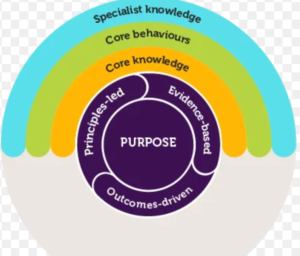
It trained me to provide practical on-the-job lessons on how to show ethical principles in even the most complex and high-pressure subjective situations. Along the same lines, it was helpful to encourage the formation of coalitions built on integrity, which I used when, a few months ago, a proposal for a more inclusive workplace policy was put forth. My recommendation was structured with data and an empathetic understanding of employee needs, along with a strong ethical rationale.
To make the proposal acceptance more possible, I mapped stakeholders’ influence to identify key stakeholders, and engaged them early on to receive some traffic and support. This coincided with the Profession Map’s focus on influencing with impact and working inclusively (CIPD, 2024a). Along the way, I learnt the confidence to constructively challenge existing practices when faced with resistance, upheld the ethical practices, and looked at the long-term value both for the individual and the organization. The experiences made me imbibe the behaviors of courage, resilience, and integrity, which are essential to take responsible leadership (CIPD, 2023a). In general, the course enabled me to possess the tools necessary to influence decisions ethically and effectively without compromising my credibility or trust.
AC 2.3 Demonstrate impactful behaviour that is aligned with wider organisational vision, values, strategies, and plans. (1,060 Words)
Situation
2022 marked a strategic shift for our organization, focusing on digital transformation and decision-making through data analysis. The HR department needed to synchronize every employee’s
Please click the following icon to access this project in full