(Solution) CIPD Level 5 5C002 Technivara Organisation
Table of Contents
1.1 Evidence-based Practice (EBP); Technivara Examples in Decisions Making. 2
Technivara Organisation Application of EBP. 3
1.2 Analysis tools and methods. 3
Analysis Tool- SWOT Analysis. 3
Analysis Method (Root Cause Analysis) 4
1.3 Critical Thinking Principles. 5
Application (Own Ideas) for Technivara. 5
Application (Others Ideas) for Technivara. 6
1.4 Decision-Making Processes. 6
1.5 Ethical Perspectives Influencing Making of Decisions. 7
3.1 Financial and Non-Financial Performance Approaches. 8
3.2 Value to Technivara; Impact to People Practices. 10
Adding Value in Technivara. 10
Task Two- Quantitative and Qualitative Analysis Review.. 11
2.1 Data of the Turnover and Recruitment 11
2.3 Patterns, Themes and Trends; Recommendations. 15
Patterns; Themes and Trends. 15
Task One- Questions
1.1 Evidence-based Practice (EBP); Technivara Examples in Decisions Making
EBP Definition– An Evidence-Based Practice (EBP) guide strategically making decisions by using existing evidence, skills and input of different stakeholders (CIPD, 2025). This is achieved by different sources used to collect the relevant data which can entail metrics, researching, professional-based experiences and staff feedback. The outcome is identified in Lizier and Reich (2021) include how the outcomes are quality, well-balance and rationally making decisions.
Further, by using EBP, they lower any assumption or out-of-date content through guaranteeing credibility and relevance of data. In active organisation operations, EBP outcomes include policies made in areas of equity, efficiency and diversity and inclusion. According to CIPD (2025a), all these areas are aligned with organisation objectives hence improved staff practice and productivity amongst people professionals.
Evaluation– EBP is relevant in offering entities with a chance to come up with a quality and understandable decisions hence reduced issues linked with guessing of conventional practice.
Critical thinking– This is an EBP approach enabling people professionals in questioning issues, noting biasness and prioritising on alternative (Siddiqi & Ahmad, 2021). The strengths/advantages for this entail being objective and reduction of errors. This is with the drawback/disadvantage including immense time used and slowed process in making prompt decisions.
Data-Driven Analysis– According to CIPD (2023), modern entities embrace HR-based metrics including retention, absenteeism/presenteeism and productivity. The strengths/advantages, CIPD (2025) identify this as providing appropriate data on best performance. This is with their drawback/disadvantage being the practice to highly prioritise quantitative data while overlooking qualitative factors including views and opinions of the employees.
Generally, tandem with identified approaches, embrace of EBP enhance balance strategy for integrating evidence and professional insights for robustness and sustainability of eventual decision.
Technivara Organisation Application of EBP
For Technivara, they could potentially embrace EBP in Recruitment and Workforce Planning. This is as the organisation focus on expansion strategies. The planning according to Elugbaju et al. (2024) would scope towards analysing industrial trends, demography of the employees and limitations of skills. Cumulatively, these areas focus guide decision making pertaining to talented employees for development. Also, this eliminates conventional resourcing approaches with organisations managing in engaging appropriate skills in computerised, electronical and automotive departments.
Also, Technivara would prioritise on embracing modern performance management approaches. The organisation today embraces paper-based reviewing non-transparency and failing in granting on-time data. According to CIPD (2025b), an integration of modernised systems would enhance gathering of data on productivity, staff feedback and benchmark creating robustness and supporting how they succession plan, capacity development and rewards.
Cumulatively the noted approaches would manage entire risks and biasness of out-of-data initiative. Nevertheless, they would be aligned with people practices noted as futuristic in organisation development.
1.2 Analysis tools and methods
Analysis Tool- SWOT Analysis
This is relevant in Technivara for analysing “S (Strengths), W (Weaknesses), O (Opportunities) and T (Threats), the identified tool is relevant. According to Qin (2022), it guides systematic analysis and diagnosis of challenges, encountered challenges and prevalent opportunities.
For instance, using the tool in Technivara, Strengths note good reputation by the organisation and sustainable development. This is with weakness being depending on out-of-date paper-based characterised with inefficiencies. Opportunities are evident amidst need to expand their operations in medicine and electronics with their threats including competitiveness and inefficient workplace plans.
The appropriateness/strengths of embracing SWOT analysis are its ability of balancing intent (internally and externally) enhancing decision making for establishing what to improve and leveraging on competitive advantage.
For the drawbacks/weaknesses of SWOT, CIPD (2025c) regard it as being very simplified and subject with views of those pursuing them prioritised. With non-reliable data lacking for supporting evidence, vagueness of the findings with bias are noted for noting prevalent issues. Another weakness is failure in prioritising core aspects complicating how decisions are made.
For Technivara, the application of SWOT Analysis is in form of EBP in diagnosing the people challenges in a data-based and elaborate manner facilitating alignment with short and long-term organisation growth.
Analysis Method (Root Cause Analysis)
Being an analysis approach, Pourasad et al. (2021) identify this method as relevant for the context of Technivara for establishing challenges of specific problems as opposed to only accounting for superficial evidence.
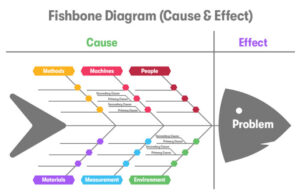
Systematically used, the method guide in identifying the 4 Whys for evaluating problems causes. In Technivara, CIPD (2025d) identify the strategy as identifying the issues associated with lack of retention, unsuccessful performance management and digitised tools not in place.
The advantages/strengths of this include managing repetitiveness of similar challenges owing to the focus being on establishing what caused these issues hence coming hp with a relevant approach. The opportunities would be noted including introducing modernised people practices and capacity development.
For the drawbacks/weaknesses of Root Cause Analysis, it is time-intensive since it includes detailed sourcing of data, interviewing them and cross-departments relations (Pourasad et al., 2021). Also, apart from an instance objective facilitation is evident, it could lead blame-games and highly-simplified challenging issues. For Technivara context, using the Root Cause Analysis facilitate an active development of evidence-based acquisition of knowledge systematically. This is with the process enhancing detailed analysing of data and open-based interaction for maximising their success.
1.3 Critical Thinking Principles
Critical Thinking Principles- Critical thinking is defined in CIPD (2024) as a strategy used to analyse, evaluate and question data/information for good reasoning and objectivity. Hence, for these principles, they guide how an organisation can embrace them for a successful practice. This is since there exist varying relevant dimensions in place.
The different principles entail being clear demanding lack of ambiguity, appropriateness and relevant with best practice in place. In this case, the available evidence is the sole issue of interest.
A second principle is being logical. According to Goddu (2021), this implies appropriate reasoning consistency and non-contradictory or lack of support of assumption. Being objective means eliminating individualised biasness prior concluding.
Lastly, use of evidence means any argument are anchored on credibility and factual contrary to intuitiveness. In Technivara context, the principles entail encouraging systems and balance making of decisions, reduced opportunity of judging poorly hence increased accuracy, transparency and fairness in making decisions.
Application (Own Ideas) for Technivara
Critical thinking is relevant for embrace in Technivara organisation starting with listing of proposals directly, practically for eliminating potential confused players.
After noting the paper-centric people practice professionals is a challenge, necessity for digitising people professionals practice is essential. By embrace of an evidence-based strategy which included statistical data analysis on efficiencies and benchmarking. The results from the analysis was appropriate to affirm need for digitisation.
Further, by being logical, I would note on success of the existing system in addressing noted issues including delayed capture of employees data. By being objective, Pettersson (2023) note this as an opportunity for guiding acknowledgement of likely challenges including incurred costs and change resistance albeit argument shared organised.
The identified principles enhance credibility, high-level evidence and persuasiveness hence objectivity in debating and lowering decisions made affected by presented assumption and traditions in place.
Application (Others Ideas) for Technivara
In Technivara case, by se of critical thinking, the phenomenon involving Bill and Board of directors in continuing their working using traditional strategies, being open-minded would be essential. This would include a characteristic of careful listening and recognition of strengths of the process.
Similarly, I can enhance assessment of importance of presented points relevant for organisation success and evaluating how logical it is. The logic is defined with paper-based systems being inefficient and ineffective with their use very costly.
The next step would include the use of evidence to reason by implementing comparative performance analyses of people practices in other same entities. This is to identify what is there for Technivara when they avoid change process. This lead to input in terms of respect and scrutiny with fairness hence rationally debating.
1.4 Decision-Making Processes
Decision Matrix
This matrix is well structured granting entities opportunities for comparing different choices. The comparison is guided by referring to a well weighted criterion for identifying scores for guiding objective in making decisions. In Technivara, similar to Vlerick (2021), this is relevant for evaluation od strategies to digitise people practices.
For example, Technivara people practice professionals would put down all likely options including investment in Artificial Intelligence (AI), outsourcing of people practice roles and paper use transition. The weighted criteria used include costing/ prices incurred, efficiencies and how it is implemented, employees is ranked at the top. Hence, what scores very well represent the decisions made backed with evidences.
An advantage of using the tool include reducing their biasness and increasing how decisions made are transparent. In line with Salehzadeh and Ziaeian (2024), Technivara would be well positioned for maintaining a balanced conventional and modernised evidences on change.
For drawbacks, they entail quality-level established from the options of criteria offered and allocate fairness in different weights. This is defined with subjectivity. Besides, in Technivara, decision making matrix grant logic in informing strategic-based investment expanded.
De Bono 6- Thinking Hats
This represent a strategy for making decisions encouraging people in examining issues in 6 different contexts (Hats) (Stoilkov, 2023). This tool is different from the others as it is detailed and include more factors.
The hats include white, red, black, yellow, green and blue. According to Kapsali (2023),……
Please click the following icon to access this project in full