(Solution) Project Management Individual Assignment (Title of PM)
Solution
Introduction
Project management entails the planning, implementation, and control of projects in a systematic way. Risk assessment, budgeting, performance and stakeholder analysis is used to make educational activities more transparent, accountable, and functional. The proper distribution of resources is also covered by the systematic way of accomplishing objectives and the evaluation of progress as compared to the set benchmarks and the consequences realized. This also promotes teamwork and collaboration between teachers, co-administrators, policy makers and development partners which will help the sector in coordination and communication.
As the principles of performance management have become a part of everyday educational operations, it is also necessary to make sure that the principles of accountability and management also do not lose their focus on the educational equity, inclusiveness and access to quality learning opportunities.
This essay will discuss the impacts of the implementation of project management on the performance of education sector programs. It explains why strategic project management can promote performance and resource use, as well as the existing challenges and situational issues. This will eventually demonstrate the way project management can assist in enhancing the quality of the education sector and its sustainability.
Understanding Project Management in Education
Project management is defined as the effective use of knowledge, skills, tools and techniques to achieve the objectives of the project (Alkatheeri et al, 2023).
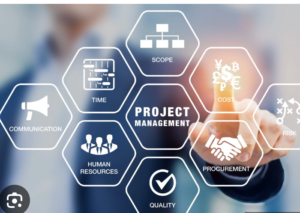
While it has historically been linked to construction and engineering industries, project management has started to be used more in the education sector. For example, educational institutions implement projects which include the development of new curricula, the creation of e-learning systems, the coordination of inter-school competitions, and the setting up of new departments (Shen et al., 2023). All these must be planned, implemented, monitored, and assessed in order to ensure that the desired educational goals are met. The concept of integrating project management principles in education is a sure way of ensuring that such initiatives are not just implemented effectively, but also lead to the institutional growth and the learner success (Aliu et al., 2023).
One of the major concepts of project management in teaching is the formulation of clear objectives. The educational programs should start with clear goals that are precise and quantifiable to plan and evaluate. In the absence of specific goals, Andersen et al. (2025) state that it is hard to analyze the progress or define whether the initiative has been a success or not. For example, when a school implements a new STEM curriculum, the goals could be to enroll 20% more students in science courses in two years or raising standardized test results in math and science. These are tangible deliverables that give an accountability and improvement benchmark.
In the context of highly-regulated educational environments, project plans most often describe the specifics of job tasks and responsibilities, as well as realistic timelines and milestones. These include, for instance, the scheduling of teacher training sessions and the collaboration with various departments of the academic calendar and the procurement of instructional materials as noted by Bachwani et al. (2023). Specifically, Gnatt charts and Work Breakdown Structures (WBS) are especially productive, as they demonstrate project schedules and show dependencies between tasks, allowing them to develop in a logical and timely way (Kerzner, 2025).
Management of resources is also important in learning projects. The resources are not only limited to finances but also human resources including teachers, administrators and counsellors and physical resources including technology, classrooms and textbooks. Jääskä and Aaltonen (2022) state that the successful distribution of these resources will make sure that the projects are properly financed and disruptions are reduced. For example, proper training of the teachers before a new curriculum is implemented eliminates challenges in implementation and improves the quality of the programs.
Uncertainties also tend to affect educational projects and hence risk management is a very necessary element. The risks can be a lack of funds, employee attrition, or shift in student attendance. Project resilience is achieved by anticipating risks and trying to mitigate them (Catyanadika & Isfianadewi, 2021). For example, when a new extracurricular program is introduced, the managers can expect risks like low student attendance or sponsorship and prepare the alternative methods of promoting the program or collaborating with other partners to maintain the attendance.
The other pillar of successful educational project management is stakeholder engagement. The stakeholders, including students, parents, teachers, administrators and community members are very instrumental in the success of a project. Grunwald et al. (2024) note that they should be kept informed by holding regular meetings, newsletters, and surveys and this will promote transparency and build shared ownership.
Moreover, quality assurance should be incorporated within the lifecycle of the project. Assessment, feedback, and performance reviews should be conducted regularly to ensure that the educational objectives are met to a high level (Fakhravar and Ouabira, 2021). Change management is also vital since numerous educational projects bring new teaching methods or technology which has to be adjusted to the culture. Project managers need to overcome resistance, explain benefits, and ease transition.
Lastly, there is the closing and review phase which is crucial in institutional learning. When project teams are completed, outcomes must be compared to predefined goals, lessons learned should be documented, and possible ways to enhance outcomes should be identified (Leong et al., 2023). This reflection process helps reinforce future project planning and implementation.
Impacts of Integrating Project Management on the Efficiency of Education Sector Programs
Enhanced Planning, Coordination, and Resource Utilization Efficiency
The education sector is one of the sectors that have benefited greatly through the integration of project management practices into their operations, which have boosted efficiency in terms of resources, where human, financial, and material are used. Educational programs tend to work under a strict budget and the availability of resources and thus deploying the assets efficiently is one of the factors that are key to success. Kerzner (2025) explains that project management creates a structured planning, cost control and accountability processes that can provide every resource with an effective contribution to the attainment of program goals. Through this, efficiency is made an intentional result of disciplined management practices.
One of the main strengths of project management is that it is a systematic manner of distributing resources. Project managers are able to break down complicated educational programs into manageable segments and allocate resources to areas that will benefit them the most with the help of such tools as Work Breakdown Structures (WBS) (Odedairo, 2024). For example, the Ministry of Education in Kenya applied project management models in the implementation of a new national literacy program so that the schedules of teacher training, textbook purchases, and student testing systems fall within a single time frame. This collaboration minimized overlapping of efforts and minimized wastage which directly enhanced the efficiency of this program (Wawire, 2023).
More so, project management methods increase budgetary discipline and cost efficiency. In the education programs that are being sponsored by the development partners like UNESCO or the world bank, there have been cases in the past where cost overruns and misallocated funds have hindered performance. Using project management tools such as earned value management and the cost-benefit analysis allow one to better monitor the financial performance relative to the targets (Li, 2023). This will make sure that funds are utilized in a strategic manner to minimize inefficiencies that are likely to occur due to fragmented administration procedures. An example is the Education Sector Support Program conducted by the World Bank in Ghana with project-based financial tracking, which enabled the Ministry of Education to redirect unused funds to teacher development, thus enhancing program effectiveness without adding to total spending (Takyi et al., 2019).
The application of project management in order to improve the utilization of human resources is also significant. Educational programs tend to involve different stakeholders like teachers, administrators, consultants and technical staffs whose performance must be in coordination so as to have the best result. Project management is accompanied by an understanding of clear roles, communication rules and performance control systems that enhance responsibility and reduce redundancy (Ismail & Esmat, 2025). For example, a study by Foong et al. (2024) revealed that during a rollout of a digital learning initiative in Singapore, project management frameworks enabled coordination between IT experts and educators and reduced project delays in the project by 30%. This improved efficiency and satisfaction of the stakeholders and delivery time of the program.
Nonetheless, although project management enhances efficiency within operations, in some cases, its strict organizational structure may restrict flexibility, which is an important element of educational activity (Tiwari and Suresha, 2021). Education is a human based sector and excessive focus on standardized project tools may limit creativity or adaptive decision making. For example, school-reform project teachers, who are too adherent to the project designs, may at times be forced to finish projects at the expense of pedagogy quality. According to Dugbartey and Kehinde (2025), this tension highlights the importance of a balance, and project effectiveness cannot be prioritized at the cost of educational integrity or innovativeness.
Strengthened Accountability and Monitoring for Operational Efficiency
Please click the following icon to access this project in full