Developing Contracts in Procurement and Supply
Task
Using a set of your organisations (or one with which you are familiar) terms and conditions, explain
how the terms and conditions help the organisation ensure that:
• The risks of poor quality, extension of time, increased costs and unethical practice are
managed effectively
• The relevant performance measures are monitored and managed.
You should use a full set of terms which includes appropriate schedule content and relevant
appendices.
Outline the concept of the “battle of the forms” and explain how you could ensure that any
agreement is carried out under the organisation’s own terms and conditions.
Solution
Executive Summary
For this assignment, the focus is using set of organisations terms and conditions in explaining their importance on assisting an organisation in its operations. This is in the areas of risks of poor quality, extension of time, increased costs and unethical practices being managed effectively. Also, the purpose of the terms and conditions in ensuring relevant performance measures are monitored and managed has equally been put into consideration. At the end of this assignment, “battle of the forms” has been outlined with an explanation of best practice in ensuring agreement is carried out under organisation own terms and conditions is achieved. The organisation of focus is XYZ operating in United Arab Emirates (UAE) waste and sewerage sector. The contract terms and conditions used is for sourcing construction of sewerage pipelines (sewerage networks).
In this assignment, the findings note the XYZ terms and conditions in the identified contract are critical for guiding successful Procurement and Supply Management (PS&M) assigned roles. Through a strict adherence to these terms and conditions as part of their operations, they achieve in managing costs, quality, ethics and time factors. This is since the terms and conditions touch on the issues of Force Majeure, Managing costs, Insurance, Managing risks and costs factors. This is with this report findings evidencing the need for working in sync with the rest of XYZ for successful operations. The outcome of this would include PS&M guiding the organisation towards provision of high quality sewerage treatment process and in the waste water management.
Finally, battle of the forms have been outlined with a discussion on how they ensure entire agreements are implemented in XYZ operations as stipulated in their terms and conditions.
In this repor, findings and conclusions have noted existence of various gaps which can be managed by pursuing the following recommendations;
- Holistically reviewing entity risks management strategy as captured in their terms and conditions
- Initiating an elaborate strategy for various suppliers teams to management battle of the forms
- Using clear KPIs and reporting for all contacts implementation integrated in their terms and conditions
- Reconstitution of scope of adoption of technology as part of the terms and conditions integration for successful contacts
- Enhancing the level of knowledge and understanding on the different terms and conditions of the contract
Table of Contents
1.1 XYZ Organisation Background. 4
1.2 Context of the Selected Contract 5
1.3 Terms and Conditions Background. 7
2.0 Explanation of Terms and Conditions. 8
2.2 Risk of Extension of Time. 9
2.3 Risk of Increased Costs. 11
2.4 The Risks of Unethical Practice. 11
2.5 Relevant Performance Measures are Monitored and Managed. 12
4.0 Conclusions and Recommendations. 16
Appendix 1: Summary of Selected Terms and Conditions. 20
Figure 1:Summary of XYZ Categories of spend.. 5
Figure 2:Mendelow Matrix Analysis Summary. 6
Figure 3:CIPS Contract Management Cycle. 7
Figure 4:Specifications and categories. 8
Figure 5:Summary of performance measures, development and managed.. 14
Figure 6:Peter Block Stakeholders categories. 15
Table 1:Sewerage Networks Contracts Risk Register. 9
1.0 Introduction
1.1 XYZ Organisation Background
XYZ organisation is located in Dubai with their target market being Middle East and North Africa. The organisation is normally operating in the field of water, waste wate and construction linked equipment. The success of the organisation is offering an optimum clients satisfaction in the area of water and waste water treatment and sewerage systems management. All their operations are based on offering highly innovative and sustainable technologies solutions which positively initiate innovative and sustained technologies leading to unfailing social implication into their wellbeing. The identified technologies and strategies are used in offering innovative and services in the areas of water and wastewater treatment. A summary of the organisation areas of operations is as summarised in the following;
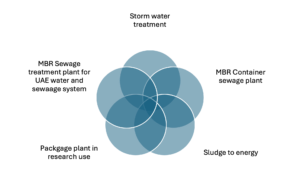
Figure 1:Summary of XYZ Categories of spend
Source: Summarised from XYZ Organisation website
Further, the success of XYX is achieved through an increased teamwork and collaboration with other organisations for success in their operations. For success of their operations, they engages different suppliers/vendors in a collaborative relationship. This is enhanced by strict adherence to various terms and conditions of these contracts.
1.2 Context of the Selected Contract
For the identified contract terms and conditions are used in the organisation construction of sewerage pipelines (sewerage networks). With the contact terms and conditions titled “construction works” is hence standard/blanket terms and conditions which are used in the organisation projects. This is particular for the high risk and high value contracts such as construction. XYZ spends approximately AED500 Million in their different construction projects of sewerage plants.
In order to understand how the identified contract (sewerage contracts) is important in context of XYZ organisation, stakeholders analysis can be carried out. This is by application of Mendelow Matrix (Farshid et al., 2022);
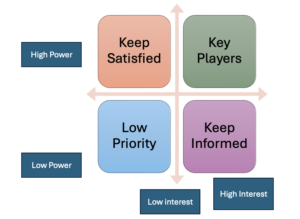
Figure 2: Mendelow Matrix Analysis Summary
Source: Summarised from (Farshid et al., 2022)
Low Priority- For this category which is made up of UAE local population where XYZ organisation is based and also the regulators in the water and sewerage sector must be continuously consulted for ensuring that the risk is appropriately managed. The appropriate time management guarantee allocated risks are managed successfully.
Key Players- With low power and high influence, the management teams in XYZ and also the legal departments are tasked with ensuring they mitigate any potential risk successfully. This is as they are directly influencing entire stakeholders relations in attaining PS&M results.
Keep Informed- The XYZ supplier teams, PS&M and other vendors, clients and finance department carry the risk of unsuccessful contract management process. By successfully initiating the terms and conditions specifications, they improve team work, consultation scope and exchanging data.
Keep Satisfied– With Low power and interest, the competitors and board of management are required to be satisfied with how the terms and conditions ae rolled out in the PS&M operations. This is intended to mitigate any evident gap in the risks, they ensure terms and conditions also mirror the local, regional and international legislations.
In summary, for the different identified stakeholders groups in XYZ, they have a major role to play in management of risks in supply chain. This is since their appropriateness of the terms and conditions are in alignment with CIPS Module notes Contract Management Cycle. As evidenced in CIPS (2023), the cycle “detail the strategy pursued for recording contracts details and tracking of their interactions with the businesses.
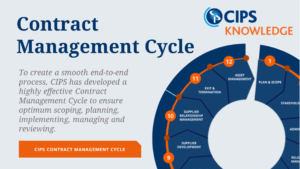
Figure 3:CIPS Contract Management Cycle
Source: CIPS Module Notes
As part of the various stages, the terms and conditions are essential for guiding how risks are shared as stipulated in their terms and conditions. The risks are finances, legal-based, brand and security of all stakeholders engaged.
1.3 Terms and Conditions Background
For the broad construction works for sewerage networks as summarised in appendix 1 are grouped into the general terms and conditions, special terms and conditions and also including the terms and conditions and specifications. A summary of this is as illustrated in the following;
Figure 4:Specifications and categories
Source: CIPS guidance notes
From the various specifications (figure 4), it is evident that functional, performance, conformance and detailed conclude the classification informed by vulnerability & risk and relative value/impact. In XYZ, the terms and conditions are more classified into performance. Construction of sewerage demand more performance owing to high level of being vulnerability and relative value. The reason for this is noted in Collier and Sarkis (2021) that the supply chain attacks and infringement are increasingly impacting on costs to organisations. Hence, the terms and conditions are essential to be initiated at the start of the contract implementation to ensure a mutual-based understanding on the overall requirements of the contract.
2.0 Explanation of Terms and Conditions
2.1 Risk of Poor Quality
For the sewerage networks construction in XYZ, quality is defined as “approach of ensuring the process achieve organisation standards”. In Villena and Gioia (2020), the quality is established through planning process, verifications and review of the services acquired. The quality is measured through the adoption of quality metrics such as defect rates of the sewerage networks and clients complaints. This is supported in the XYZ terms and conditions which note;
Hence, from these terms and conditions, the sewerage networks under construction must meet clear stipulations and expectations in quality control. In regard to quality, the potential of poor quality is mitigated by use of risk register. This is as summarised in table 1;
Table 1:Sewerage Networks Contracts Risk Register
Source: Summarised form CIPS Module Notes
| Risk ID# | Date of raising risk | Explained | Likelihood | Impact | Severity | Owner | Mitigating strategies |
| 1 | 5th October | Sewerage network timeline of implementation unclear | High | Medium | Low | Contracting entities | Detailed information on the contract implementation and mitigating entire gaps |
| 2 | 15th November | Clear deliverables of sewerage network unclear | Medium | High | High | XYZ management | Elaborate deliverables in line with stakeholders initiated |
| 3 | 20th January | The schedule of different phases of sewerage network implement networks do not elaborate | High | Low | High | PS&M Teams | Clear scheduling in line with stakeholders expectations |
| 4 | 10th February | KPIs and SLA’s among the different suppliers not effective | High | High | Medium | Admin and PS&M in XYZ | Initiating SMART KPIs in form of objectives and SLAs to be met |
Hence, the contract terms and conditions protect XYZ Sewerage Networks construction from the risk of poor quality. As evidenced in Sharma et al. (2020) the quality aspects managed include unfavourable contractual terms, delays, contractual disputes with suppliers and financial issues. These details are stipulated in the Quality Control Plan (QCP) introduced in the organisation. Therefore, this is a condition and not a warranty with contact dismissal faced when it is breached. The terms and conditions note;
With the contract being used in most of their construction projects, it is not specific on how the construction projects are impacted by the quality issues. This inform the need for linking construction projects with specifications of their implementation. There is a link to statutory implied terms which include duty of care for others in the construction process. This is since it is an implied clause from UAE legislations. This is clear embrace of all requirements in the contract.
2.2 Risk of Extension of Time
This is defined as “a request for moving completion data of a procurement and supply process owing to cause that are not
Please click the following icon to access this project in full