(Solution) 5CO02 one appropriate analysis tool and one appropriate analysis method that Camellia might apply to diagnose issues, challenges, and opportunities
Solution
AC1.2 Evaluating Tools and Methods Effectively
Evaluation of an Analysis Tool: SWOT Analysis
A suitable analysis tool for Camellia’s People Team is SWOT analysis (Strengths, Weaknesses, Opportunities, and Threats). SWOT is a structured framework used to assess internal and external factors affecting organisational performance. In people practice, it helps HR teams diagnose workforce issues by identifying internal capability gaps and external labour market pressures (CIPD, 2025c).
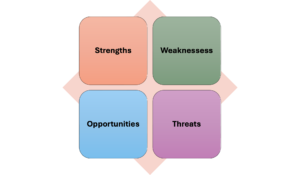
For Camellia, SWOT can be used to analyse challenges in recruitment, onboarding, reward systems, and learning and development, particularly after concerns raised by the Senior Management Team regarding weak data insight capability.
The strength of SWOT lies in its simplicity and accessibility, making it useful for HR teams that are still developing analytical maturity. It enables cross-functional discussion and helps the People Team communicate findings clearly to senior stakeholders. However, its main limitation is that it is descriptive rather than analytical; it identifies issues but does not quantify their impact or determine causal relationships. CIPD notes that effective people analytics requires moving beyond descriptive identification of issues toward evidence-driven interpretation and action (CIPD, 2025c). Therefore, SWOT alone may oversimplify complex people challenges if not supported by data.
Evaluation of an Analysis Method: Descriptive People Analytics
A suitable analysis method for Camellia is descriptive people analytics, which involves analysing historical HR data to identify patterns and trends (CIPD, 2025b). This may include turnover rates, recruitment cycle time, onboarding satisfaction scores, and employee engagement survey results. Descriptive analytics is particularly relevant for organisations like Camellia that are building foundational data capability.
The strength of this method is that it provides clear, measurable insights into what is happening within the workforce. For example, it can reveal whether turnover is higher in specific departments or whether onboarding satisfaction has declined over time. This supports evidence-based decision-making and improves transparency in HR reporting. However, its limitation is that it does not explain why issues are occurring or predict future outcomes. Gupta and Sharma (2023) argue that while descriptive HR analytics improves visibility, deeper diagnostic and predictive methods are required to generate strategic insight.
Conclusion……
Please click the following icon to access this assessment in full