TL2PRM – Project Management
Solution
Executive Summary
Oman construction sector is experiencing the major change due to the sustainability requirements, increased energy prices, regulatory requirements, and strategic directions of Oman Vision 2040. The national energy consumption is an important part of commercial buildings, especially, which introduces the urgent necessity to find smart energy-efficient infrastructure solutions. It is on this background that the GreenBuild Oman project suggests to develop the smart and energy efficient commercial building that incorporates the sustainable construction technologies and intelligent building management systems.
The overall goal of the project is to provide a commercially viable environmentally responsible building that ensures maximum energy consumption, minimises operation cost and occupant comfort by using renewable energy systems, smart automation as well as sustainable materials. The project has a structured approach to project management, including the detailed planning of time, cost, scope, and resources that it supports with the experience of the recognised tools like the Work BreakDown Structures (WBS), PERT analysis, network diagrams, and financial appraisal methods.
Financially, the project is set out to generate long-term value in terms of minimised energy spend, enhanced asset value, and enhanced competitiveness in the market that will be evaluated with Net Present Value (NPV) analysis and Payback Period analysis. Simultaneously, the overall risk management framework will be utilised to detect, examine, and eliminate the major project risks related to construction, the use of new technologies, adherence to the regulations, and marketing uncertainty.
On the whole, the presented project GreenBuild Oman can be used to illustrate that modern project management methods may be successfully implemented in a business environment to enhance the goals of sustainable development as well as provide tangible economic and operating advantages.
Declaration
I declare that we have personally prepared this assignment. The work is our own, carried out personally by us unless otherwise stated and has not been generated using Artificial Intelligence tools unless specified as a clearly stated approved component of the assessment brief. All sources of information, including quotations, are acknowledged using the appropriate citations and references. We declare that this work has not gained credit previously for another module at this or another University.
I understand that plagiarism, collusion, copying another student and commissioning (which for the avoidance of doubt includes the use of essay mills and other paid-for assessment writing services, as well as unattributed use of work generated by Artificial Intelligence tools) are regarded as offences against the University’s Assessment Regulations and may result in formal disciplinary proceedings.
I understand that by submitting this assessment, we declare ourselves fit to be able to undertake the assessment and accept the outcome of the assessment as valid.
Table of Contents
2.0 Task 1: Market Analysis, Project Charter, and Work Breakdown Structure. 2
2.1 Market Trends and Opportunities 2
Table 2.8: Roles and Responsibilities 4
2.9 Work Breakdown Structure (WBS) 4
Table 2: summary of the WBS for GreenBuild Oman. 4
3.0 Task 2: Project Scheduling and Critical Path Analysis. 5
3.1 Assigning Predecessors and Successors 5
Table 3.1: Predecessors and Successors. 5
3.2 Optimistic, Most Likely, and Pessimistic Durations. 6
Table 3.2: PERT Durations, Expected Time, Variance, and SD. 6
3.3 Network Diagram and Critical Path. 6
3.4 Analysis and Interpretation. 6
4.0 Task 3: Slack Analysis and Schedule Flexibility. 7
4.1 Identification of Activities with Slack. 7
4.2 Expected Project Duration and Variance. 7
4.3 Impact of a 4-Week Delay. 8
5.0 Task 4: Financial Analysis and Risk Management 9
5.1 Cash Inflow Projection (5 Years) 9
5.2 Net Present Value (NPV) and Payback Period. 9
5.3 Identification of High- and Low-Risk Activities 10
Figure 5.4: Gantt chart for Risk-Assessed Activities 10
5.4 Likelihood vs Impact Matrix. 11
Table 5.4: Summary of Likelihood vs Impact Matrix 11
1.0 Introduction
1.1 Background
GreenBuild Oman is a proposed smart, energy-efficient commercial building in accordance with Oman Vision 2040 and enhancing sustainable development, resource use, and infrastructure development of the private sector (Oman Vision, 2021). The project serves the need to deal with the increased consumption of energy in the commercial sector of Oman due to urbanisation, foreign investments, and traditional construction activities. GreenBuild Oman will strive to maximise energy consumption, lower operational expenses, and prove the financial and environmental feasibility of green buildings by incorporating easily sustainable materials, solar photovoltaic systems, and smart management of buildings. Supplier sustainability, local content and adherence to changing environmental standards are also given prominence in the project.
2.0 Task 1: Market Analysis, Project Charter, and Work Breakdown Structure
2.1 Market Trends and Opportunities
Commercial real estate and building industry in Oman is undergoing a massive change, which is fuelled by sustainability requirement, urbanisation, and economic diversification agenda as stipulated by the Oman Vision 2040 (Oman Vision, 2021). The fast urbanisation of Muscat and other large cities has led to the higher demand of modern commercial facilities and the rise of energy prices and environmental standards has generated the strong desire to find the smart and energy-efficient constructions. Deloitte (2024) states that the implementation of sustainable building technologies, such as the use of energy-saving HVAC systems, the integration of renewable energy, and the use of smart building management systems, is becoming a critical competitive positioning factor in the Omanian market.
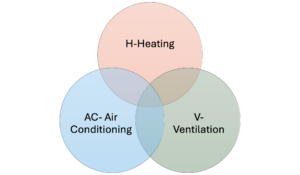
Moreover, the global experience shows that the operational expenses of commercial structures with the adoption of green building principles are reduced by up to 30 percent, and their tenants have an increased level of satisfaction (World Green Building Council, 2022).
The trends depict an opportunity in the market to create a flagship smart energy-efficient commercial building since it not only conforms to the national sustainability aims, but also portrays the commercial feasibility. The project incorporates the latest technologies and the principles of sustainable construction, which makes it one of the models in the future development of Oman.
2.2 Project Name
“Development of a Smart, Energy-Efficient Commercial Building Using Sustainable Construction Technologies at GreenBuild Oman” captures the strategic intent, highlighting sustainability, smart building technology, and Omani context. The name communicates the dual focus on environmental responsibility and commercial feasibility.
2.3 Project Charter
The section gives the Project Charter of GreenBuild Oman which gives the aim and objective, scope, key deliverables of the project, project team roles and work breakdown structure. This model forms the basis of project planning, allocation of resources, scheduling, and budgeting.
2.4 Aim
The aim of project is to create an intelligent and energy-efficient commercial building in Oman that is supposed to maximise energy consumption, minimise operational expenses, and act as an example of sustainable construction methods (Deloitte, 2024).
2.5 Objectives
Project objectives are precise objectives that will be used to plan and implement. They include:
- Adopt green building technologies and materials in order to have energy efficiency.
- Instal renewable energy sources, such as solar photovoltaic panels to decrease grid reliance.
- Instal a smart Building Management System (BMS) to streamline operation.
- Make sure that there is adherence to Omani construction regulations and standards of sustainability.
- The project must be completed in a 52-weeks and USD 4.5 million budget.
2.6 Scope of the Project
GreenBuild Oman involves planning, designing, constructing, and commissioning of a smart energy-saving commercial building in an urban location in Oman. Sustainable materials, renewable energy systems and smart building technologies are incorporated in the project to maximise energy efficiency and minimise the environmental impact.
The main factors in the scope of the project are:
- Construction and engineering design.
- Sourcing of environmental-friendly materials.
- Installation of energy saving HVAC systems.
- Installation of solar PVs.
- This involves installation of an intelligent building management system.
- Commissioning, end-user training and testing.
The project also ensures compliance with Omani building regulations and sustainability standards. Activities outside the project scope include post-construction property management and large-scale urban infrastructure development beyond the building footprint. The project is planned within a defined budget and timeline to ensure cost control and timely delivery, providing a structured foundation for subsequent scheduling, financial, and risk management analyses.
2.7 Key Deliverables
The key deliverables define the tangible project outputs, which will be attained with the successful project completion. These include:
- Architectural and engineering designs.
- Acquisition and installation of greener materials.
- Green HVAC and lighting.
- Solar photovoltaic panels
- Integrated smart BMS
- Commissioning, handover documentation and testing.
2.8 Project Team and Roles
Project team is charged with the responsibility of executing and monitoring project activities. The major team members and their roles are described in table 2.8:
Table 2.8: Roles and Responsibilities
| Role | Responsibility |
| Project Manager | Overall coordination and timeline management |
| Construction Manager | Supervises site activities and contractors |
| Sustainability Consultant | Ensures energy efficiency and compliance |
| Procurement Specialist | Manages sourcing and vendor coordination |
| Electrical & HVAC Engineers | Install and commission energy systems |
| BMS Specialist | Integrates and configures smart building technologies |
| Safety Officer | Ensures site safety and regulatory compliance |
| Finance Officer | Tracks budget, cost control, and financial reporting |
2.9 Work Breakdown Structure (WBS)
The Work Breakdown Structure (WBS) is used to have a clear breakdown of all the project activities in terms of duration and budgetary allocation (Singh, 2022). This enables proper planning, allocation of resources and scheduling. Table 2 means that all the activities are arranged in a logical sequence, which enables successful distribution of time, resources, and costs. The following sections of the report will use this WBS as the basis of further PERT analysis, network diagrams, and financial evaluation.
Table 2: summary of the WBS for GreenBuild Oman.
| Activity No | Task Description | Duration (Weeks) | Budget (USD) |
| 1 | Project initiation and approvals | 2 | 50,000 |
| 2 | Site survey and feasibility study | 3 | 80,000 |
| 3 | Architectural design | 4 | 150,000 |
| 4 | Structural engineering design | 4 | 140,000 |
| 5 | Sustainability assessment | 2 | 40,000 |
| 6 | Procurement planning | 2 | 30,000 |
| 7 | Material sourcing | 4 | 500,000 |
| 8 | Site preparation & foundation works | 4 | 400,000 |
| 9 | Structural construction | 6 | 1,200,000 |
| 10 | Electrical and HVAC installation | 5 | 600,000 |
| 11 | Solar PV system installation | 3 | 250,000 |
| 12 | Smart BMS integration | 4 | 120,000 |
| 13 | Interior works and finishes | 4 | 350,000 |
| 14 | Testing, commissioning, and quality assurance | 3 | 150,000 |
| 15 | Handover and training | 2 | 80,000 |
| Total Duration | 52 weeks | ||
| Total Budget | USD 4,500,000 |
3.0 Task 2: Project Scheduling and Critical Path Analysis
Project scheduling plays the vital role of successful completion of the GreenBuild Oman project. In this task, the project management tools are used to set up the sequence of activities, compute the durations expected on the project based on PERT and the critical path is computed. The analyses offer a systematic way of tracking project schedule, dependency identification and dealing with any possible delay.
3.1 Assigning Predecessors and Successors
To establish logical links among tasks, predecessors and successors are established in order to maintain a smooth flow of the project (Keita, 2025). Task that cannot commence before the end of the other tasks are defined as successors and this aids in creating a coherent schedule. The table 3.1 represents the initial 15 core activities of the WBS and its logical relationships.
Table 3.1: Predecessors and Successors
| Activity | Task Description | Predecessor(s) | Successor(s) |
| A1 | Project initiation and approvals | – | A2 |
| A2 | Site survey and feasibility study | A1 | A3 |
| A3 | Architectural design | A2 | A4 |
| A4 | Structural engineering design | A3 | A5 |
| A5 | Sustainability assessment | A4 | A6 |
| A6 | Procurement planning | A5 | A7 |
| A7 | Material sourcing | A6 | A8 |
| A8 | Site preparation & foundation works | A7 | A9 |
| A9 | Structural construction | A8 | A10 |
| A10 | Electrical and HVAC installation | A9 | A11 |
| A11 | Solar PV system installation | A10 | A12 |
| A12 | Smart BMS integration | A11 | A13 |
| A13 | Interior works and finishes | A12 | A14 |
| A14 | Testing, commissioning, and quality assurance | A13 | A15 |
| A15 | Handover and training | A14 | – |
3.2 Optimistic, Most Likely, and Pessimistic Durations
With the help of the PERT (Programme Evaluation and Review Technique) technique, the pessimistic (P), most likely (M), and optimistic (O) durations are allocated to every activity. The projected life (TE) will be computed as:
Total Duration= Expected time (TE) = (optimistic + 4* most likely + pessimistic)/6
Variance (var) = (pessimistic – optimistic)/6) ²
Standard deviation (SD) = √ var…