(Solution) MBA MGT506 Human Resource Management
Solution
Contents
2.0 Company Selection and Background. 2
3.1 Recruitment and Talent Acquisition. 3
3.2 Learning and Development 3
3.4 Compensation and Rewards 4
3.6 HR’s Role in Organizational Change, Innovation, and Growth. 5
4.1 Talent Retention and Turnover 6
4.2 Employee Engagement and Motivation. 6
4.3 Skills Gap and Workforce Readiness 6
4.4 Diversity and Inclusion. 7
4.5 Managing Change Fatigue. 7
5.0 Recommendations & Solutions 7
5.1 Introduce a Structured Career Development Framework. 7
5.2 Strengthen Employee Engagement Programs 8
5.3 Expand Digital Upskilling and Continuous Learning. 8
5.4 Promote Diversity and Inclusive Leadership. 9
5.5 Implement a Change Management Support System.. 9
1.0 Introduction
The project outlines how Human Resource Management (HRM) strategies influence the success of large organizations in the Gulf Cooperation Council (GCC) region. It seeks to establish that HR activities are not only administrative functions but also the strategic drivers that steer organizations towards their strategic goals. The primary objective of the project is to investigate the HRM practices of STC Group so as to comprehend how people management has helped the organization to prosper, innovate, and maintain competitive edge over the years.
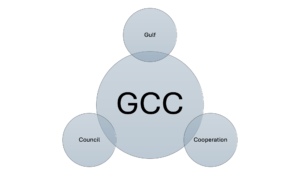
The paper will explore five essential HR practices, which are aligned to the organizational strategy and how they influence goals including performance improvement, employee engagement, and digital transformation. It will also recognise five key HR challenges that the organisation is currently experiencing, some of which are likely to influence talent retention, skill development, and organisational culture. This analysis will then form the basis on which the project will offer practical, research-based solutions that can help the company improve its HR effectiveness and overall business performance.
2.0 Company Selection and Background
To conduct this research, I have selected STC Group (Saudi Telecom Company), a telecom and digital company, headquartered in Riyadh, Saudi Arabia. STC was established in 1998 and has since become one of the largest and most powerful telecom operators in the GCC region (STC Group, 2025). It is based in Saudi Arabia, Bahrain and Kuwait and is present in the Middle East, North Africa and some parts of Europe.
STC is a big employer by size and scale, having almost 19,900 employees as of its recent reports. The group also has substantial revenues. In 2023/2024, revenue was about SAR 72-75 billion, with strong year-on-year growth seen in several of its business lines (STC Group, 2024). Its net profits have also shown improvement, reflecting both expansion and efficiency efforts.
STC offers a wide portfolio of services such as mobile voice and data, fixed Internet and broadband, cloud computing, Internet of Things (IoT), digital payments and fintech (through stc Pay/stc Bank), cybersecurity, content & entertainment streaming, and digital platforms (STC Group, 2024b). With over 25 data centers (both operational and under construction), more than 20,000 telecommunications towers across multiple countries, and participation in submarine cable systems, its infrastructure footprint is large. The group also enjoys high market share in many of its core services in Saudi Arabia, for example in mobile and fixed broadband.
Finally, its financial, technological and brand strength make it a benchmark in the telecom/digital sector in the region. With a strong brand valuation, high market capitalization (among the top in MENA telecoms), and leadership in subscriber numbers (mobile and fixed), STC Group provides a rich case for studying how HRM practices can help sustain competitive advantage in a large, complex, and rapidly changing business environment.
3.0 Strategic Alignment
STC Group has positioned itself as a digital and telecommunications industry leader in the GCC region. This is due to the fact that its Human Resource Management (HRM) practices are aligned with its strategic vision. The company strategic focus is on digital transformation, customer experience, innovation, and sustainability. HR implements the required policies that help the company to meet these goals such as recruitment and acquisition of talent, learning and development, performance management, compensation and rewards and employee’s engagement.
3.1 Recruitment and Talent Acquisition
At STC, recruitment is not only about filling job positions but identifying individuals who can aid in the realization of the companies’ digital ambitions. The HR department works in close coordination with business leaders to hire the best talent with important skills in cybersecurity, artificial intelligence, and cloud computing. As Sajin (2019) explains, this approach to recruitment will help STC achieve its vision of becoming the largest digital facilitator in the region. The company uses digital recruitment tools, partners with universities, and provides internship programmes to recruit future talent. Singh (2020) observed that STC has a program called Future Leaders Program to identify high-potential graduates and provide them with the training necessary to transform them into leaders within the company. This aligns with the company’s emphasis on innovation and the capacity to develop local human capital as outlined in Saudi Vision 2030. Using recruitment technologies such as AI-based applicant screening and competency models, HR makes hiring decisions effective and objective. Such proactive strategy transforms recruitment into a way of building capabilities, changing business, and enabling the company to stay competitive in the fast-changing telecom and digital market.
3.2 Learning and Development
Learning and Development (L&D) at STC is significant in maintaining innovation and operational excellence. The firm owns the STC Academy, which educates all employees in technical, managerial, and leadership skills (STC Group, 2025b). This academy connects business objectives with personal career goals and makes sure that employees learn skills required by the current digital transformation. The organization offers employee training to learn data analytics, digital strategy, and automation, which helps employees and the company adapt quickly to technological changes (Gomathi et al., 2023). The L&D emphasis underpins strategic aim and priorities of innovation leadership and customer experience. Moreover, the academy promotes and holds employees responsible in their learning process. According to Achdiat et al. (2022), this culture encourages retention of talent within the organization.
3.3 Performance Management
The performance management at STC is founded on transparency, accountability and result alignment with business. The HR department makes sure that the goals of every employee are aligned with business priorities such as the digital transformation, customer experience and revenue growth, which are the key priorities. STC applies the concept of Performance Excellence, under which the HR department utilizes Key Performance Indicators (KPIs) and regular performance discussions to identify the employee performance contribution (The KPI Institute News, 2025). This system also makes sure that managers take into account the outcome and behavioral goals, and promotes the system of fairness and continuous feedback. Moreover, HR uses data analytics systems to recognize performing employees and to reveal the areas where continuous support should be offered. STC promotes coaching culture by having leaders as mentors to their respective employees towards achieving shared goals as set in the organizational strategy. The practice promotes teamwork, responsibility, and inspiration (Baker et al., 2021). HR promotes a culture of results by aligning personal targets with those of the organization, inspiring innovation and growth (Bristol-Alagbariya et al., 2022). Employees know what to expect, feel motivated to deliver more than is expected, and, lastly, make the firm successful in the digitally competitive market.
3.4 Compensation and Rewards
The compensation and reward strategies used at STC are implemented to attract, retain, and motivate the best talent and also to ensure that the larger business objectives are achieved. The company has competitive salaries, which takes into account personal performance and market standards in the telecom and the digital industry. In addition to the minimum wage, STC is offering value bonuses, performance pay, stock options, and reward awards, which, according to Aalders (2023), encourage a culture of success and responsibility. The HR activities are strategic in that they ensure that compensation is equitable, open, and consistent with the business performance of the organization. This is essential to develop trust and engagement amongst its employees, which are the main factors to innovative growth (McMullen and Dahle, 2024). The reward system also promotes diversity and inclusion through equal remuneration of equal work and provision of career development opportunities. Moreover, flexible work, learning opportunities, and wellness programs are among the non-monetary incentives that STC uses to spur work-life balance to enhance productivity and creativity (Dumitru & Popescu, 2025).
3.5 Employee Engagement
Employee engagement is regarded as a pillar of innovation and high performance at STC. The HR department fosters a workplace where employees are respected, informed and have a sense of belonging to the mission of the company. These initiatives are created to build solid connections and positive communication between the management and employees and can be used to make sure that workers know that their opinions are listened to (Pincus, 2022). Engagement analytics are also utilized by HR to gauge satisfaction, find out concerns, and apply specific interventions to enhance morale and retention. Another way HR fosters a collaborative and inclusive spirit is the ability of different teams to share ideas openly. This culture of engagement promotes the strategic objective of STC, which promotes innovation and agility. STC enhances productivity by paying attention to engagement, which facilitates loyalty and decreases turnover (Riyanto et al., 2021). Employees who are engaged will offer high quality services, and will be able to creatively contribute to new projects, which will enable the company to retain its leadership in the telecom and digital solutions market.
3.6 HR’s Role in Organizational Change, Innovation, and Growth
HR in STC is one of the driving forces of organizational change and innovation-driven growth. The readiness of STC to transform its model of a traditional telecom operator into a diversified digital entity required a more strategic and culture-driven approach. In this respect, as observed by Dwivedi et al. (2021), strategic workforce planning falls under the responsibility of HR, since it is expected to make sure that the HR of STC complements its business models of fintech, cybersecurity, and cloud business. HR takes care of the technological and work process changes and assists the employees to cope with changes. Their emphasis on agility, collaboration, and adaptive learning encourages an enabling culture towards innovation. Moreover, HR helps employees engage with business issues positively by undertaking programs that promote internal innovation and cross-functional teamwork. Growth is also managed by HR in terms of recruitment, training and reward systems alignment, where employee engagement is emphasized (Mishra, 2024). That satisfies the shift in the business requirements and develops the competitive advantage of STC as a regional digital transformation leader.
4.0 HR Challenges and Gaps
4.1 Talent Retention and Turnover
A notable HR issue facing STC is how to retain its highly skilled staff, especially in competitive jobs in the digital and technology sector. The telecom and IT sectors have experienced a high level of growth in the GCC. A significant number of talented workers, in turn, turn into the target of international corporations that can pay more and provide them with greater flexibility of working (Al-Asfour et al., 2022). The compensation and benefits package offered by STC is competitive, yet some employees will still leave the company because of the lack of career development opportunities and workload. This type of turnover is disruptive to the working process of the organization and getting new talent is expensive. Employees working in technical-related fields, especially the young ones, would like to have a faster rate of promotion and autonomy, which the hierarchical structure of STC do not support (Fasbender et al., 2021).
4.2 Employee Engagement and Motivation
Although there has been some positive developments in the workplace culture of STC, there is still a challenge of ensuring that all the departments are fully engaged. The constant change and digital
Please click the following icon to access this assessment in full
Related to: https://rankedprofessionals.com/downloads/solution-mba-mgt504-strategic-management/