(Solution) Assessment ID / CIPD_5CO02_26_01 5CO02 Evidence-based practice
Solution
. AC1.1 Evaluating Evidence-Based Practice Concept
Evidence-based practice (EBP) in people management can be described as a methodical process of decision-making based on the most effective available evidence, in addition to professional experience and stakeholder values, as opposed to basing decisions on assumptions, experience, or personal views. This may be applied in HR practice by combining organisational data, employee insights, external research, and practitioner expertise and enhancing the level of quality of decisions. According to CIPD, EBP is a scientific practice that enhances the decision-making of people; it constitutes the synthesis of various sources of evidence, as well as the minimization of bias in HR judgement (CIPD, 2025a). This is the reason why the EBP is especially applicable to Camellia in which the People Team has been accused of poor usage of data insights.
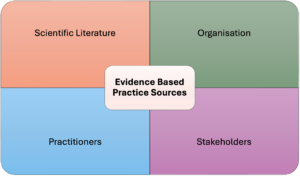
EBP is valuable because it enhances objectivity and accountability in the process of decision-making among people. It minimizes the use of intuition and establishes HR practices that can be associated with quantifiable results, including performance, retention, and engagement of employees. But there are limitations to EBP (Pitsillidou et al., 2023). It is very reliant on the quality and accessibility of information and low-quality or unfinished information may result in false inferences. It also demands analytical skills in HR teams, which might not be developed at first in those organisations where a data-driven culture is being adopted.
Example 1: Recruitment and selection decision-making.
The EBP can be used in the recruitment process of Camellia through the integration of external labour market information with internal information regarding hiring (turnover, time to fill, quality of hire, etc.) and the use of structured interviews information. As an example, in case the turnover is high during the first six months, the People Team can compare the selection criteria, job descriptions, and onboarding processes to identify any possible discrepancies. Okon, Somtochukwu Odionu and Bristol-Alagbariya (2024) emphasize that HR analytics enhances better workforce decision-making when organisations are able to correlate the HR data with the profit-related performance. This makes sure that decisions to recruit are made on the basis of evidence on what leads to long term success instead of being based on which manager prefers a particular person.
Example 2: Learning and Development (L&D) Investments Decisions.
The pulse survey feedback, skills gap assessment and performance appraisal data also allow Camellia to make decision on which training programmes to prioritise on using EBP. Where employees mention that they lack confidence in their leadership skills, the People Team can confirm this fact through the data on promotion readiness and then plan specific leadership development programmes. Kiran, Chaubey and Shastri (2023). stress that people analytics is more effective in improving HRD performance in instances where data are relied on to detect capability gaps and assess intervention effectiveness. This makes sure that the L&D investment can be focused on those areas which will generate organisational value.
Conclusion
EBP enhances the quality of decisions, transparency, and strategy alignment within the People Team at Camellia. Although it needs good data systems and analytical power, its advantages surpass its disadvantages since it allows people decisions to be more constant, unbiased, and performance-linked.
AC1.2 Evaluating Tools and Methods Effectively
Evaluation of an Analysis Tool: SWOT Analysis
SWOT analysis (Strengths, Weaknesses, Opportunities and Threats) is an appropriate analysis tool of Camellia People Team. SWOT is a systematic model to evaluate in-house factors as well as external influences on performance of an organisation. In practice of people, it aids HR departments to diagnose workforce problems by determining internal capability gaps and external labour market demands (CIPD, 2025c). In the case of Camellia, the challenges involved in recruitment, onboarding, reward system as well as learning and development can be analysed using SWOT analysis following frailties expressed by a Senior Management Team about lack of proper data insight ability.
One of the advantages of SWOT is that it is a simple analysis tool and is accessible to HR teams that are yet to attain some analytic maturity. It allows cross-functional discourse and allows the People Team to convey findings in an understandable way to the senior stakeholders. The major limitation of it though is that it is descriptive and not analytical; it determines, but not the magnitude of issues and how they cause each other. According to CIPD, effective people analytics involves making the transition to descriptive identification of the problem, as opposed to evidence-based interpretation and action (CIPD, 2025c). Thus, it is possible that without data, SWOT itself can reduce complex people issues to a simplistic level.
Evaluation of an Analysis Method: Descriptive People Analytics
An efficient approach to analyse Camellia should be descriptive people analytics that means that the past HR data are analysed to discover patterns and trends (CIPD, 2025b). This can include the turnover levels, time of recruitment, onboarding satisfaction rating, and survey of employee engagement. The concept of descriptive analytics becomes especially applicable to organisations that are setting the foundations of data capability, such as Camellia.
The advantage of this approach is that it gives clear, quantifiable information that concerns what is transpiring in the workforce. As an illustration, it is able to show turnover in certain departments or how satisfaction during the onboarding process has deteriorated over the years. This assists in evidence-based decision-making, and enhances transparency of HR reporting. Nevertheless, it has a weakness because it does not stipulate why problems are taking place or forecast future. Muller (2025) believe that to gain strategic insight, improving data visibility is necessary, but descriptive HR analytics needs a more profound diagnostic and predictive approach.
AC1.3 Applying Critical Thinking Principles Effectively
Understanding Critical Thinking in HR Practice
Critical practice in individuals is the mindful skill to reason out information without bias, and question assumptions and make evidence-based decisions (Young, 2023) without relying on intuition or prejudice. In the case of Camellia, this is necessary since the People Team will likely enhance the utilization of data insights in decision-making. In the absence of critical thinking, HR can make decisions based on the views of senior managers, and not the workforce evidence. The CIPD highlights the importance of evidence-based practice based on critical thinking, as HR professionals need to assess the quality of evidence, explore multiple perspectives, and eliminate cognitive bias in making people decisions (CIPD, 2025d).
Principle 1: Objectivity and Bias awareness……
Please click the following icon to access this assessment in full
Related with: https://rankedprofessionals.com/downloads/solution-cipd-level-5-5c002-new-evidence-based-practice/