(Solution) CIPS Corporate Award Programme PIN
Solution
Executive Summary
This integrated assessment focuses on developing a basis of a formal commercial negotiation. This is through explaining the key facts, data and approaches which are embraced in negotiation process. The negotiation plan has been developed by focusing on Saudi Arabia Maaden Petrochemical Company (SAMAPCO) and in particularly the logistics services category. Specifically, the category of spend used is the logistics services which are managed by JAS Company in Saudi Arabia (KSA) which is a subsidiary of the organisation. The negotiation plan developed is informed by the Bailey et al. Negotiation Plan strategy.
The data and information used for sourcing data in this project has been sourced from internal documents, external sources from peer reviewed journals and quality webpages. Also, various frameworks have been embraced including Porter’s 5 Forces Analysis and STEEPLED analysis tool for evaluating market context and informing negotiation plan. By prioritising on how negotiation plan guide achievement of quality, delivery schedules, timing and amendments/variations and others, organisation needs and market pressures have been identified as instrumental.
The Key Findings in this report highlight negotiation plan as promoting stable win-win based relationships with entire suppliers with priority being on engaging best suppliers. Also, the key findings highlight through the use of commercial negotiation plan, priority is not majorly left on costs but broadly in timely access and control risks. Also, adequate planning is important to plan in an internal need’s context and assessment of risks and stakeholders involved. Another key finding in this report is that commercial negotiations plan positively contribute to achievement of value for money outcomes and having priority to different stakeholder’s interest. This is by successfully driving value for money outcomes and sustainability in relationships with suppliers of logistics spend area.
To manage the different gaps identified in process of working in this project, recommendations suggested are;
- Develop a holistic/merged Digital Procurement System (IDPS) to track negotiation plan
- A well detailed capacity development initiative to improve negotiation process
- Implement every quarter performance appraisal of suppliers to appreciate negotiation challenges encountered and mitigation
- Pursue risk-assessment process to identify risks and mitigate occurrence in sourcing logistics category
Table of Contents
1.1 Organisation Background. 4
1.2 SAMAPCO Procurement and Supply Management (PS&M) Department 5
1.3 Spend Category Selected. 6
2.0 Commercial Negotiation Plan. 7
2.1 Bailey et al. Negotiation Plan Model 8
3.1 Stage 1 (Internal and External Data sourcing) 9
Step 2: External Environment Analysis. 12
3.1.1 Suppliers Pricing Analysis. 12
3.1.2 Supply Market based Analysis. 14
3.1.3 Porter’s 5 Forces Analysis. 15
3.1.4 Kraljic Matrix Analysis. 19
3.1.4 Suppliers Preferencing Model 20
3.1.6 Supplier Key Accounts Management (KAM) 22
3.2 Teams responsibilities in Negotiation Plan. 23
4.0 Opening (Agenda Setting) Stage. 25
4.1 Identifying Negotiation Forms (Types) 26
4.2 Negotiation Strategy/Style. 26
4.3 Concessioning and Tactical 26
7.0 Bargaining Stage of Negotiation Plan. 28
9.0 Post-Negotiation Review Step. 29
10.0 Conclusion and Recommendations. 30
Figure 1:Summary of SAMAPCO organisation operations. 6
Figure 2:Suppliers List Framework Agreement Summary. 6
Figure 3: Stages of PSC in SAMAPCO.. 7
Figure 4:SAMAPCO Logistics Sub-Categories. 8
Figure 5:Negotiation Plan Stages summary. 9
Figure 6:Factors of Mendelow Matrix Analysis. 12
Figure 7:: Considerations in the External Environment Analysis. 13
Figure 8:: Considerations in the External Environment Analysis. 15
Figure 9:Factors considered in Supply Market Analysis. 16
Figure 10:Porter’s 5 Forces Analysis Summary. 17
Figure 11:Kraljic Matrix Analysis Summary. 20
Figure 12:Suppliers Preferencing Model. 22
Figure 13:French and Raven 5 Bases of Power Summary. 25
Figure 14:Thomas-Kilmann theory of bargaining. 29
Figure 15:Kolb Reflective Cycle.. 31
Table 1:Supply Market Analysis Summary. 16
Table 2:SAMAPCO SWOT Analysis. 23
Table 3:Summary of the Supplier Key Accounts Management (KAM) 23
Table 4:Opening/ Agenda Setting Stage. 26
1.0 Introduction
1.1 Organisation Background
Saudi Arabia Maaden Petrochemical Company (SAMAPCO) is used in this report operating as a subsidiary of Ma’aden organisation (Ma’aden, 2024). The organisation is ranked as a fast growing in the mining and chemicals industry internationally and Middle East region. As a result of their intense growth, it is currently positioned amongst the top 10 amongst all the existing mining organisations in regard to their market capital base. In the organisation active practice, they generate upto 300,000 metric tons of ethylene dichloride and 250,000 metric tons caustic soda product (Ma’aden, 2024a). Further, the organisation practice in petrochemical sector is facilitated by ability to product high-level quality products characterised with substantial quality where production is tandem or complying with international-level standards and entire demand. The vision of the organisation is “generating sustainable mining products with international positioning”. This is while the organisation mission being “leadership in development of petrochemical products in KSA by maximising value of mineral resources while similarly making sure they develop successfully KSA Global mining and petrochemicals industry. A summary of the organisation scope of operations is as illustrated in the following;

Figure 1:Summary of SAMAPCO organisation operations
Source: Summarised from internal documents
1.2 SAMAPCO Procurement and Supply Management (PS&M) Department
In line with SAMAPCO organisation structure, they operate a fully-fledged/stand-alone PS&M department mandated to develop successful suppliers’ relationships and contracting. A summary of PS&M function to develop agreements/negotiations plan are;
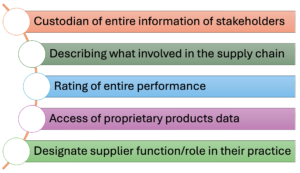
Figure 2:Suppliers List Framework Agreement Summary
Source: Summarised from CIPS Module Notes
In summary, SAMAPCO PS&M is involved in establishing a strategic Pre-Qualification Questionnaire (PQQ) intended for identifying most fitting supplier for them spend categories (University of Reading, 2024). They capitalise on the application of Procurement Supply Cycle (PSC) which is made up of the steps as illustrated in the following;
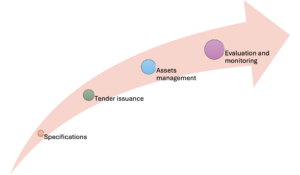
Figure 3: Stages of PSC in SAMAPCO
Source: Summarised from CIPS Notes
In summary, for the identified stages, the PS&M function is involved in guiding different commercial teams in analysis and costs break down for management of tendering and entire stakeholders relations management.
1.3 Spend Category Selected
In this integrated project, logistics sourced by SAMAPCO has been selected as the category of spend. In CIPS (2024) definition, logistics are identified to be “various forms of products and services sourced from different providers to implement an organisation active operations”. Post COVID-19 pandemic, different supply chain networks have been significantly disrupted. As a result, the need for logistics spend area have been on the rise. The various SAMAPCO sub-categories of spend and their budgetary amount allocated is summarised as follows;
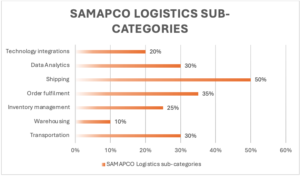
Figure 4:SAMAPCO Logistics Sub-Categories
Source: SAMAPCO internal documents
For SAMAPCO organisation, their operations in different chemicals sector in KSA, they are actively engaged in enhancing their access to the locations they are needed by their end-users. In overall, they incur upto SAR140 Million in implementing logistics sourcing process. This is identified in ChemOrbis (2017) as enhancing their efficiencies with mitigating encountered issues hindering leveraging on competitive advantage eliminated. The set of risks in supply chain network are also resolved which are prevailing Post-CCOVID-19 challenge. In logistics sourcing, this research recommendation is prioritising on integrating technologies in logistics sourcing. The relevance for this is improved efficiencies and effective scope in procurement strategy.
2.0 Commercial Negotiation Plan
In this integrated assessment, a formal commercial negotiation plan has been developed. The plan is guided by set terms and conditions of the contracts which govern the relationship of the logistics suppliers/vendors and SAMAPCO end-users. The negotiation plan include noting negotiation scope, timeline of implementation and deliverables to mitigate barriers hindering supply chain efficiency identified in past. Also, negotiation plan entail evaluating pay terms fixed and deliveries informed by preferences and predictability of the customers (CIPS, 2024b). Also, security challenges are essential in logistics due to how sensitive they are and data management. With the process involving outsourcing strategy, CIPS (2024c) identify the concept of intellectual property (IP) right important to evaluate people rights as part of development strategies, party-based logistics and assigned functions. Eventually, terms and conditions embraced in sourcing strategy are prioritised with exit strategy granting opportunities for contract termination also prioritised.
2.1 Bailey et al. Negotiation Plan Model
The relevance of embrace of this tool/model is to evaluate various stages and negotiation principle which guide sourcing identified category of spend to improve negotiation and entire stakeholders collaboration (CIPS, 2024c). The negotiation stages as stipulated by the model are;
Figure 5:Negotiation Plan Stages summary
Source: Summarised from CIPS Module Notes
Preparation/planning- At the start of negotiation process, clear definition of organisation needs is done, expectation set clear with potential hindrances identified. Considering logistics sourcing, quality expected, frequency/demand, key objectives and statutory compliance in negotiation is highlighted.
Opening- This entail initiating the negotiation with good relationships created having earlier identified what each stakeholder expect. For logistics sourcing, supplier is supposed to explain reason SAMAPCO is sourcing it for adding their value of operations. According to CIPS (2024d), the emotions are eliminated with constructive engagement enhanced while any misunderstanding eliminated.
Testing- The different parties demands met are identified, goals setting and likely barriers. In logistics sourcing, budget allocation in SAMAPCO is put into account with timelines prioritised. The different questions set, clarifying expectations and long-term scaling of negotiation is achieved.
Proposal & Bargaining- In sourcing for logistics, consultants are engaged to give solutions in line with clients needs, negotiation terms including setting payment and sustainability of the demand. Similarly, de Oliveira et al. (2021) note the scope of negotiation is evaluated, custom-made, contracts timeline and. Balance of demands in line with how viable the process is considered.
Agreement– With any battle of the forms mitigated, this stage include aligning the terms and conditions. The consultants in logistics sourcing execute exit clause (CIPS, 2025). In this stage, supply chain management strategies and their review in line with demand change are prioritised. The exit process include all parties expectations noted, functions and key performance indicators.
To conclude, the embrace of Bailey et al. negotiation model imply success in the negotiation plan. It assists in facilitating an opportunity for all stakeholders interaction, any ambiguous understanding eliminated while aligned with all stakeholders relations.
3.0 Preparation
3.1 Stage 1 (Internal and External Data sourcing)
For logistics spend category in SAMAPCO, analysis of internal data is important to optimise how resources are allocated, manage costs and guarantee service-level quality in their practice (CIPS, 2025). The best strategy entail;
Spend Analysis History analysed– This include focusing and analysing previous spending in logistics category by SAMAPCO. The areas of priority are spending patterns (budgetary allocation), assessment of successful vendor/buyers relations and costs changes informed by demand (CIPS, 2025a).
Analysing today and future sourcing demand– Having SAMAPCO expansion in different locations in KSA, achieving logistics needs would also surge. This imply management of their increased projects and to upgrade scope of their practice. As a best practice, forecasting demand in SAMAPCO increasing. This imply management of projects and upgrade their practice. In line with CIPS (2025b), accuracy forecasting demands enhance SAMAPCO ability to pursue sustainability of their contracts by involving logistics consultants. Securing a continuity in being competitive with less dependent for short-term oriented agreements made.
Verification– Taking into account of SAMAPCO logistics suppliers and consultants, being verified is essential. This is by prioritising on expert knowledge, compliance with logistics and service-based quality intended to attain set standards in SAMAPCO to source logistics.
- Analysis of Stakeholders Management
This is a relevant practice in the preparation stage of negotiation process. The management of stakeholders prioritise on the different stakeholders (logistics suppliers/vendors, PS&M and government authorities/regulators).
In this report, the analysis embrace the use of Mendelow Matrix analysis method which segment different stakeholders on their power and interest (CIPS, 2025b). The importance of stakeholder management is identifying individuals involved in providing contracts and signing them in a way which support strategic goals amongst the PS&M. This lead to negotiation process being efficient since procurement is in alignment with varying needs of stakeholders. This is appropriate in the overall procurement lifecycle of logistics. The Mendelow analysis use the factors in the following;
Figure 6:Factors of Mendelow Matrix Analysis
Source: CIPS Module Notes
Low Power; Low Interest- SAMAPCO board of management and the legal teams have low power and interest in the negotiation process. Their involvement in negotiation is ensuring adherence to set legislations, policy development and aligning organisation operations with negotiation process implementation.
High Power; Low Interest- The population in KSA where SAMAPCO operate greatly influence the negotiation outcomes in sourcing logistics. Similarly, the country government, regulators are tasked with the responsibility of approving quality to be considered as part of the negotiation process. Their core mandate is ensuring SAMAPCO successfully source logistics services with effective negotiation in place.
Low power; High Interest- For the logistics category vendor, PS&M teams of SAMAPCO, their have a huge interest in the success of negotiation process. They influence collaboration and sharing of information for effective stakeholders relations.
High Power; High Interest– SAMAPCO being a government organisation, they are actively engaged in the negotiation direction setting. Also, the end-users or their customers interests must be included in the eventual decision making.
Step 2: External Environment Analysis
In coming up with the commercial negotiation plan, pursuing a market analysis is core specifically in large projects pursued in SAMAPCO. This stage promote acquisition of knowledge on various external factors which define behaviours of suppliers, managing costs and logistics market environment to develop a PS&M system which assist achieving of organisation objectives. This is achieved through significant cost cutting and addressing external environment factors (Martinovic et al., 2022). The focus in the analysis is as illustrated in the following;
Figure 7:: Considerations in the External Environment Analysis
Source: Summarised from Internal documents for SAMAPCO
3.1.1 Suppliers Pricing Analysis
In the preparation phase of negotiation process, pricing analysis of the suppliers is done evaluating pricing strategies. As identified in CIPS (2025c) the priority is on being fixed, timely, providing materials and value-based costing embraced by SAMAPCO PS&M. This lead to proposal of fair-based costing strategy. The limitation of this is costing competitiveness and costs-based discrimination informing negotiation to source logistics category. Taking into account of logistics category in SAMAPCO, the negotiation process follows following approaches;
Pricing strategies– This is noted as inclusive of competitive-based pricing. In negotiation process, this is the preference since it contribute to identifying services providers incurred costs to compare with market-based rates in place. On basis of SAMAPCO expectation, consultants in outsourcing process assess all costs and comparative analysis pursued where medium price note on fair costs. This target low-level and high-positioned suppliers.
Indicators of pricing– For logistics sourcing negotiation process, the different indicators put int account include outsourcing process experiences and proficiencies in offering the logistics. In line with de Oliveira et al. (2021), this include identification of specialisation of suppliers in execution of their undertakings.
Costing evaluation– In SAMAPCO, costs evaluation is instrumental to assess cost structure for logistics category and identification of costing with a potential of overcharge eliminated.
To conclude, supplier pricing analysis is appropriate to compare the different suppliers’ costs guiding negotiation. As supported by CIPS (2023), benchmarking process include noting any deliverable and costs incurred in PS&M operations in organisations in same or different market environments. This guide SAMAPCO to negotiate for the logistics with no enforcement of incurring further charges in market rates comparisons.
BATNA Technique
In implementation of commercial negotiation plan, best strategy is to appreciate whether the supplier use cost-based costing or value based (CIPS, 2022). This can be noted through the embrace of BATNA technique as shown herein;
Figure 8:: Considerations in the External Environment Analysis
Source: CIPS Module notes
By using the BATNA technique, it is possible for negotiation strategy involving main supplier could fail and hence Best Alternative Supplier involved. For instance, this entail involving an alternative supplier prioritised. When there exist alternative supplier relations or delaying sourcing until relevant terms and conditions are implemented. According to Karoumi (2022), the embrace of BATNA technique contribute to appropriate outcomes of increasing negotiation strategy appreciation hence SAMAPCO successfully pursuing a review of likely results with zero feeling of being vulnerable or losses.
3.1.2 Supply Market based Analysis
In negotiation strategy, a holistic supply market analysis is important to note how suppliers are competitive in logistics sector. As evidenced in CIPS (2021), the priority is on scope of suppliers concentration, market-base and technology embrace. The different risks forecasting is to understand market players and scope of their influence. As highlighted in CIPS Module Notes, negotiation include analysis of the factors below;
Figure 9:Factors considered in Supply Market Analysis
Source: CIPS Module Notes
In the noted category, SAMAPCO prioritise on a set of factors aligned with the identified model. These are summarised in the following table;
Table 1:Supply Market Analysis Summary
Source: CIPS Module Notes
| Supply Market Analysis Factors | Descriptive Analysis |
| Existing supplier markets | This prioritise on scope of suppliers and market stability, competitive and reliability |
| Products | Analysis of available logistics, life cycle and appropriateness in developing supply chain |
| New Markets | Exploring markets which are continuously emerging for various suppliers having competitive alternatives |
| Buyer Markets | Appreciation of buyer demand dynamism, preferences and procurement capability |
3.1.3 Porter’s 5 Forces Analysis
Adopting definition in CIPS (2021) as the tool is used to offer relevant information on how an industry is competitive. The priority areas entail bargaining power of suppliers, new entrants and substitutes threats. The analysis is illustrated in the following;
Figure 10:Porter’s 5 Forces Analysis Summary
Source: Summarised from CIPD (2021a)
For SAMAPCO procurement of logistics category, Porter’s 5 Forces prioritise on a set of areas which are;
Threat of New Entrants- SAMAPCO operate with many entrants as their supply chain networks evolve in a continuous fashion. As identified in CIPS (2021b), the existence of modernised technology influence how logistics are provided which include Artificial Intelligence (AI), automation and cloud computing hence many entrants emerging. For an active negotiation plan, brand recognition would be important and aggressively focusing on cost and services provision.
Threat of Substitute- This is noted to be low specifically in terms how substitutes of critical logistics can be readily available. The suppliers/vendors of logistics have immense power and technical know-how of implementing their roles. Hence, substitutes are required to be prioritised by consulting in detail with entire stakeholder groups.
Bargaining power of buyers- In SAMAPCO logistics sourcing negotiation plan, being high require awareness creation on the necessity for multiple logistics and facilitate support services. The priority also guide SAMAPCO to negotiate on relevant costings of the logistics, quality and maintenance of timeline of delivery (on-time supply).
Rivalry amongst available suppliers– There prevail high-level competitiveness particularly in logistics sourcing. This is noticeable from the high-level development and advanced technologies and disrupted supply chain.
In negotiations, the existence of high competition is advantageous to SAMAPCO as all their stakeholders are involved. The rationale of this is that the negotiation provide most appropriate logistics outsourcing service as multiple stakeholders are engaged guaranteeing on-time, high-level quality and appropriate management of costs.
To conclude, in embrace of Porter’s 5 Forces Analysis, SAMAPCO is relevant for segmenting an entity macro-environment factors which impact suppliers and hence logistics sourcing.
3.1.3 STEEPLED Analysis………..
Please click the following icon to access this assessment in full
Related; https://rankedprofessionals.com/downloads/solution-cips-formal-commercial-negotiation-plan-pin/