(Solution) CIPS Module 3- Developing Contracts in P&S
Solution
Executive Summary
In this module “Developing Contracts in P&S”, it focuses on evaluating best practice of initiating appropriate relations with entire stakeholders. A strategic approach of achieving the appropriate relations of integrating terms and conditions (T&Cs). In current report, various T&Cs have been pursued with evaluation pursued. The relevance of pursuing T&Cs is to ensure they are managing risks of poor quality, extension of time, increase in costs and ethics. Also, as part of this project, performance measures monitoring and successful management has also put into account. Eventually, “battle of the forms” has been put into account and importance to SAMAPCO and their management considered.
The main findings in this report entail the T&Cs being critical for the success of managing quality, achieving time management, cost overrun and mitigating ethics in SAMAPCO operations. Also, the findings evidence the Key Performance Indicators (KPIs) and the Service Level Agreements (SLAs) impacting stakeholders’ relations to implement contracts. In this case, the findings evidence that T&Cs are summarised in Appendix 1 cited in this assignment main content.
For battle of the forms, the main findings evidence that they prevail in an event where an entity and the contractors/suppliers work with varying T&Cs and prefer theirs over the others in contract execution. The final finding is that performance measures entail various KPIs noted, and demand being monitored and managed effectively.
From this assessment, a set of challenges have been noted which could be resolved through implementation of the following recommendations;
- Improve the T&Cs for SAMAPCO by including immense KPIs in different practice areas’
- Effective agreement with T&Cs at beginning of a contract execution for avoiding battle of the forms
- To appropriately note the concepts to be part of the Force Majeure considering modern challenges including financial downturn post-COVID
- To manage the SAMAPCO T&Cs with the existing KSA laws to manage ethics and time issues
Table of Contents
1.1 Selected Organisation (Saudi Arabia Maaden Petrochemical Company- SAMAPCO) 3
2.0 Introduction of Terms and Conditions (T&Cs) used by SAMAPCO.. 4
4.0 Risk of Extension of Time. 8
5.0 Risk of Increased Costs. 10
6.0 Risk of Unethical Practice. 11
7.0 Performance Measures Monitoring and Management 12
9.0 Conclusion and Recommendations. 14
Appendix 1: Summary of the Terms and Conditions. 19
Figure 1:SAMAPCO Organisation Summary. 4
Figure 2:Categories of Spend in SAMAPCO used for T&Cs identified. 5
Figure 3:Summary of the contents of Mendelow Matrix Analysis. 6
Figure 4:Contract Management Cycle Components and requirements 7
Figure 5:Summary of Logistics spend category included in the T&Cs. 7
Table 1:Summary of risk analysis 8
1.0 Introduction
1.1 Selected Organisation (Saudi Arabia Maaden Petrochemical Company- SAMAPCO)
Saudi Arabia Maaden Petrochemical Company (SAMAPCO) operate as a subsidiary of Ma’aden organisation (Ma’aden, 2024). The organisation is the fastest developing mining and chemicals sector company globally and in Middle East. Today, SAMAPCO is ranked in the 10 global mining organisations informed by the company market capitalisation. As part of the organisation operations, they product approximately 300,000 metric tons of ethylene dichloride and 250,000 metric tons of caustic soda (Ma’aden, 2024a). This is with their operations in the petrochemical industry being enhanced by production of high-level quality products of immense quality with their production in line/compliant with the global standards and overall demands. The organisation vision is “sustainable mining champion with global presence” This is with their mission being leadership in developing the petrochemicals sector in KSA through maximisation of value of mineral resources while at the same time ensuring development of Saudi Arabia Global Mining and petrochemical giant. To achieve this, it is appropriate to identify the organisation best practice in driving value through procurement and supply and also management of entire expenditure. A summary of the organisation statistics is as illustrated in the following;
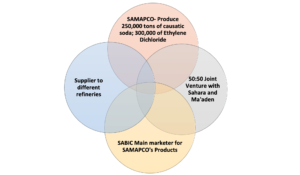
Figure 1:SAMAPCO Organisation Summary
Source: Summarised from Ma’aden (2024)
For the different operations of the organisation as illustrated herein, SAMAPCO succeeds by harnessing their set vision, mission and main objectives. In this case, a significant budget of upto SAR250 Million is set in their PS&M. The set budget is to manage relationship with all consultants, contracts management, manufacturing department and PS&M strategies. SAMAPCO works through a set of contracts inclusive of services agreement, agreeing on framework, purchasing orders and FIDIC. These initiatives are guided by prevalent T&Cs noted in appendix 2;
2.0 Introduction of Terms and Conditions (T&Cs) used by SAMAPCO
In this project, identified terms and conditions are noted to be “General Conditions of Purchase” as summarised in appendix 2. They are therefore blanketed adopted in general procurement for SAMAPCO. The general purchase in specific belong to the category of logistics which are sourced actively by the organisation. This is for success in their operations in their business environment. The general terms and conditions are embraced in a set of procurement areas as evidenced here;
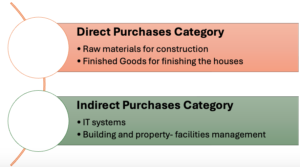
Figure 2:Categories of Spend in SAMAPCO used for T&Cs identified
Source: SAMAPCO organisation background
For the purpose of various stakeholders to distribute on risks, Mendelow Matrix Tool is applicable (CIPS, 2023). Also, this is used for identifying how the contractors and consultants impact their relations. A summary of Mendelow Matrix Tool is shown herein;
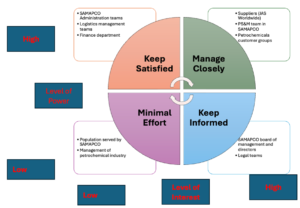
Figure 3:Summary of the contents of Mendelow Matrix Analysis
Source: Summarised from SAMAPCO internal documents
High Power; Low Interest– The KSA population and KSA regulators have high power on how the T&Cs are implemented. This informs need for SAMAPCO PS&M to align their T&Cs with KSA laws and government regulations.
Low Power; High Influence- The finance department, logistics teams and admin have less power in crafting the T&Cs, but their influence ensures that they are implemented in the organisation.
High Power; High Influence- Suppliers of the “General Supplies”, PS&T teams and customers have a significant influence on the terms and conditions. Their scope of influence is establishing its implementation.
Low Power; Low interest– In SAMAPCO case, board of management must approve the terms and conditions to be adhered to in order to be aligned with quality. They ensure the contract terms and conditions are adhering to recent JAS Worldwide to SAMAPCO. The board of management need to ensure that the terms and conditions are aligned with KSA laws such as the Saudisation (Mason, 2023).
Further, through a prioritisation of the contents of contract management cycle (CIPS, 2024), the relevance of T&Cs is to enhance the following areas;
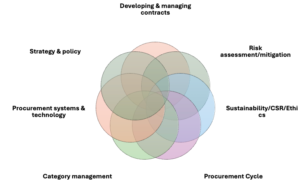
Figure 4:Contract Management Cycle Components and requirements
Source: CIPS Module Notes
In summary, as illustrated in the cycle (above illustration), the T&Cs are used in sourcing general supplies in the organisation. These suppliers are grouped majorly into logistics as illustrated in the following;
Figure 5:Summary of Logistics spend category included in the T&Cs
Source: Summarised from JAS worldwide (2024)
For all the identified sub-categories, the T&Cs are essential for guaranteeing successful sourcing with stakeholders relations enhanced while mitigating all potential conflicts.
3.0 Risk of Poor Quality
In procurement, Quality is defined in CIPS (2024a) as “scope in which the characteristics/features of a sourced product/service are satisfactory to the end-users”. Hence, with provisions set in procurement and supply process, quality is noted to be achieved when they are all met successfully. In regard to the logistics part of SAMAPCO General Supplies, quality is determined by defect rates from their suppliers as core Key Performance Indicators (KPIs). For instance, in 2023, for Oracle, the Network Optimisation had a defect rate of less than 20%. As such, the quality offered to SAMAPCO was considered satisfactory. For T&Cs used, they note;
Therefore, for T&Cs, failure to meet the identified KPIs or Service Level Agreements (SLAs) lead to termination of the contract with losses fully covered by supplier for defective products/services. This is hence a condition for failure to offer the services within expected quality hence terminating the contract (Laitinen, 2021). Further, T&Cs defect rates are reduced/increased owing to failure/ability to adhere with the T&Cs. They note;
For ensuring the T&Cs assists to monitor and analyse risks successfully, risk register can be used for monitoring and analysing all risks. Risk register can be used (CIPS, 2023a) in this case as shown in the following in a recent sourcing of technology and customer relations;
Table 1:Summary of risk analysis
Source: SAMAPCO Internal documents
The noted risk register areas are set as a priority in their terms and conditions. The different risks diagnosis is essential in order to guarantee high quality services provision. For managing the risks in line with the risk register, the T&Cs. Note;
As evidenced in the highlighted T&Cs, risks are an aspect of the buyers and collaborating with vendors/sellers for ensuring SAMASCO or buyer enhance delivery sourced products and services. The different KPIs for the quality is nevertheless insufficient and ought to be improved to ensure risks management effectively.
4.0 Risk of Extension of Time
Extension of time can be defined as inclusive of a scenario where the contractor issues a request for time increase from the initial
Please click the following icon to access this assessment in full
Related; https://rankedprofessionals.com/downloads/solution-qatarenergylng-developing-contracts-pdc/