(Solution) ROSHN leadership and management Assignment
Solution
Executive Summary
This report evaluates the role of leadership and management in shaping organisational success at ROSHN, a leading Saudi real estate developer established by the Public Investment Fund to deliver sustainable housing as part of Vision 2030. The analysis focuses on four areas: the impact of leadership and management on organisational behaviour, leadership approaches and their influence on job satisfaction, the use of power within the organisation, and the importance of equality and diversity policies.
The findings show that leadership and management both play essential roles in ROSHN’s growth. Management ensures structure, accountability, and operational discipline, while leadership drives motivation, innovation, and alignment with national priorities. However, leadership is still more task-oriented than people-centred, with communication gaps across departments. Employee job satisfaction is generally high, particularly in training and development, compensation, and career progression, but issues such as workload management and role relevance remain. Power within ROSHN is primarily drawn from expert, legitimate, and referent sources, with procurement leveraging supplier dependency for competitive advantage. When linked with Belbin’s team roles, these power bases show how individual strengths support team performance. Finally, while equality and diversity policies exist, gaps remain in consistent implementation, especially around unconscious bias and transparent progression pathways.
To address these gaps and sustain growth, the following recommendations are proposed:
- Implement a transformational leadership programme to improve communication and engagement.
- Introduce a career development framework and customised training, supported by HR technology, to strengthen retention and productivity.
- Launch knowledge-sharing platforms and recognition schemes to enhance expert and referent power, driving innovation and stronger supplier relationships.
- Deliver mandatory diversity training and promotion audits, aiming for an improvement in inclusivity perceptions
Table of Contents
1.0Introduction and Background. 4
1.2 Organisation Background. 4
2.0 The impact of leadership and management on organizational behaviour 6
2.1 Difference Between Leadership and Management at ROSHN.. 6
2.2 Forces Affect the Leadership Style of ROSHN’s Leaders. 7
2.3 Internal Factors Affecting ROSHN’s Organisational Behaviour 7
2.4 External Factors Affecting ROSHN’s Organisational Behaviour 8
3.0 Impact of leadership approaches on job satisfaction. 10
3.1 Job Satisfaction in the Context of ROSHN.. 10
3.2 ROSHN Leadership Approaches Impact on Job Satisfaction. 15
3.3 ROSHN Leaders’ Concern About Staff Wellbeing. 16
4.0 Sources of Power Within ROSHN.. 17
4.1 A Summary of ROSHN’s Stakeholders. 17
4.2 Sources of Individual Power Within ROSHN.. 18
5.0 Importance of Equality and Diversity Policies Within ROSHN. 20
5.1 Equality and Diversity Policy at ROSHN.. 20
5.2 Benefits of Cultural Diversity at ROSHN.. 21
6.0 Conclusion and Recommendations. 21
Appendix 1: Employee response Data on Satisfaction with Work-life Balance. 27
Appendix 2: Employee response Data on Satisfaction with Training and Development 27
Appendix 3: Employee response Data on Satisfaction with Compensation and Benefits. 27
Appendix 4: Employee response Data on Satisfaction with Career Progression. 27
Appendix 5: Employee response Data on Satisfaction with Job Security. 27
Appendix 6: Employee response Data on Satisfaction with Workplace Relationships. 27
Figure 1: ROSHN Leadership and Reporting Structure. 5
Figure 2: Kotter’s distinction between management and leadership. 7
Figure 3: Nadler-Tushman Congruence Framework. 8
Figure 4: PESTLE Analysis on Impact of ROSHN External Factors on Organisational Behaviour 9
Figure 5: Herzberg’s Two-Factor Theory. 11
Figure 6: A graph Representing Survey Responses on Work-life Balance. 12
Figure 7: A Graph of Survey Responses on Training and Development 12
Figure 8: A Graph of Survey Responses on Compensation and Benefits. 13
Figure 9: A Graph of Survey Responses on Career Progression. 14
Figure 10: A Graph of Survey Responses on Job Security. 15
Figure 11: A Graph of Survey Responses on Workplace Relationships. 15
Figure 12: Blake and Mouton’s Managerial Grid. 16
Figure 13: A summary of ROSHN Stakeholders. 18
Figure 14: Mendelow’s Stakeholder Matrix. 18
Figure 15: French and Raven Form of Leadership Power 19
Figure 16: Belbin’s 9 team roles. 20
1.0 Introduction and Background
1.1 Introduction
Leadership and management play a central role in shaping organisational success, particularly within large-scale enterprises operating in competitive environments. While management focuses on planning, organising, and controlling resources to achieve objectives, leadership is concerned with inspiring, motivating, and guiding people towards a shared vision (Gavin, 2019). Both functions are vital, yet their balance and application influence how employees behave, engage, and perform within the workplace. This evaluation is centred on ROSHN, a leading Saudi real estate developer supported by the Public Investment Fund (PIF), which is driving large-scale residential and community-focused projects across the Kingdom (ROSHN, 2025). As part of Saudi Arabia’s Vision 2030, ROSHN seeks to transform the housing sector by delivering modern, sustainable, and integrated communities.
In this context, the organisation’s leadership and management approaches directly affect workforce behaviour, job satisfaction, stakeholder engagement, and the successful delivery of strategic objectives. The report evaluates four key areas: the impact of leadership and management on organisational behaviour, the influence of leadership approaches on job satisfaction, sources of power within ROSHN and their utilisation, and the significance of equality and diversity policies. The analysis concludes with recommendations to enhance leadership practices, strengthen employee satisfaction, and ensure alignment with ROSHN’s long-term strategic ambitions.
1.2 Organisation Background
ROSHN is a national real estate developer that was founded by the Public Investment Fund (PIF) to support the Saudi Arabian vision 2030. Its key goals include expanding home ownership, enhancing quality of life, and providing modern and sustainable communities (ROSHN, 2025). In addition to housing, ROSHN also plays a role in economic diversification through investment in integrated infrastructure, localisation, and long-term job creation.
The organisation is guided by a Chief Executive Officer and an Executive Leadership Team, supported by divisional heads across core functions such as development, operations, finance, human resources, and procurement. This leadership and reporting structure enable strategic alignment, accountability, and effective management of large-scale projects.
Within this framework, the procurement department has a critical role in securing resources, managing suppliers, and advancing localisation initiatives.
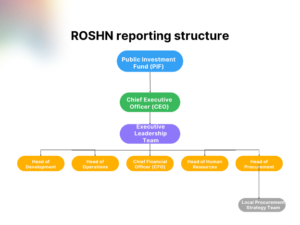
Figure 1: ROSHN Leadership and Reporting Structure
Source: ROSHN (2025)
Under this structure, my role is in local procurement strategy, where I design sourcing frameworks that strengthen domestic supply chains and ensure procurement practices support operational efficiency and national economic resilience.
2.0 The impact of leadership and management on organisational behaviour
Organisational behaviour can be defined as the academic study of the interaction of individuals and groups in organisations and how this interaction influences performance and culture (Kelleher, 2022). Its principles give businesses an understanding of motivation, decision-making, communication, and group dynamics that enable them to operate more efficiently. Organisational behaviour is especially applicable in ROSHN because of the size of the organisation, its fast development, and its strategic position in attaining the Saudi Arabia Vision 2030. Applying organisational metaphors, ROSHN can be considered both as a machine, with structured systems, procedures, and accountability, and as an organism, adapting to external pressures like market demand, policy changes, and environmental sustainability (Mathews, 2025). These perspectives demonstrate the influence of leadership and management practices on employee behaviour and organisational development.
2.1 Difference Between Leadership and Management at ROSHN
Management and leadership are different but related. Traditionally, management is linked with planning, organising, and controlling resources in order to meet organisational goals, while leadership is linked with inspiring, motivating, and guiding people towards a common vision. According to Pandey (2024), managers usually rely on authority and process whereas leaders fucus on influence and innovation. Practically, ROSHN needs both. For example, the procurement department needs to use management functions like supplier contracts and budget control, yet it also needs leadership skills to develop supplier relationships, promote innovation, and promote localisation efforts. To further understand this, we can apply Kotter’s distinction between management and leadership summarised in Figure 2.
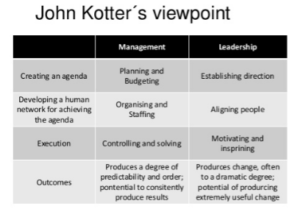
Figure 2: Kotter’s distinction between management and leadership
Source: Virkus (2019)
Using Kotter’s view point, it is evident that ROSHN demonstrates both leadership and management qualities. For example, senior executives act as leaders by setting strategic direction, while divisional heads act as managers by ensuring operational efficiency. This balance influences organisational behaviour by promoting accountability while encouraging innovation and adaptability.
2.2 Forces Affecting the Leadership Style of ROSHN’s Leaders
Several forces influence the leadership styles used in ROSHN. Internally, the multinational workforce is diverse and demands leaders to adopt people-focused and inclusive practices. Externally, Naftalin (2025) points out that Vision 2030 places high expectations on localisation and sustainability, promoting transformational leadership that motivates employees to do more than just their routine tasks. Leaders at ROSHN are expected to not only meet targets but also inspire teams to align their work with the broader social and economic mission of the organisation. This leadership style encourages commitment and engagement but may also lead to pressure when the expectations are not supported by sufficient resources or communication.
2.3 Internal Factors Affecting ROSHN’s Organisational Behaviour
Organisational behaviour is also influenced by internal factors. Applying the Nadler and Tushman Congruence Model (See Figure 3), the effectiveness of ROSHN can be evaluated by examining the alignment of work, people, formal structures and culture.
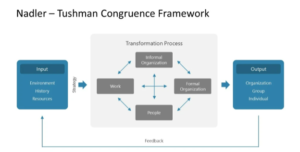
Figure 3: Nadler-Tushman Congruence Framework
Source: Einstein (2024)
In ROSHN, work processes are highly structured to achieve project deadlines, people bring expertise from various backgrounds, and formal structures establish clear reporting lines. Nevertheless, the culture is dynamic and there is a necessity to balance between Saudi cultural practices and the global business practices. Misalignment between these factors, such as rigid structures limiting innovation, can affect employee behaviour, causing frustration or disengagement (Anees, 2025).
2.4 External Factors Affecting ROSHN’s Organisational Behaviour
There are also external factors to be taken into account. A PESTLE analysis underscores the influence of political forces (government housing policies), economic forces (inflation and supply chain costs), social forces (demographic growth), and technological forces (smart housing solutions) on organisational behaviour (CIPS, 2022). For instance, economic fluctuations may lead to tighter cost controls, affecting management decisions, while social demands for sustainability encourage leadership to champion environmentally responsible practices. Here is the summary:
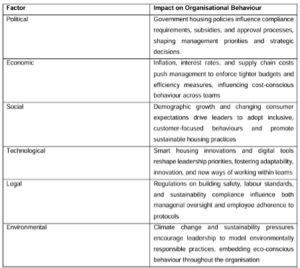
Figure 4: PESTLE Analysis on Impact of ROSHN External Factors on Organisational Behaviour
Overall, the PESTLE analysis illustrates the influence of external forces on organisational behaviour at ROSHN. Compliance is driven by political and legal frameworks, and cost discipline is enforced by economic pressures. Sustainable leadership is promoted by social expectations and environmental concerns, and adaptability is promoted by technological innovation. Collectively, these aspects affect the alignment of strategies by leaders and managers, which shapes culture, decision-making, and employee behaviour across the organisation.
2.5 Areas of Improvement
Evaluating the current situation at ROSHN, it is clear that leadership and management positively influence organisational behaviour by providing strategic clarity and operational discipline. However, there are gaps. Leadership tends to be more task-oriented than people-centred with limited emphasis on employee well-being and job satisfaction. Additionally, communication across departments can be fragmented, leading to siloed behaviour rather than collaborative problem-solving.
To improve, ROSHN should invest in developing leadership capabilities that balance task focus with a stronger emphasis on people and culture. Incorporating transformational leadership training may assist leaders in motivating employees in a more effective way, whereas participative management practices might enhance communication and cooperation (Hanna & Needle, 2024). Furthermore, strengthening alignment between work, people, structures, and culture using Nadler and Tushman’s model in Figure 3 would enhance organisational behaviour, ensuring employees remain motivated, innovative, and engaged in delivering ROSHN’s long-term objectives.
3.0 Impact of leadership approaches on job satisfaction
3.1 Job Satisfaction in the Context of ROSHN
Job satisfaction refers to the level of fulfilment…..
Please click the following icon to access this assessment in full