(Solution) CIPS PSE Supplier appraisal checklist
Solution
Executive Summary
This report evaluates the sourcing strategy of TAQA Water Solutions for wastewater infrastructure projects that include treatment plants, pump stations, sewer pipelines and house connection networks, to ensure the most effective procurement strategies to minimise risk, improve supplier performance and support long-term operational efficiency. The assessment uses PESTLE analysis, Porter’s Five Forces, the Five Rights of Procurement, and a supplier appraisal checklist with detailed information based on Carter’s 10Cs and adapted for the context of TAQA. The purpose of the report is to investigate the strengths and weaknesses of TAQA’s existing sourcing environment, identify capability gaps and offer strategic improvements to sourcing in line with public sector expectations.
The results indicate that the operation of TAQA is in a tightly regulated supply-constrained market with a limited number of technically qualified suppliers for wastewater infrastructure delivery. This creates a moderate-to-high supplier power and adds risk associated with sole or single sourcing. Dual and multiple sourcing are alternatives to reduce the dependence but are constrained by the availability of suppliers and the uniformity of performance levels. The PESTLE analysis shows powerful political and environmental drivers behind procurement decisions while the Five Forces analysis indicates high barriers to entry and varying cost structures. The supplier appraisal checklist reveals that TAQA has good capability evaluation processes but insufficient structured weighting systems, digital preparedness and consistent sustainability auditing that creates gaps in long-term risk control. These gaps highlight the need to improve strategic fit, compliance and continuity of supply. As a result, the following recommendations are made;
- Introduce an Innovation and Digital Readiness criterion to assess technological capability of suppliers.
- Implement a system of weighted scoring which prioritises high-risk criteria in strategic categories of wastewater.
- Establish supplier development partnerships to decrease reliance on sole and single suppliers.
- Introduce annual compliance and sustainability audits for all strategic suppliers to ensure greater alignment with expectations of the public sector.
Contents
1.1 Organization Background. 6
2.2 The Supplier Preferencing Matrix 9
3.0 Analyzing the marketplace. 11
3.4 The 5 Rights of Procurement 15
5.0 Supplier appraisal check list 17
6.0 Conclusion and Recommendations 21
Figure 1:Core Specialisations of TAQA Water Solutions 6
Figure 2: TAQA Wastewater Collection, Treatment, and Reuse Value Chain. 7
Figure 3: The Kraljic Matrix. 8
Figure 4: The Supplier Preferencing Matrix 9
Figure 5: The Portfolio Analysis grid. 10
Figure 7: Porter’s Five Forces. 13
Figure 8: The 5 Rights of Procurement 14
Figure 9: Carter’s 10Cs model 16
Figure 10: The Balanced Scorecard Model 18
Table 2: TAQA supplier appraisal checklist 17
1.0 Introduction
Effective sourcing is an important part of procurement and supply chain management at TAQA Water Solution, especially so given the organisation’s responsibility for the delivery of wastewater treatment plants, sewer networks, pump stations and house connection infrastructure. According to Overvest (2025), selecting the appropriate sourcing approach directly impacts project costs, operational continuity, supplier performance and risk exposure into these complex categories of spend. This report identifies four types of sourcing approaches and explains how each of them can be applied to different spend categories that are relevant to TAQA Water Solutions, taking into consideration factors such as market structure, supply risk, strategic importance and supplier relationships. By using analytical tools such as portfolio models and supply market assessments, the report examines the suitability, strength and limitations of each approach in the context of TAQA’s operation. The selected spend category is then developed through the in-depth development of a supplier appraisal checklist that is matched to selection requirements, risk considerations and compliance requirements for the public sector. The report ends with recommendations on how to improve sourcing effectiveness.
1.1 Organization Background
TAQA Water Solutions is a leading provider of integrated water and wastewater infrastructure services in Saudi Arabia. The organisation specialises in the design, construction, operation and maintenance of key assets, such as wastewater treatment plants, sewer pipelines, network of house connections and pump stations (TAQA Water Solutions, 2025). Operating under the TAQA Group, the company assists with national objectives on sustainable water management and the expansion of utility services in growing urban areas.
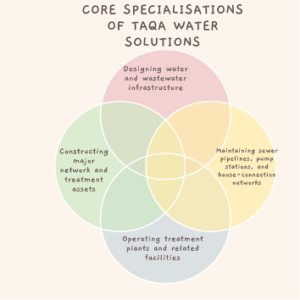
Figure 1:Core Specialisations of TAQA Water Solutions
Source: TAQA Water Solutions (2025)
While operating under the activities in Figure 1, TAQA Water Solutions operates with a wide variety of suppliers, cutting-edge technologies, as well as long-term infrastructure programmes, so effective sourcing is crucial in ensuring quality, continuity of supply and delivery of cost-efficient, compliant projects across the Kingdom.
1.2 Category of Spend
The category of spend selected for this report is Wastewater Collection, Treatment, and Reuse Services which is a strategically critical area for TAQA Water Solutions. This category includes all the activities necessary to collect wastewater from networks, transport it through pump stations, treat it through advanced technologies, and deliver treated wastewater to be reused (Taqa Water Solutions, 2025). Its importance is its ability to provide for service continuity, environmental compliance, and protection of public health. The end-to-end nature of the category is highlighted in Figure 2 below.
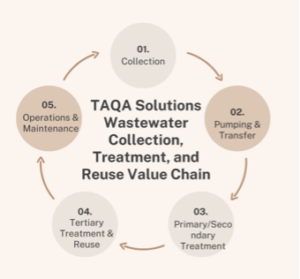
Figure 2: TAQA Wastewater Collection, Treatment, and Reuse Value Chain
Source: Taqa Water Solutions (2025)
Figure 2 shows the end-to-end value chain for wastewater collection, treatment, and reuse, and identifies the integrated activities and technical dependencies in this strategic spend category. Hence, sourcing decisions are crucial for this category because they impact the operational continuity, supplier capability requirements and overall risk management of TAQA Water Solutions wastewater infrastructure projects.
2.0 Category Importance
2.1 The Kraljic Matrix
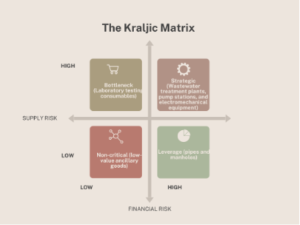
According to CIPS (2022), the Kraljic Matrix is used to place the categories of spend in terms of supply risk and business impact to drive sourcing strategy and supplier management to optimise continuity, cost, and performance (See Figure 3).
Source: CIPS (2022)
The Kraljic Matrix identifies the category of Wastewater Collection, Treatment, and Reuse Services as a Strategic category because of high operational impact and significant supply risk. This classification directly influences the way in which the sourcing should be done on TAQA. Strategic items must have secure, long-term arrangements, so dual sourcing or single sourcing to ensure continuity, capability and commitment of the suppliers (Schwarz, 2023). In contrast, leverage items might have multiple sourcing to help maximise competition, while bottleneck items might have sole sourcing with good risk management. Using the Kraljic Matrix therefore ensures that each of the sourcing approaches is aligned to risk, importance to the business and market structure in TAQA’s procurement environment.
Further, for effective sourcing of this category, understanding supplier relationships is important for TAQA. Therefore, the Supplier Preferencing Matrix is important here as shown in Figure 4.
2.2 The Supplier Preferencing Matrix
This model focuses on the supplier’s perspective, assessing customers based on value and attractiveness (CIPS, 2020).
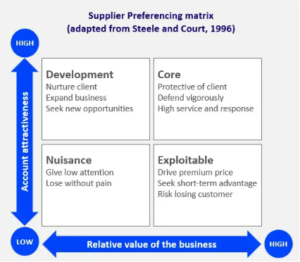
Figure 4: The Supplier Preferencing Matrix
Source: CIPS (2020)
Development: Development suppliers have high potential but currently have limited value (Ideson, 2025). They need investment, direction, and support to improve capabilities, ensuring that they evolve into reliable high-performing partners with whom to source strategically.
Core: Core suppliers provide high value and consider TAQA as an attractive customer. These relationships are strategic, collaborative, and long-term with a focus on innovation, risk sharing and continuous performance improvement.
Nuisance: Nuisance suppliers are suppliers who add little value and view TAQA as less attractive. Minimal management effort required, transactional interactions and cost-efficient processes, no major collaboration or strategic involvement required.
Exploitable: Exploitable suppliers offer some value, but are very dependent on TAQA. These relationships could be leveraged to secure favourable terms, but over-reliance is risky and a number of risk management activities must be made.
2.3 Portfolio Analysis
Portfolio Analysis examines an organization’s suppliers by risk, value and criticality so that sourcing strategies can be prioritised and resources allocated across procurement categories (Tamplin, 2022).
Figure 5: The Portfolio Analysis grid
Source: Collin (2024)
Figure 5 categorizes items according to expenditure and market difficulty. High expenditure high difficulty items, such as wastewater treatment plants and pump stations, need strategic sourcing to minimise risk and secure competitive advantage, often single or dual sourcing. Low-difficulty, high-expenditure items, such as bulk pipes and manholes, are focused on maximising profit while low-expenditure items are handled with minimal effort or routine acquisition strategies.
3.0 Analysing the marketplace…..
Please click the following icon to access this assessment in full
Related; https://rankedprofessionals.com/downloads/solution-pse-sourcing-appraisal-for-selected-category/