(Solution) ROSHN PDC developing contracts in procurement and supply
Solution
Executive Summary
In this assessment of the module “developing contracts in procurement and supply”, analysis of ROSHN organisation Terms and Conditions (T&Cs) is carried out. The selected contract is used in sourcing different doors for multifamily buildings. The focus is on the appropriateness of the contracts in managing risk of quality, time extension, costs and unethical issues. Part of this assessment include the analysis of performance measures and management in ROSHN organisation. In all the sections of this report, T&Cs quoting has been provided and summaries included in appendix section.
The findings highlight that the T&Cs are relevant for ensuring ROSHN successfully source the products and services. This is in the management of the different issues encountered in the contract management. The findings also evidence that the T&Cs are important in reviewing and monitoring the performance, Force Majeure, managing costs, indemnity, risks of encumbrances and insurance cover considered.
Further, this assessment findings note that the T&Cs in the sourcing process as supporting ROSHN int heir actively practice. By working with highly qualified supply chain network players, ROSHN has dominated their industry and leverage on competitive advantage.
In terms of “Battle of the Forms”, they have been put into account with their relevance identified to ensure achievement of similar strategy of contract implementation. An agreement with the T&Cs ensures they mutually agree rather than hardening their positioning.
The gaps identified in this assessment can be resolved by following recommendations;
- Differentiating the T&Cs used in the identified contract for including multiple multi-speciality contracts
- Reach a mutual understanding/agreement of the T&Cs to resolve issues associated with the battle of the forms
- Ensuring that the process followed to implement the contract is in alignment with different Key Performance Indicators (KPIs) and successfully implementing contracts
- Integrating embrace of modern technologies for implementation of the contracts for avoiding Force Majeure issues
- Creating high-level awareness by PS&M in ROSHN organisation to improve the ability to improve the ability to appreciate relevance of T&Cs
Table of Contents
1.1 ROSHN Organisation Background. 4
1.2 Selected Contract Terms and Conditions. 5
1.3 Contract Terms and Conditions (T&Cs) Purpose. 6
2.0 Managing Risks by Contract T&Cs. 9
2.1 Managing Risks of Poor Quality. 11
2.2 Managing the Risks of Extension of Time. 12
2.3 Managing Risks of Increased Costs. 13
2.4 Managing the Risks of Unethical Practice. 14
3.0 Performance Measures; Monitoring Approaches and Management 15
4.0 Analysis of Concept of Battle of the Forms. 17
5.0 Conclusion and Recommendations. 19
Appendix 1: Summary of the used T&Cs. 24
Figure 1:A summary of ROSHN’s Core Products and Services 5
Figure 2:Kraljic Matrix Analysis Tool for the Contract Identified. 6
Figure 3:Contracts Management Cycle. 7
Figure 4:Comparative Analysis of the Warranty and Conditions in Contracts 8
Figure 5:Mendelow Matrix in Stakeholders Analysis 9
Figure 6:4T’s Risk Management Model 10
Figure 8: A summary of the concept of battle of the forms 18
Table 1:Risks management matrix analysis. 12
1.0 Introduction
1.1 ROSHN Organisation Background
ROSHN is the leading multi-asset class real estate developer in Saudi Arabia and thus a vital player in the realisation of Saudi Vision 2030. It offers human-centric and integrated developments that improves the quality of life and connectivity across the Kingdom, thus revolutionising the urban landscape. The integration of modern architectural approaches with the Saudi traditions and culture ensures that the communities are built with functionality, social inclusion as well as environmental sensitivity. Beyond housing, ROSHN supports the diversification of the country’s economy by investing in real estate, construction and infrastructure on a large scale (ROSHN, 2025b). Its developments also include the construction and development of schools, healthcare, retail, leisure spaces, and green areas, resulting in self-sufficient and active communities, which reinforces ROSHN’s position as a transformational real estate developer of Saudi Arabia’s urban landscape.
The organisation’s core products and services can be summarised as follows:
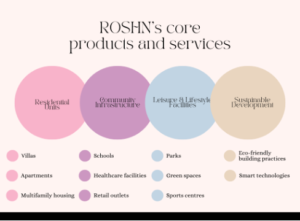
Figure 1:A summary of ROSHN’s Core Products and Services
Source: ROSHN (2025)
The highlighted elements of community development in Figure 1 describes ROSHN’s approach. ROSHN integrates best infrastructure within residential units (villas, apartments and multifamily housing), schools, healthcare facilities, and retail outlets. ROSHN has also developed lifestyle amenities, including parks and sports facilities, built with best practices of sustainable architecture and smart technologies, creating self-sustaining, ready to use vibrant communities across the Kingdom of Saudi Arabia.
1.2 Selected Contract Terms and Conditions
The identified contract is General T&Cs and used in doors for multifamily buildings Spend category. The different doors for multifamily buildings are sourced guided by ROSHN core objectives of increasing Saudi Arabia (KSA) home ownership with more than 70% in a timeline of 10 years by Vision 2030 (ROSHN, 2022a).
For the purpose of identifying the noted spend category and contract risks management, Kraljic Matrix Analysis is applicable. This represents strategic tool used in Procurement and Supply Chain Management (PS&M) experts to identify and minimise these risks. Therefore, the T&Cs in the contract is guided by risks distribution;
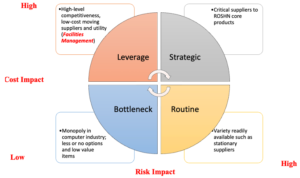
Figure 2:Kraljic Matrix Analysis Tool for the Contract Identified
Source: CIPS Module Notes Summary
In the model analysis, doors for multifamily buildings by ROSHN belongs to leverage category quadrant. For KSA, with the country working towards transitioning from their dependent on oil and gas sector to diversify into property and innovation, suppliers in the facilities initiate with initiatives for managing competition levels. Therefore, there are less supply risks and hence ROSHN make sure they elaborately note functions n contract management. According to CIPS (2022a), the T&Cs are hence instrumental in ensuring that they gain cost-saving measures. Hence, as part of ROSHN practices, they develop strategic-based partnering with KSA administration and suppliers.
With the spend category core int heir spend areas, high-level expenditure is evident with many alternatives in place and suppliers readiness in their engagement. In this regard, the different T&Cs are relevant for eliminating suppliers failing in achieving expectations for purchase demands. According to CIPS (2021), in line with UK legislations identify “flexibility in competitiveness practices” granting buyers with responsibility to negotiate and innovate to gain maximum in different sectors with KSA similarly operating in their legislations. For ROSHN context, they put in place less tendering approaches appropriate in different situations such as extremities.
1.3 Contract Terms and Conditions (T&Cs) Purpose
The T&Cs in ROSHN contracts is intended in achieving contract management cycle outcomes (CIPS, 2022b) guiding understanding the T&Cs insights. The suppliers and ROSHN organisation are guided towards making sure risks distribution is appropriate appreciating contracts needs. Further, negotiations are important to prioritise different organisation change;
Figure 3:Contracts Management Cycle
Source: Summarised from CIPS (2022b)
For evaluation of the contract T&Cs and various phases in Contract Management Lifecycle, priority areas are;
Warranties– In most instances, guarantee are done in writing (CIPS, 2022c). The warranties are noted to be implied terms in contracts not noted as a condition/warranty;
Figure 4:Comparative Analysis of the Warranty and Conditions in Contracts
Source: Summarised from CIPS Module Notes
To support this, the T&C’s evidence that;
Contracts Termination– The termination process of the contract is upon the contract having expired or other reasons in different stages. In the contract implementation, T&Cs section b and 1.0;
In line with the contract T&Cs, other than lacking capabilities by vendors in supplying required products and services in appropriate/required quantity or disputes transitioning to formal tribunal.
Clause Types– This entail express and implied clause which vary in various jurisdiction
Contracts Types– From the T&Cs identified, this is a representation of a call-off and PO oriented SoW. The relevance of this model from contracts gains and challenges and contract terms in priority.
2.0 Managing Risks by Contract T&Cs
In a contract, risks are defined in CIPS (2022d) as “likelihood of potential inappropriate/unwanted results occurring”. Taking
Please click the following icon to access this assessment in full
Related;https://rankedprofessionals.com/downloads/solution-assignment-2-pdc-terms-and-conditions/