(Solution) effective negotiation (PIN) Emaar Properties (EMAAR)
Solution
Executive Summary
In this integrated assessment of effective negotiation of procurement and supply chain management (PS&M), a formal commercial negotiation plan is developed. This is for Emaar Properties (EMAAR) organisation lead by PS&M teams in collaboration with commercial departments. To achieve this, the focus is on the Construction and Development Management Services (CDMS) spend category. Part of this report include evaluation of the concept of negotiation in detail, skills required for negotiators. This is in the different phases including preparation, negotiations, post-contract execution and activities in these phase for successful negotiations. This is supported by the different CIPS Module notes including Mendelow, Kraljic matrix, PESTLE, and Porter’s 5 Forces core before enrolling to the market having request for quotation or proposals. The key findings in this report evidence that the PS&M teams in EMAAR Properties need to possess specific skills for successful management of their negotiation plan.
Also, this report findings note that the negotiation plan in PS&M is core to gain value for money outcomes and to acquire the best properties in the real estate sector where they operates. Further, this report findings evidence Post-COVID-19 economic slowdown and disruption in the property market, this lead to performance decline of real estate. Hence, the findings point out to Emaar Properties having less resources which affect directly their operations. This guide necessity for a holistic negotiation plan among the various engaged stakeholders for guaranteeing organisation continuous operations. This negotiation plan is noted in this report as being aligned with different sourcing approaches, T&Cs and market analysis findings.
Further findings in this integrated report is that EMAAR need to invest on best strategies for implementing their negotiation plan. This is by being detailed in preparing, testing, proposing, bargaining, agreeing and closing the process. For these phase, a set of tools and techniques are relevant in developing sustainable stakeholders relations. Also, to achieve a successful negotiation plan in their CDMS spend category EMAAR is supposed to work with BATNA and MLA to have sufficient resources in place.
The findings and conclusions note on existence of varying limitations which impact successful negotiation plans. For managing the identified limitations, a set of recommendations have been generated;
- Implement holistic planning for negotiation with multiple stakeholders engaged
- Embracing innovativeness and technologies for introduction of negotiation plan and merging
- A detailed documentation for negotiation plan with entire conflicts of interest managed
- Customising their negotiation plan for specific spend categories
Table of Contents
1.1 Emaar Properties Introduction. 3
1.2 Rationale/Scope of Integrative Report 4
1.3 Summary of Selected Spend Category. 5
2.1 Implementing Negotiation Plan Reason. 7
2.2 Business Needs in the Formal Commercial Negotiation Plan. 9
2.3 Importance of Stakeholders in the Negotiation Plan. 11
4.0 Formal Commercial Negotiation Plan Implementation. 14
4.1.1 EMAAR Properties Suppliers/Vendors Negotiation Plan Analysis. 15
4.1.2 Negotiation Plan Market Analysis Findings. 18
4.2 Planning Stage of Negotiation Plan. 21
4.3 Execution Phase of the Negotiation Plan. 23
4.3.1 Environment where Negotiation is done. 23
4.3.2 Contracts/ Category Importance to EMAAR Properties Organisation. 25
4.4 Evaluation Phase of the Negotiation Plan. 25
4.4 Delivery Phase of the Negotiation Plan. 27
5.0 Conclusion and Recommendations. 27
Figure 1:Emaar Properties Main Projects. 4
Figure 2:Emaar Properties PS&M Department Organisation Structure. 5
Figure 3: Procurement Lifecycle Illustration.. 6
Figure 4: CDMS Negotiation Plan Areas of Interest 9
Figure 5:A summary of the different EMAAR Properties. 10
Figure 6:Illustration of the Kraljic Matrix. 11
Figure 7: Mendelow Matrix Analysis of the Stakeholders Summary. 13
Figure 8:Components of the RACI Matrix. 14
Figure 9: Suppliers Prerencing Model/Technique. 18
Figure 10:SWOT Analsis Summary. 19
Figure 11:Porters 5 Forces Analysis Model 21
Figure 12:Persuasion Tool Model analysis. 23
Figure 13:5 Rights of Negotiation Plan.. 25
Figure 14:4R’s Model in Negotiation Evaluation process. 27
Table 1:Categories/Specifications of EMAAR Properties CDMS.. 7
Table 2:EMAAR Properties CDMS suppliers potential 16
Table 3: Summary of EMAAR Properties STEEPLED Analysis. 20
1.0 Introduction
1.1 Emaar Properties Introduction
Emaar Properties (“EMAAR”) has been in operation from 1977 being a leader in integrated master-planned communities. It is enlisted in the Dubai Financial Market and a leader in the significantly high real estate organisation internationally (ICD, 2025). Owing to the broad organisation operations, it currently has upto 108,000 residential units in Dubai and different international markets.

Figure 1:Emaar Properties Main Projects
Source: Summarised from (ICD, 2025)
In Emaar Properties, the organisation operates a fully-fledged PS&M which has its own budget for operations. With an overall recorded revenue of approximately AED35.5 billion ($9.6 Billion), majority of it is reimbursed back in their different procurement and sourcing strategies (Emaar Properties, 2025);
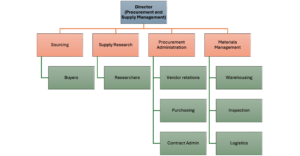
Figure 2:Emaar Properties PS&M Department Organisation Structure
Source: Summarised from Emaar Properties (2025)
Further, the PS&M department in Emaar Properties operate in active collaboration with other departments. This is for guaranteeing success in procurement and supply process of different products and services.
1.2 Rationale/Scope of Integrative Report
In contemporary organisations practices, a negotiation plan is essential to guide commercial agreements. This is as an organisation work towards a leverage on competitive advantage and dominating their market. In negotiation plan, CIPS (2022 highlight necessity for prioritising on varying interests of stakeholders, managing costs, evaluating qualities and achieving value for money outcomes.
Further, the commercial negotiation plan is essential for achievement of effective communication with sustainable relations achieved. Hence, in the current integrative report, negotiation plan guiding basis for commercial negotiation is initiated, various stakeholders interests a priority, concerning areas and expectations noted. Therefore, according to Mwagike et al. (2022), there is a need to implement detailed engagement in the entire negotiation plan to arrive at a mutual agreement. The negotiation plan is hence in tandem with set Key Performance Indicators (KPIs) and also Service Level Agreements (SLAs) as part of negotiation plan;
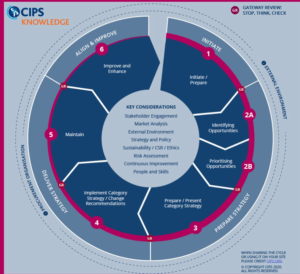
Figure 3: Procurement Lifecycle Illustration
Source: CIPS Materials in “Developing Contracts in PS&M” Module
Taking into account of this integrative assessment, Antal and Mitrik (2020) highlight the need for developing a basis for formal negotiations in EMAAR organisation. This is backed up with statistical data/insights, content, factual information and CIPS illustrations. Additionally, having the varying Terms and Conditions (T&Cs) in place guiding EMAAR and their suppliers/vendors, best practice in management of Battle of the forms is essential. This is with prioritisation in negotiation plan guided by considerations of time, qualities, quantities and achieving value for money.
1.3 Summary of Selected Spend Category
Considering EMAAR organisation operates in real estate, a huge spend area is in Construction and Development Management Services (CDMS). The sourcing of CDMS is core for achieving perfection and zero errors in designing before appointment of any contractor for evaluating and designing the constructions of communities. Eliminating all errors in designing of construction as part of CDMS is informed by the guidance provided by UAE government. The government grants a protocol capturing the Saudi Standards, Metrological surveys and scope of quality management required to be adhered by all UAE citizens in their construction projects. Irrespective of their nature of constructions (types of buildings), there exist a listing of standardised specification which ought to be achieved for achievement of the Health and Safety Environment (HSE) demands. Failing in complying with the requirement of UAE department of construction guidelines/protocol lead to lack of licencing of their constructions, finning by the local government. the outcome of this is lack of government subsidy and protection as the project is being executed. Hence, taking into account of the Construction and Development Management Services (CDMS) spend area, this is further classified into;
Table 1:Categories/Specifications of EMAAR Properties CDMS
Source: Internal documentation in EMAAR Properties
| EMAAR Properties Sub-Classifications | Identified Suppliers | Further Categories |
| Pre-Constructing | Locally in UAE | Strategically planning for the entire construction, develop designs, source permits and any entitlement |
| Managing Projects | Entire MENA Region | Managing the designing requests posted, allocating tasks functions, pursuing project lifecycle to the end |
| Electrics engineering | International market/industry | Designing, setting plans and implementation of electrical designs for different constructions and equipment’s |
| Construction development | Local in UAE | Interior designing, architecture drawing, infrastructural development and build design services |
| Designing and Building | Local in UAE | Designing for building; guided by architects, contractors leading designing and building |
2.0 Negotiation Plan Scope
2.1 Implementing Negotiation Plan Reason
In line with available CIPS Module Notes, negotiation plan is inclusive of different initiatives implemented to come up with mutually oriented agreeing. Hence, upon success in developing a negotiation plan, EMAAR organisation would mutually agree with all their involved stakeholders on the scope of their sourcing process. The outcome include acquisition of best suppliers/highly qualified, accessing to high-level quality materials and service, appropriate quantities sourced timely and best terms for engaging vendors/suppliers. After the economic slowdown necessitated by prevalence of COVID-19, Emaar Properties negotiation plan has been evolving and transitioning from only considering on prices/costs agreement. This is towards considering the factors of sustainable operations (environmental), stakeholders relations and reputation/image.
For EMAAR, their negotiation plan is primarily in the identified areas;
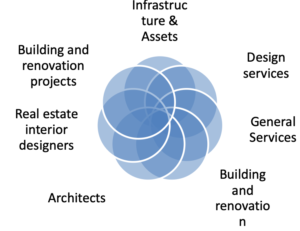
Figure 4: CDMS Negotiation Plan Areas of Interest
Source: Summarised from Internal Documentation
Being in the helm of leadership in UAE real estate and communities development, successful negotiation plan enhance achievement of core function/objectives. These are attainment of Vision 2030 and achieving a holistic community development achieving 80% of sustainable housing investments in UAE (EMAAR, 2024). In their CDMS spend area, negotiations plan is to initiate new designs. This is in Post economic downturn after COVID-19 where the demand for newer designs has been in an upward trajectory after resolving the supply chain challenge (Borio, 2020).
Additionally, UAE government (Emiratis) have significantly reduced how they invest in the real estate sector and community development as they diversify their operations from oil and gas industry over-reliance. Cumulatively, the identified areas affect EMAAR organisation CDMS sourcing and different construction area spend. Therefore, by executing a formal negotiation plan, it is possible for EMAAR Properties to maintain a consistent designing of their community development projects and other classifications. The rationale of this is achievement of their objectives, increasing profitability and business outcomes.
2.2 Business Needs in the Formal Commercial Negotiation Plan
As aforementioned, a formal commercial negotiation plan lead to attainment of a mutual-based agreement. In line with CIPS (2023), irrespective of the choice of negotiation plan, the best practice entail appreciation and mitigation of risks in contracts, champion sustainability initiatives, explore contracts T&Cs, financing approach and improved costs management which are used in their operations. In EMAAR Properties context, a summary of their focus include;
Figure 5:A summary of the different EMAAR Properties
Source: EMAAR Internal documentation
Considering the identified objectives, negotiation plan would be appropriate for gaining value for money outcomes and achieving noted objectives in EMAAR properties. Also, EMAAR properties negotiation plan lead to the best strategy of achieving the buyers and suppliers focus areas attained. According to Chen et al. (2020), this is by improving buyer-seller relationships, interaction in supply chain (buyer and sellers) and negotiating the contract. By successfully achieving these specification, most appropriate designs for construction are sourced. This is while quality standardised significantly and safety measures adhered to in the sourcing strategy. The rationale of this is achieving all expectations/demands in construction process.
Further, for evidencing negotiation plan in EMAAR Properties and set objectives, Kraljic Matrix is applicable. According to CIPS (2023a), the scope of its use is classifying negotiation plan for CDMS, supply chain network weaknesses, supporting strategies and less disrupted supply chains;
Figure 6:Illustration of the Kraljic Matrix
Source: Summarised from CIPS Materials (PDV, PDC and PSE Modules)
Strategic Items- In CDMS sourcing, designs are costly to source since they need a continuous review for ensuring they are meeting the expected specifications. Hence, they have a direct influence on risks management and profitability in EMAAR Properties. This inform on necessity for detailed negotiation plan and alignment with bottom-line.
Leverage Items- For EMAAR Properties, the existence of well stipulated designing from the beginning of construction projects positively influence their practice. Having varying designs in place from various UAE and international architects, negotiations ought to be holistic contrary to the rest of spending areas. The negotiation plan is relevant in guiding competitiveness in biddings.
Bottleneck Items- EMAAR Properties is similarly engaged to source the HSE equipment for their different investments/community development projects in UAE. These are readily available from different providers in UAE therefore less risks incurred in negotiation plan. Therefore, in this case, prioritisation is supposed to target alternative. This is while negotiation plan nurturing suppliers relations with exploration and development of alternatives.
Non-Critical Items– In sourcing for EMAAR Properties CDMS spend area, they have less finances and suppliers risks. Hence, the negotiation plan is noted to be appropriate and improve entire finance results.
2.3 Importance of Stakeholders in the Negotiation Plan
As part of formal commercial negotiation plan, management of…………
Please click the following icon to access this assessment in full
Related;https://rankedprofessionals.com/downloads/solution-cips-corporate-award-programme-pin/