(Solution) ENOC P&SM Terms and Conditions PDC
Solution
Executive Summary
This report assesses the extent to which the Emirates National Oil Company (ENOC) uses its General Conditions of Purchase to mitigate the risks of procurement, guarantee the performance of suppliers and safeguard its operational, financial and ethical interests throughout its global supply chain. The four main areas of risk that are analysed include poor quality, extension of time, increased cost, and unethical practice, discussing the contractual provisions that deal with each risk, their legal enforceability, and monitoring mechanisms.
The Findings show that the contract structure at ENOC is strong, and the express conditions shift risks to the party who is best placed to absorb them. Inspection rights (Clause 11.2) support quality requirements, which allows identifying defects early. The risks associated with time (Clause 17.4) are reduced by setting strict limits to extensions, payments based on milestones, and force majeure provisions. Fixed price provisions (Clause 9.1) and stringent invoice acceptance criteria ensure cost control whilst ethical compliance (Clause 27) is supported by a requirement to comply with ENOC Vendor Code of Conduct. Performance measurement is integrated by pre-determined Key Performance Indicators (KPIs) in timeliness, quality, cost, and health, safety, and environmental compliance, and monthly reviews, benchmarking, and supplier scorecards provide ongoing monitoring. The “battle of the forms” is addressed through Clause 2, ensuring ENOC’s terms prevail over supplier terms unless expressly agreed otherwise, protecting legal and commercial interests. Additionally, procedural vulnerabilities remain in preventing supplier terms from prevailing in the “battle of the forms,” as not all contractual documents undergo central approval before issue.
To address the identified gaps, the following recommendations are made:
- Conduct a full legal review of General Conditions of Purchase
- Introduce quarterly joint performance review sessions with key suppliers within the next 12 months,
- Implement a mandatory internal approval process for any contractual document issued to suppliers within six months to mitigate risks related to the battle of the forms.
Table of Contents
2.0 Organisation Background. 4
3.0 ENOC’s Contract Introduction and Context 6
4.0 Application of ENOC’s Terms and Conditions. 8
4.1 Risks of Poor Quality in Contracting. 8
4.2 Risk of Extension of Time in Contracting. 10
4.3 Risks of Increased Costs in Contracting. 12
4.4 Risks of Unethical Practice in Contracting. 13
5.0 Relevant Performance Measures. 15
5.1 Measuring Performance in Contract 15
5.2 Monitoring Performance in Contract 15
7.0 Conclusion and recommendations. 16
Appendix 1: ENOC’s General Conditions of Purchase. 23
Figure 1: Components of ENOC’s Purchase Order 7
Figure 2: The Risk Register Approach to Contract Management 10
Figure 3: ENOC Tendering Process. 13
Figure 4: The Fraud Triangle model 14
Table 1: Summary of ENOC Portfolio Activities. 5
Table 2: A Summary of ENOC’s General Conditions of Purchase. 6
1.0 Introduction
The aim of this report is to assess how the Emirates National Oil Company (ENOC) uses its contractual framework, specifically the General Conditions of Purchase, to manage procurement risks and ensure that supplier performance meets operational requirements. The analysis focuses on four key risk areas: poor quality, extension of time, increased costs, and unethical practice, all of which can have significant financial, operational, and reputational impacts in ENOC’s high-value, complex supply chain. For each area, the report will identify the relevant clauses, explain how they protect ENOC’s interests, and evaluate the monitoring mechanisms and remedies available under the contract.
The report will also look at how the contractual terms of ENOC integrate performance measures to monitor and measure supplier delivery in accordance with the agreed standards. This involves an evaluation of the manner in which these measures are defined, administered and enforced to facilitate compliance, continuous improvement and value of money. Further, the battle of the forms will also be discussed with particular reference to how ENOC makes sure that the contractual agreements are signed under its own terms and conditions and not under the terms and conditions suggested by the suppliers. This is important in ensuring that the contractual risk allocation, performance expectations, and enforceability are in control.
The contract in question is a standard form agreement as part of a framework arrangement, which allows ENOC to purchase under purchase orders with pre-approved suppliers with consistent protections and performance requirements across transactions. The report will connect every aspect of the analysis to the specific contractual clauses that will help to illustrate how the procurement terms of ENOC protect the continuity of its operations, cost-effectiveness, and ethical adherence in its global energy operations.
2.0 Organisation Background
ENOC (Emirates National Oil Company) is a fully government-owned energy group headquartered in Dubai, United Arab Emirates. Founded in 1993, ENOC is a major driver of the Dubai economy and one of the largest integrated global oil and gas players, with operations across the entire energy value chain, including exploration, production, refining, supply trading, storage, aviation fuel, lubricants, and fuel retail. It has a wide portfolio, which targets both the local and the global markets (See Table 1).
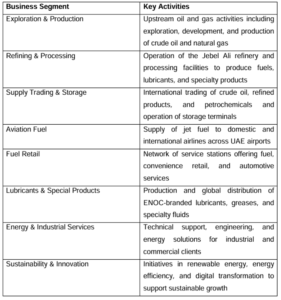
Table 1: Summary of ENOC’s Portfolio Activities
Source: ENOC (2025)
These activities help ENOC to align its strategic vision with long-term economic growth and sustainability goals of Dubai. The company has over 30 subsidiaries and joint ventures which offer scale, flexibility and innovation in project delivery. Procurement is a key aspect of ENOC operations, which helps the company to source goods, equipment, and services at the right time and at the right cost. Through the use of structured contracts and strong supplier management systems, ENOC achieves supply chain efficiency and maintains quality, ethical compliance and value optimisation in all its projects.
3.0 ENOC’s Contract Introduction and Context
The contract examined in this report is ENOC’s General Conditions of Purchase, which functions as a standard form contract within a framework agreement (See Appendix 1). The contractual terms are summarised in table 2 as follows;
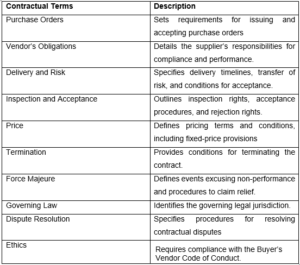
Table 2: A Summary of ENOC’s General Conditions of Purchase
Source: ENOC (2025)
This form of contract is consistently applied across a range of suppliers, ensuring that the same terms and conditions govern all transactions, regardless of the value, product type, or associated procurement risk. The framework was established following a competitive tendering process, allowing multiple pre-qualified suppliers to be appointed. According to Patil (2025), this approach secures competitive pricing, ensures continuity of supply, and reduces operational risk by avoiding reliance on a single supplier.
Under this arrangement, ENOC issues purchase orders to call off goods or services as operational needs arise. Each purchase order specifies the required quantity, agreed price, delivery date, and any applicable technical or performance requirements as seen in Figure 1.
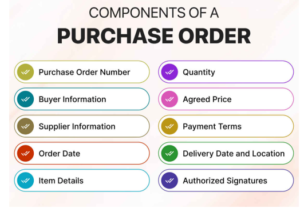
Figure 1: Components of ENOC’s Purchase Order
Source: Sullivan (2020)
With such specifications, individual procurements remain fully aligned with the overarching contractual provisions set out in the General Conditions of Purchase. The structure provides ENOC with the flexibility to meet varying operational demands without renegotiating core contractual terms for each order.
Although ENOC predominantly uses this standardised framework approach for most routine and recurring procurement activities, it also employs other contract forms when necessary. Model form contracts, common in engineering and construction, are utilised where industry-specific clauses are essential to address technical or regulatory complexities. In certain high-value, complex, or unique projects, bespoke contracts are developed. According to Simpson (2025), these are customised agreements negotiated directly between ENOC and the supplier to address specific risks, deliverables, or performance requirements not covered in standard terms.
4.0 Application of ENOC’s Terms and Conditions
4.1 Risks of Poor Quality in Contracting
In the context of ENOC’s General Conditions of Purchase, quality is defined through Clause 11.1, which requires products to be new, fit for purpose, free from defects, and manufactured in accordance with agreed specifications and applicable industry standards stating:
Please click the following icon to access this assessment in full
Related:https://rankedprofessionals.com/downloads/solution-cips-roshn-contract-terms-and-conditions/