(Solution) ICS Learn 5C001 Assessment ID / CIPD_5CO01_25_01
Answer to the Questions
Q1: AC 1.1 Flat Non-Hierarchical Structure appropriate; Hierarchical Bureaucratic Structure Suitable
In this analysis, the flat non-hierarchical structure of Calmere House is considered to be suitable to Kirsten as the owner and possible compared to hierarchy structure in a bureaucracy owned by Chaffinch Group.
Flat Non-Hierarchical Kirsten Organisational Structure.
The flat non-hierarchical organisation structure consists of few or no management layers, broad spans of control, and decentralised decision-making whereby it promotes the participation of employees, employee independence, and close interaction (CIPD, 2023).
This was a very suitable structure under the ownership of Kirsten. The 42 employees were all directly reporting to Kirsten which favored her consultative style of management. Frequent meetings of the staff, one to one check-ins, and nursing shifts provided possibility of open communication and shared decision making. The specialist skills and experience of employees were appreciated, engagement, commitment, and retention were enhanced (CIPD, 2023a).
However, as all the employees were reporting to Kirsten, a bottleneck in decision making could be created as it depended on her availability. Lack of formal policies and procedures amplified the chances of inconsistency and the organisation would be at risk should Kirsten depart.
Hierarchical Bureaucratic Organisational Structure at Chaffinch Group.
A hierarchical bureaucratic structure is characterised by layers of management, strict reporting lines, strict rules and standard procedures, to create uniformity and control (Taylor and Woodhams, 2022).
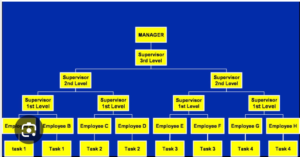
In the case of Chaffinch Group this is a better structure. Being a big company providing care homes, it has to have the accountability, regulation adherence, and cost management at various locations. Addressing the concerns that Kirsten has about increasing costs is possible through formal policies and in a way that will not compromise care standards. Roles and procedures also make the system less dependent on individuals and scaleable (CIPD, 2023b).
However, disadvantages might occur. With more hierarchy, the degree of autonomy among employees might be less, and the good culture of relationships that was experienced before will be undermined.
Nevertheless, this does not mean the hierarchical bureaucratic structure is inappropriate as the size of Chaffinch Group, the pressure of the regulatory environment as well as the necessity of efficiency, requires standardisation, governance, and strategic control.
Q2: AC 1.2 Chaffinch Group using Rational Approach for Strategy Formulation
This discussion examines how Chaffinch Group can use a rational approach to strategy formulation so that service quality is able to match the needs of customers without focusing on the weaknesses bequeathed by Calmere House.
Service Area that needs to be improved: One of the critical service-level concerns is the lack of consistency in care delivery because Calmere House previously experienced the informal policies and procedures, which leads to inconsistent experience of the residency as the organisation grows.
Adopting a Rational Approach to Strategy: The rational approach is a systematic approach, has clear goals, alternatives are evaluated, and decisions are designed to be implemented in a controlled manner, making sure to use evidence-based decision-making and fit them with the needs of the customers (Whittington et al., 2022).
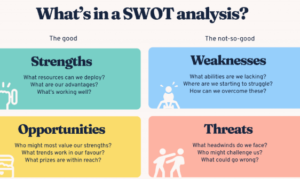
Analysis of the Issue (SWOT): SWOT analysis determines the organisational strengths, weaknesses, opportunities, and threats (CIPD, 2025). The strength of the staff commitment, weak staff commitment through the lack of formal processes, the standardisation opportunity, and the regulatory non-compliance threat are all strengths, weaknesses or opportunities of Chaffinch Group which can be evaluated with the help of SWOT analysis.
Objective Setting: Specific goals can be to enhance the level of care consistency, raise regulatory compliance rates, and keep resident satisfaction levels above established standards, according to the SMART criteria (Armstrong and Taylor, 2014).
Creation of Strategic Alternatives: Standardised care protocols, investment in staff training, introduction of digital protocols of care planning, and formalisation of channels of communication can be viewed as potential solutions to ensure that the employees have a voice.
Assessing Strategic Alternatives: The cost, implications on the quality of care, staff acceptability, and consistency between options and organisational values should be analysed in comparison using cost-benefit and risk analysis tools.
Decision Making: The best alternative would be a combination of standardisation of procedures and planned employee input, without losing the relational culture of Calmere House whilst enhancing the stability and efficiency of the organisation.
Strategy Implementation: It should be implemented through a vertical strategy to make it parallel with corporate strategy and a horizontal strategy to incorporate practices under care, HR, and operations to ensure uniformity (Project Management Institute (PMI) 2010).
Q3: AC 1.3 External Factors with Negative and Positive Impact
Residential care industry is influenced by numerous external factors; this analysis will provide one of these adverse external conditions that threaten the sustainability of services.
Negative External Environment: Increasing Cost of Operations and Workforce….
Please click the following link to access this assessment in full
Related to: https://rankedprofessionals.com/downloads/solution-level-5-associate-diploma-cipd-5c001/