(Solution) CIPD Unit 1 5C001 Organisational Performance and Culture in Practice
Solution
Answer to the Questions
1.1 Appropriateness of Flat Non-Hierarchical Structure and Hierarchical Bureaucratic Structure
Flat Non-hierarchical Organisational Structure
A flat non-hierarchical organisational structure reduces structural complexity by minimising layers of management and facilitating direct communication between employees and leaders. Decision-making is approached in a participative manner, influenced by employees’ contributions. As described by CIPD (2025b), this system ensures teamwork, innovation, openness, and a high level of employee commitment.
Advantages and Disadvantages Under Kirsten’s Ownership
Under Kirsten’s leadership, the flat structure worked well with Calmere House’s small workforce consisting 42 employees. Kirsten promoted participation through regular meetings and one-on-one conversations, which helped employees feel valued. Employee involvement in recruitment prioritised behaviours alongside qualifications, further strengthening commitment (Childs, 2020). However, the absence of formal policies created reliance on informal practices, which could create inconsistency and potential compliance issues. Reporting directly to Kirsten also meant decision-making could be dependent on her availability, potentially creating delays. While effective in encouraging a family-like culture, the structure lacked scalability. As the organisation faced rising costs and the need for investment, the absence of formal systems could have limited its capacity to manage emerging challenges effectively.
Reason for Appropriateness
The flat structure was appropriate for Calmere House because it aligned with its ethos of personalised care and employee empowerment. With strong employee engagement, low turnover, and high resident satisfaction, this structure supported stability and trust (Klyagin, 2024). It allowed Kirsten to maintain close communication with her staff and ensured decisions reflected both professional expertise and resident needs.
Hierarchical Bureaucratic Organisational Structure
A hierarchical bureaucratic organisational structure consists of multiple management layers, where authority flows from top to bottom. Decision-making is centralised, and rules, policies, and procedures guide operations (Clure, 2023). This structure provides control, consistency, and standardisation, particularly in larger organisations. However, it often reduces flexibility, slows decision-making, and can distance senior leadership from employees and customers.
Advantages and Disadvantages Under the Chaffinch Group’s Ownership
The hierarchical structure under Chaffinch Group created standardisation by introducing uniform policies and procedures across care homes. This ensured compliance and operational consistency, which is vital for managing a large organisation. However, the rigid structure reduced employee autonomy, with Kath’s autocratic style alienating staff. Employee input was dismissed, leading to dissatisfaction, disengagement, and increased turnover (Picincu, 2021). The shift also disrupted Calmere House’s established culture, replacing personal connections with bureaucracy. Residents, too, felt overlooked as their preferences were ignored, diminishing service quality. While the structure provided accountability through multiple managerial layers, it proved not suited to the small, community-focused environment of Calmere House. Instead of improving efficiency, it led to morale issues, loss of trust, and operational decline, undermining both employee and resident loyalty.
Reason for Appropriateness
The hierarchical structure is appropriate for Chaffinch Group as it manages multiple care homes requiring standardisation and control. Clear lines of authority help enforce policies, monitor performance, and ensure financial accountability across a large organisation (Morales, 2024). It allows Chaffinch to align Calmere House with its wider business goals, prioritising consistent service delivery and return on investment across its portfolio.
1.2 Rational Approach to Strategy Formulation
Area of Service Levels Improvement by Chaffinch Group
A critical service level issue at Calmere House is the decline in resident satisfaction, particularly concerning personalisation of rooms. Residents previously valued the ability to customise decor, but under Chaffinch Group, uniform refurbishments removed individuality. This has weakened the home’s appeal, leading to resident dissatisfaction and departures, directly impacting occupancy rates and undermining the organisation’s goal of filling all rooms.
Rational Approach to Formulating Strategy to Address the Issue
A rational approach enables Chaffinch Group to address declining service quality through systematic analysis, structured decision-making, and evidence-based planning. Through the use of models such as SWOT to identify causes of dissatisfaction, setting measurable objectives, and evaluating alternative solutions, Chaffinch can ensure strategies directly address customer needs. Francis (2024) mentions that this structured approach reduces risks, enhances decision quality, and aligns improvements with long-term business goals.
Analysis of the issue
Using a SWOT analysis, Chaffinch can assess strengths such as financial resources and refurbishment capabilities, weaknesses like loss of personalisation, opportunities including differentiating through customised care, and threats such as competitors attracting residents. This analysis highlights that the main service gap lies in ignoring customer preferences, which directly affects satisfaction and occupancy, allowing Chaffinch to formulate strategies grounded in evidence (CIPD, 2022b).
Objective settings to produce clear goals
Chaffinch should establish clear, measurable objectives to restore resident satisfaction and increase occupancy. For example, they can set that within 12 months, 90% of residents will rate personalisation of rooms as good or excellent, and achieve 95% occupancy within six months. These objectives provide direction, align efforts across management levels, and allow progress tracking, ensuring that improvement initiatives remain focused, realistic, and outcome-driven (CIPD, 2025a).
Generating a range of ideas and solutions
Chaffinch can generate multiple ideas to address the service gap, such as offering residents a choice of decor packages, introducing personalised care plans, or creating feedback forums for continuous input. Jahan (2022) explains that brainstorming a broad range of alternatives helps Chaffinch ensure flexibility and inclusivity in potential solutions, encouraging creativity while prioritising customer needs.
Evaluating the generated ideas
Evaluation should compare solutions against criteria such as cost, feasibility, impact on resident satisfaction, and alignment with organisational goals. For instance, decor packages may offer balance between standardisation and personalisation at a manageable cost. Meanwhile, continuous feedback forums may provide long-term adaptability (Roberts, 2023). Structured evaluation ensures the chosen strategies deliver value to both residents and the business, avoiding reactive or impractical measures.
Picking best ones- decision making
Following evaluation, Chaffinch should adopt solutions offering the highest benefit-to-cost ratio and strongest alignment with resident expectations. For example, introducing decor package options supported by structured feedback mechanisms provides a scalable yet personalised approach. According to Hayes (2024), this decision balances operational efficiency with resident-focused care, addressing dissatisfaction while supporting strategic goals of increased occupancy, financial sustainability, and long-term competitive advantage in the care sector.
Implementation of the strategy
Implementation should follow a vertical and horizontal approach. Vertically, clear communication of strategy from senior managers to frontline staff ensures consistency. Horizontally, collaboration across care, facilities, and people teams secures buy-in (Matthews, 2024). Training employees to manage personalised services and involving residents in decision-making ensures alignment with objectives.
1.3 External Factors Impacting the Residential Care Industry
Negative Impact: Rising Inflation
One major external factor negatively impacting the residential care industry is rising inflation, which directly increases operational costs.
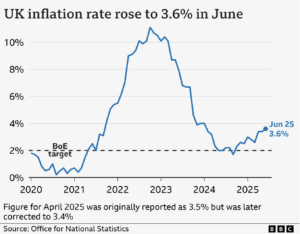
Inflation drives up prices of utilities, food, medical supplies, and wages, all of which are essential in residential care. According to Oner (2023), inflation erodes purchasing power, creating pressure on both businesses and households. For care homes, this results in higher staffing costs, particularly as labour is the largest expense in the sector. The Bank of England (2025) notes that increased interest rates, often used to combat inflation, further raise borrowing costs, limiting the ability of providers to invest in facilities. In the case of Calmere House, Kirsten had already expressed concern over rising staff and utility costs, fearing these would compromise quality of care. Hence, it is evident that inflation affects business viability and also risks reduced service quality, staff dissatisfaction, and higher resident fees. The impact is long-term, as the care sector faces ongoing vulnerability to economic fluctuations, with persistent cost pressures threatening sustainability and profitability.
Positive Impact: Ageing Population
The ageing population, on the other hand, is a positive external factor influencing the residential care sector since it generates consistent, long-term demand for care services. One in four people will be 65 years or older by 2041, according to the Office for National Statistics (2025), which would greatly increase the demand for residential and respite care. This demographic shift provides a growth opportunity for providers such as Chaffinch Group, who can expand services to meet rising demand. According to the CIPD (2023b), demographic trends are central to workforce and service planning, and organisations that adapt effectively to population changes will remain competitive. For Calmere House, this trend represents a chance to rebuild its resident base by customising services to the preferences of older adults, such as personalised rooms and individualised care plans. This is a long-term driver, ensuring demand will remain strong for decades. If effectively managed, the ageing population can help care providers achieve financial stability while reinforcing their social value in supporting an increasingly dependent demographic.
1.4 Technology and impact in workplace
Technology to Improve Patient Care
Chaffinch Group could introduce smart sensor mattresses to detect residents’ vital signs such as heart rate, breathing patterns, and movement during sleep. These sensors provide real-time alerts to care staff when abnormalities occur, reducing risks associated with falls, pressure sores, or undetected health deterioration (Bose, 2025). The system ensures early intervention and supports personalised, proactive patient care.
Impact on Patient Care Work
The introduction of smart sensor mattresses
Please click the following link to access this assessment in full
Related to:https://rankedprofessionals.com/downloads/solution-cipd-avado-5c001-unit-1/