(Solution) CIPD 5C002 Task One- Questions
Solution
Task one – Questions
Q1. Evaluate the concept of evidence-based practice (EBP) and provide two examples of where Technivara could use it to ensure sound decision-making in people practice. (AC 1.1) 505
Below is evaluating the concept of evidence-based practice (EBP) and providing two examples of where Technivara could use it to ensure sound decision-making in people practice.
Evidence-based practice (EBP) is a way of making decisions that uses the best available facts, data, and research to support clear and fair choices. In any business, making good decisions is very important, especially when it comes to managing people.

When decisions are based only on habits, opinions, or outdated ways of working, they can lead to mistakes or risks for the company. Instead of relying on guesses or personal feelings, EBP encourages combining real evidence with careful thinking to make well-justified decisions.
EBP was first developed in healthcare but works well in business too. It is defined as “the conscientious, explicit, and judicious use of current best evidence in making decisions” (Sackett et al., 1996). This means combining reliable information, expert knowledge, and what matters most to the company and its employees. Using this method helps businesses like Technivara move away from old-fashioned or risky decisions and adopt more modern, effective ways of working. It also encourages continuous learning and improvement, allowing companies to adapt quickly to changes in the market or workforce needs.
Technivara could apply evidence-based practices in at least two key areas of people management to improve decision-making. The first area is recruitment and selection. Currently, the company may rely on traditional hiring methods based on intuition or paper forms, which can be slow and less accurate. Technivara could implement an internal website, similar to the one used in my company, where discipline managers can submit requests for new hires. As HR, we would evaluate these requests to ensure they align with the company’s growth strategy and the fiscal year operational plan. We would also hold in-depth discussions with managers to define the ideal candidate profile for each position. This approach reduces the time needed to identify suitable candidates and increases the likelihood of hiring individuals who will contribute to the company’s continued growth.
The second area is performance management. Technivara’s current paper-based system may not provide timely or useful feedback on employee performance. By adopting evidence-based methods, such as using data to track performance trends and applying research-supported feedback techniques, the company can better identify training needs and recognize high performers. This includes ensuring that each employee understands their duties and job description, setting achievable goals for the year, and aligning expectations between the employee and their manager, as practiced in my company. This approach helps employees improve, supports better planning for future leadership roles, and creates a more productive and motivating workplace.
In conclusion, evidence-based practice is a powerful tool for Technivara to make better decisions about managing people. Using EBP will help the company replace outdated practices with modern, data-driven approaches. By applying this in recruitment and performance management, Technivara can ensure that its decisions are clear, fair, and lead to continued success. This approach not only improves business outcomes but also creates a more positive and engaging work environment for employees.
Q2. Evaluate one appropriate analysis tool and one appropriate analysis method that Technivara might apply to recognise and diagnose issues, challenges, and opportunities. (AC 1.2) 412
When a company like Technivara wants to grow and improve, it needs to understand the problems it faces and find the best ways to fix them. Right now, Technivara has a traditional way of working and old-fashioned people practice, which makes change difficult. To help with this, it is important to choose the right analysis tool and method. These will help us find out what is working, what is not, and what opportunities the company can take. In this answer, I will explain one analysis tool and one analysis method that can help Technivara recognize and solve its issues.
The best analysis tool for Technivara is Force Field Analysis.
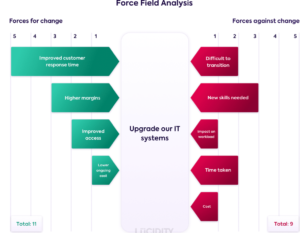
This tool helps us understand what forces are pushing for change and what forces are holding it back. It is useful when a company faces resistance to new ways of working. Lewin (1947) said, “Force Field Analysis is a method for diagnosing situations involving change by assessing the balance of driving and restraining forces” (Lewin, 1947). For Technivara, the driving forces might be the need to grow and update people practices, while the restraining forces include Bill’s traditional style and the old paper systems. By listing these forces, the company can decide how to reduce the resistance and support change, making it easier to convince Bill and the board. This tool also helps focus the team’s energy on the most important issues that need change.
For the analysis method, interviews are a good choice. Interviews involve talking directly to people to understand their views and feelings. Since Technivara’s staff and leaders may be worried about changes, interviews let them explain their concerns and ideas in their own words. Kvale (2007) explains, “Interviews are a powerful method for gathering rich, in-depth information about people’s experiences, attitudes, and motivations” (Kvale, 2007). By interviewing Bill, Sue, and others, Technivara can learn what people really think about current practices and how to improve them. Interviews also help build trust and show employees that their opinions matter during the change process.
In conclusion, using Force Field Analysis and interviews together will give Technivara a clear picture of the challenges and chances for change. Force Field Analysis shows what helps and blocks change, while interviews provide personal insights. Together, they will help Technivara build a strong case for updating their people’s practices in a way that works for everyone. This combined approach makes it easier to plan changes that are realistic and have strong support from the whole organization.
Q3. Explain the main principles of critical thinking including how these might apply to your own and others’ ideas to assist objective and rational debate at Technivara (AC 1.3) 442
Critical thinking is a valuable skill that helps individuals and organizations make smarter decisions by carefully evaluating information and ideas. It means not just accepting things at face value but asking questions, thinking clearly, and using evidence. For a company like Technivara, which is trying to move away from old-fashioned methods, applying critical thinking can support better decision-making and help the business grow in a modern, effective way. It encourages a more thoughtful approach to change, which is especially important in a fast-growing company.
One important principle of critical thinking is the careful analysis of information. This means breaking down complex ideas into smaller parts to understand how they relate and whether the reasoning makes sense. Facione (2015) explains, “Analysis is the identification of the intended and actual inferential relationships among statements, questions, concepts, descriptions or other forms of representation intended to express belief, judgment, experiences, reasons, information, or opinions”. In other words, analysis is about examining the details to make sure the conclusions follow from the facts. For Technivara, this could mean analysing employee data and current HR practices to see if the paper-based system still meets the company’s needs or if it causes problems that slow growth.
Another key principle is using evidence-based methods to make decisions. This means carefully selecting and applying the best information available from multiple sources before deciding on a course of action. Rousseau (2006) defines evidence-based management as “making decisions through the conscientious, explicit, and judicious use of the best available evidence from multiple sources”. For Technivara, this means looking at employee feedback, performance data, and industry examples before deciding to change people management practices. This approach helps avoid decisions based on guesswork or personal opinions and reduces bias, leading to better results.
Recognizing bias is also an important part of critical thinking. Everyone has personal preferences or habits that might influence decisions without them realizing it. Bill, the founder, prefers traditional methods, which might make him resist change, while Sue, the People Practice Manager, sticks to old paper-based systems because that’s familiar to her. Being aware of these biases helps create open, honest discussions where different ideas can be fairly considered, reducing the risk of mistakes caused by unchecked assumptions.
In conclusion, the main principles of critical thinking careful analysis, using strong evidence, and understanding bias are essential for Technivara. Applying these principles will help the company make well-informed, rational decisions and successfully modernize its people management systems to support future growth and success. This will also encourage a culture of openness and continuous improvement, which is vital for staying competitive in the electronics industry.
Q4. Explain two decision-making processes that Technivara could apply to ensure that effective outcomes are achieved. (AC 1.4) 416
As Technivara continues to grow,…..
Please click the following icon to access this assessment in full
Related to:https://rankedprofessionals.com/downloads/solution-cipd-5c002-evidence-based-practice/