(Solution) ICS Learn 5HR01 Distinguish between third-party conciliation, mediation and arbitration (AC 2.3)
Solution
Third Party Conciliation, Mediation and Arbitration
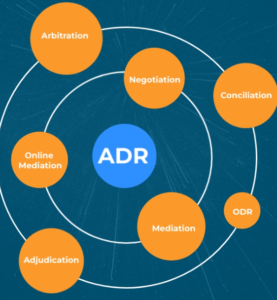
Third Party Conciliation is a process where a neutral conciliator is asked to help disputing parties to enter into a voluntary agreement by facilitating discussions (Acas, 2021a). Unlike arbitration, there is no decision imposed by a conciliator. For example, in the UK, ACAS can often act as a conciliator in dealing with employment disputes before they get to tribunals.
Mediation is a neutral process between two or more parties who want to find a common solution. It is informal and aims at better communication and maintaining relationships (Gifford, 2024). For example, a mediator may assist with the resolution of disputes between employees in a newly merged government public sector organisation whose team is having trouble working together.
Arbitration is more formal and involves an impartial arbitrator who reviews evidence and makes a binding or non-binding decision (Gohil, 2023). It is common in industrial disputes, like when a public sector union and government body cannot agree on wage increases and an arbitrator is hired to decide a fair outcome.
Distinction Between Third Party Conciliation, Mediation and Arbitration
Mediation, conciliation and arbitration vary in degree of formality, control over result, and enforceability. Conciliation is informal and advisory with a neutral conciliator present to facilitate rather than to impose a decision (GOV.UK, 2019). This is a useful method to prevent disputes from escalating, especially in newly merged public sector organisations where employees may not be completely sure what workplace policies apply. However, conciliation is nonbinding, and parties can refuse proposed solutions.
Furthermore, mediation is also voluntary but emphasises collaboration in which the parties talk to one another and try to come up with mutually acceptable solution. This is particularly effective for interpersonal conflicts like that of tensions between long term employees and new management in a merged organisation (Shaw-Parker et al., 2024). Mediation helps bring the parties together, but in some cases, it does not lead to the resolution of the parties.
On the other hand, arbitration is a formal procedure and an arbitrator, whether binding or not, issues a decision. It can be used………..
Please click the following icon to access this assessment in full