(Solution) 5HR01 AC 3.3 Advise on the importance of handling grievances effectively
Solution
As a best practice, management of the employees grievances is a core area of achieving fairness, transparency and support-based workplace. In the new merger, leaders and managers lack understanding of relations in the public sector. By enhancing appropriate management of grievances, this could enhance trust-based relations, increased in overall morale and performance increase. The rationale of this is feeling as important players of their organisations reassuring them of consideration of all issues from becoming worse.
According to Dhanabhakyam and Monish (2021), by ensuring fairness and all-inclusive grievances resolved assists to initiate an appropriate organisation culture with employees feeling of high-level value and mutual respect. This is particularly important in change process with merging uncertainties leading to an increase in tense environment.
Initiatives put in place clearly and consistently assists in maintaining how they are adhering with legislations/policies and mitigating tribunal issues and punished with fines being charged. Further, it evidence an embrace of set organisation value actively and embraced for evidencing support scope to achieve equality, diverse teams and inclusivity scope (ACAS, 2023). In times of grievances being managed appropriately consistently and impartiality, this lead to effective employees engagement, lowered absenteeism cases and improving how reputable an organisation is. The eventual result is protection of how an organisation is stable, encouraging continuous organisation operations hence efficient services provision.
Impacts of Grievances failing to be effectively handled
Failing in successfully handling the occurring grievances could elicit immense challenges to the entity and also staff.
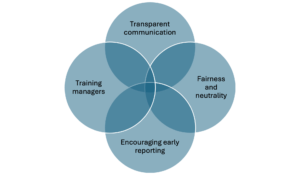
One of the impact entail development of a cultural practice which is defined by lack of fairness and mistrust issues. According to Osayi (2023), failure to adequately manage the concerns raised by the employees, this end up ruining the scope of how motivated employees are hence less disengaged. The overall productivity is affected substantially and presenteeism lowered substantially. For the case of organisation heading to a merger with change felt to be unsettling successfully, staff could assume a feeling of not valued well and not safe. Hence, grievances not appropriately handled lower retention levels hence disrupted organisation operations and lost employees with substantial experiences.
Second, failure to appropriate manage…
Please click the following icon to access this assessment in full