(Solution) CIPD ICS Learn 5HR01 CIPD_5HR01_25_01
Solution
1.1 Employee involvement and participation
Employment involvement– entail employees being engaged actively in coming up with decisions despite of ultimate authority/responsibility resting on management. This definition by ACAS (2021b) identify the scope of inclusion of employees as initiating presenting their ideas, suggesting and implementing projects which call for setting adequate plans in their daily workplace. The outcome of this is sustainable relations developed since staff and management feel involved, job satisfaction enhanced and trust-based relations.
In the Merger, suggestion schemes or employee forums can potentially be used in acquiring insights which pertain to employees thinking changes owing to leadership change post-merger process. According to Young (2024), through the identified initiatives, employees inclusion in change strategy is achieved, less resistance to change collaboration culture even after leadership moves to the private sector after merger.
Employees Participation– This means actively being involved in making core decisions in organisations. This is contrary to only giving their input. According to Lombard (2024), this transition past simple consultation by trade unions which are formal, joint consultative committees and representing employees in boards.
The outcome of participation is initiating relations anchored on mutual-based respect, accountable and trust-based relations of staff and management. Further, by being part of enactment of these policies and making decisions in organisations, harmonious coexistence in organisations.
In the merger process, work councils would be most relevant or trade unions to ensure employees influence is maintained even after initiating major post-merger policy. According to Indeed (2024), all employees end up being offered with a feel their overall voice is listened to, appreciated mitigating uncertainties and stabilising workplace sector.
Differences
Employees involvement and participation are varying in line with power of making decisions, engagement and scope extent. Different from employees involvement noted as management supported and active consultations, participation is facilitated by employees and offering direct-based impact in making decisions.
The involvement process is identified in Willemse (2023) as a simple sourcing/gathering of feedbacks by practicing surveys/interviews. Participation is different since employees are engaged in collective bargain and representatives negotiating for the policy implementation.
Secondly, involvement is informally and voluntarily pursued with participation inclusive of formalised structures such as trade unios and advisory committees. Sourcing of the employees by engaging them in various initiatives evidence their involvement. This is while granting voice in making core decisions highlighting their participation. Nevertheless, participation offers employees proactiveness in the merger hence sustainability after the merger.
1.2 Forms of union and non-union employee representation
Union Employee Representation– Employees join a trade union which bargain for them targeting to enhance workplace relations, reward strategy and security in work. From a general context, when organisations are going through merging, trade unions present collective bargaining for their employees to employers.
According to CIPD (2025b), trade unions give legality of the relationship with employers adhering to employment laws. In Merger, Equality Act 2010 would be critical not to discriminate employees in regard to their gender after the merger. All of them would be collectively involved in making decisions. They end up being confident in working relationships owing to assurance of being fairly treated with change in organisation size after merging.
Non-Union Employee Representation– This act as a communication platform for staff voicing their issues/participating in making core organisations decisions with no necessarily enrolling to trade unions.
Employee forms identified by Peters (2020) would be set after noting the merger would be initiated for discussing on areas to be improved and active interactions. The new leadership after merger would initiate the forums with a target of handling security in workplace, restructuring issues and policies initiated at work. Therefore, an open-based interaction is enhanced amongst the organisation and employees, trust-based relations and transparent.
Similarities and Differences
Similarities
Both union and non-union forms are intended in enhancing ideas sharing, presenting their points of view and what concern them while making core decisions and voices encouraged.
Further, according to CIPD (2024), both ensure they work in harmony through an active communication of staff and management with any conflicts avoided with all employees involved.
Differences
This is informed by their power and influence. The unions are in place legally backed and collective bargaining policies initiated for allowing active negotiations. This is in regard to employment and pursuing industrial actions including striking upon demand.
For Non-Union representation, this is done voluntarily by working with management with limited enforcements legally. Also, unions have an opportunity for escalating disputes formally negotiating and pursuing industrial actions. According to ACAS (2022), they are actively engaged with goodwill for resolving issues in their organisation. This end up to limit how they impact direction of employment environment.
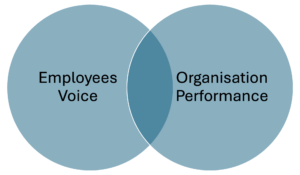
1.3 Relationship of employee voice and organisation performance
Arguments which Support
Please click the following icon to access this assessment in full
Related to:https://rankedprofessionals.com/downloads/solution-cipd-avado-5hr01-answer-to-the-task-questions/