(Solution) CIPD Level 5 5HR03 AVADO_5HR03_24_06
AC 1.1: Principles of Reward
Reward systems are essential in driving employee motivation and aligning their efforts with organisational goals (Cotton, 2023). They contribute to fostering a high-performance culture and ensuring employee retention and satisfaction.
Fairness and Equity in Rewards
The fairness of reward systems creates employee confidence that their work values correspond equally to their peer groups and external marketplace (CIPD, 2021). Equity-based pay systems match financial offerings to work value through evaluations of individual contributions alongside demonstrated skills and work experience. Employees will develop trust within the organisation and demonstrate enhanced commitment when they feel the reward system treats them justly.
Home International should apply fairness through an organisation-wide standardisation of reward policies which ensures that roles holding similar responsibilities have equal compensation. The organisational high turnover of younger factory workers makes this principle crucial for the business. The implementation of equal pay policies helps to preserve employee happiness which then results in decreased turnover levels.
Alignment with Organisational Objectives
The reward systems of an organisation must support its established strategic goals and core values. By following this principle employees dedicate their work to activities which generate business achievement. Organisations under this principle connect rewards to measurable performance metrics in order to strengthen both ideological alignment and operational results.
Home International’s commitment to sustainable furniture receives employee buy-in through bonus payments or performance-linked incentives both for sustainability work and beyond standard production milestone achievements. The organisation’s alignment creates both employee motivation and strengthens its dedication to sustainability through shared organisational purpose.
Importance of Reward in Culture and Performance Management
An organisation’s values and behaviours find reinforcement through its reward systems so they help shape the workplace culture. A reward system that matches goals with fairness delivers both positive workplace culture and performance management support through performance recognition (Jansen, 2022). Resolving reward system issues at Home International would boost its sustainable workplace culture while improving staff commitment at the same time it would reduce employee departures in its manufacturing facilities.
Organisations using fairness-based reward systems which match organisational goals create motivated teams whose achievements parallel business success.
AC 1.2: Extrinsic and Intrinsic Rewards
Extrinsic and intrinsic rewards constitute powerful drivers of employee motivation that help maintain organisational performance standards. An organisation needs to understand how employee rewards affect both their actions and their work outcomes to implement performance-driven reward systems.
Extrinsic Rewards
Pay combined with bonuses and benefits and promotional opportunities make up the category of extrinsic rewards (AIHR, 2024). Compensation packages encourage staff to fulfil both time-bound performance targets and reach defined procedural outcomes. Employees easily respond well to external rewards that specify certain measurable outcomes or targets that need to be met.
Home International could supply performance-based bonus plans to their factory operatives as they seek higher production levels. These monetary incentives push employees to achieve their production goals and consequently drive better efficiency and higher manufacturing results. When wages grow following positive performance reviews employees will maintain their dedication to occupational responsibilities. The concrete nature of extrinsic incentives ensures monetary appreciation of employees’ labour and helps organisations maintain staff retention particularly in jobs with consistent turnover.
However, while extrinsic rewards can yield short-term results, they are less effective at fostering long-term motivation or developing intrinsic satisfaction. Without a balance of intrinsic rewards, extrinsic incentives alone may not sustain high performance over time.
Intrinsic Rewards
As defined by AIHR (2024) intrinsic rewards represent psychological internal forces which employees experience as achievement alongside personal development and job fulfilment. The satisfaction and meaning that workers find in their work combines with performance success to form intrinsic workplace benefits.
Home International should dedicate itself to establishing advancement programmes for career skills development targeted at its manufacturing workforce. Through organisational training initiatives and mentoring systems and advancement opportunities entered into the workforce employees will maintain their position at the company for extended time periods.
The promotion of enduring engagement and performance success relies primarily on intrinsic workplace rewards. Employees who discover meaningful connexion to their work roles together with strong emotional participation in organisational goals demonstrate enhanced commitment to exceed basic duties. Home International can sustain high performance by embedding employee purpose in their sustainability objectives.
AC 2.1: Differences Between Types of Grade and Pay Structures
Job Grading Structures
Job grading structures organise work roles into graded levels based on their required skills and responsibilities to determine pay levels (SHRM, 2024). Organisations commonly implement two different job grading models including multi-graded structures combined with broad-banded structures.
Multi-Graded Structures
Organisations using multi-graded structures fragment work positions into many standardised categories or grades that separate job duties and required competencies. The hierarchical design of this structure benefits established organisations which emphasise official professional advancement together with smooth salary systems. At Home International the company assigns factory operatives to distinct grades determined by their experience and skills which control their assigned pay ranges for each grade. Organisations benefit from these clear pay bands yet experience limitations because employees find themselves restricted within stringent pay ranges associated with each grade.
Broad-Banded Structures
The Broad-Banded Structures merges several grade levels into salary bands which offer expanded compensation ranges. With broad range salary bands employers enjoy more options to define and pay their roles. Broad-banded structures prove especially advantageous to organisations like Home International because they eliminate grade restrictions that limit staff members from expanding responsibilities. Employees at Home International benefit from increased career mobility through their broad-banded structure because it permits staff to advance either across different roles or vertically between grades without traditional hierarchies.
Pay Structures
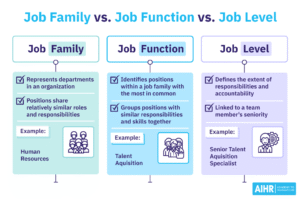
The method by which companies compensate their staff between roles constitutes pay structures (CIPD, 2024). Organisations use two primary pay structure types including job family pay structures and spot rate pay structures.
Job family pay structures unite roles with comparable competencies by using one identical pay model across groups of similar jobs. At Home International manufacturing supervisors and quality controllers would establish the “manufacturing family” as a single payment system which sets identical wage levels. The system creates consistency across job categories and helps employees stay with the company longer. The strict organisation of roles through pay structures creates challenges because employees experience restricted access to diverse roles in other families.
Spot Rate Pay Structures
Pay structures with spot rates specifically define salary levels for positions needing hard-to-find specialised competencies or difficult to recruit talent. The role of expert sustainable product designer within Home International falls under the spot rate pay structure framework. The implementation of spot rates cansuccessfully draw qualified personnel into hard-to-recruit positions yet creates pay inequalities which might result in workforce dissatisfaction among staff who do not qualify for this enhanced compensation.
Key Differences between Grade and Pay Structures
| Category | Grade Structures | Pay Structures |
| Definition | Grade structures classify roles into hierarchical grades or bands based on skill level and responsibility. | Pay structures define how employees are compensated, either through fixed rates or flexible pay scales. |
| Flexibility | Multi-graded structures offer limited flexibility, while broad-banded structures allow greater career movement. | Spot rate structures provide rigid pay for niche roles, while job family structures maintain consistent salaries across similar jobs. |
| Career Progression | Multi-graded structures support structured promotions, while broad-banded structures encourage lateral moves. | Job family pay structures offer stability, while spot rate pay may incentivise employees with high-demand skills. |
AC 2.2: Impact of Contingent Rewards on Performance
Companies award contingent rewards that depend on workers meeting pre-established performance goals (Cotton ,2022). The rewards companies provide have major performance effects at individual and team levels together with organisational performance outcomes. There exist three specific ways through which contingent awards impact workforce productivity in individuals teams and enterprises.
Impact on Individual Performance
Contingent rewards prove extremely effective at motivating individual employee performance through immediate incentives which guide goal achievements. Employees motivated through performance-based bonus programmes focus on tasks that lead to their personal achievements through rewards such as bonuses and commissions and forms of recognition. Performance-based bonuses combined with innovation recognition awards help factory operatives at Home International achieve their targets meaningfully and push toward sustainable solutions. By establishing clear connexions between performance achievements and reward distribution systems employee motivation strengthens and job satisfaction grows while workers reach new heights in their work (Manzoor, Wei and Asif, 2021).
Impact on Team Performance
Team-based contingent rewards lead teams to collaborate more effectively as they work together to reach their unified organisational targets. Success-based team rewards drive employees to collaborate more frequently toward meeting organisational goals. Home International should offer team rewards to its teams when they collectively reach sustainability benchmarks including waste reduction and energy efficiency targets. Group rewards create shared teamwork by uniting employees through common goals which enhances cooperation and mutual effort. Fair rewards that demonstrate equity across teams will promote collaboration but reward systems must be designed to avoid competing behaviour that leads to detrimental effects on relationship building.
Impact on Organisational Performance
Contingent rewards provide organisations with the ability to unite personnel and team objectives with corporate business targets (Ryba, 2021). Being able to connect rewards with essential business targets which include boosting sales and achieving both production goals and better customer satisfaction helps organisations attain increased success. Home International establishes reward systems linked to business expansion targets in sustainable furniture markets which bolster organisational sustainability commitments as well as staff performance toward these extended goals. High performance results from contingent reward systems which develop a results-focused work environment where employees see their contributions directly influence organisational success.
AC 2.2: Impact of Contingent Rewards on Performance
Companies award contingent rewards that depend on workers meeting pre-established performance goals (Cotton, 2022). These rewards significantly influence performance at the individual, team, and organisational levels by aligning employee efforts with business objectives. Below, we examine the impact of performance-related pay (PRP) and skill-based pay on these three performance dimensions.
Impact on Individual Performance
Contingent rewards are highly effective at motivating individuals by providing direct financial incentives that encourage goal achievement. Employees who receive performance-based bonuses or skill-based pay increases focus on meeting performance standards that lead to greater personal rewards.
- Performance-Related Pay (PRP): PRP directly links pay to individual performance, ensuring employees are financially rewarded based on their output or achievements. At Home International, factory operatives can receive PRP through individual productivity bonuses, which encourage them to meet or exceed production targets. This increases motivation, enhances job satisfaction, and fosters a sense of achievement as employees see their efforts translate into tangible rewards (Manzoor, Wei, and Asif, 2021).
- Skill-Based Pay: Unlike PRP, skill-based pay rewards employees for developing new competencies rather than meeting fixed performance targets. Employees at Home International who gain additional technical skills, such as sustainable material processing or machinery operation, may receive higher wages. This encourages continuous learning, improves job proficiency, and increases individual engagement in career development.
By establishing clear connections between reward structures and performance outcomes, both PRP and skill-based pay reinforce high standards and motivate employees to consistently improve.
Impact on Team Performance
Team-based contingent rewards enhance collaboration by encouraging collective goal achievement and fostering a shared sense of purpose. However, the effectiveness of these rewards depends on the design and fairness of the reward system.
- Performance-Related Pay (PRP): Team-based PRP, such as group bonuses tied to achieving sustainability targets, can strengthen cooperation among Home International employees. For example, if a manufacturing team successfully reduces material waste or increases efficiency, they may receive a collective PRP bonus. This approach ensures that employees work together rather than in isolation, promoting a culture of teamwork and shared accountability. However, PRP must be carefully structured to prevent competition that could lead to internal conflict.
- Skill-Based Pay: In a team setting, skill-based pay can be used to encourage cross-functional learning and knowledge sharing. If employees are rewarded for developing additional skills, teams naturally become more versatile and capable of covering multiple responsibilities. At Home International, factory teams that complete cross-training programs in machinery operation, quality control, and safety compliance could be eligible for skill-based pay increments. This creates a more adaptable and efficient team while reducing reliance on specific individuals.
By using PRP to incentivise collective achievements and skill-based pay to enhance team versatility, Home International can ensure that teamwork remains strong and that employees actively support one another’s success.
Impact on Organisational Performance
At an organisational level, contingent rewards help align employee behaviour with business objectives by ensuring rewards drive performance improvements at scale. A well-structured reward system contributes to higher efficiency, reduced turnover, and stronger business results.
- Performance-Related Pay (PRP): When PRP is strategically aligned with corporate goals, it creates a results-driven culture. At Home International, linking PRP incentives to overall business expansion in the sustainable furniture market encourages employees to contribute to long-term growth. Employees strive to improve efficiency, meet production targets, and enhance sustainability efforts, all of which positively impact the organisation’s performance.
- Skill-Based Pay: A workforce with diverse skills is better equipped to handle business challenges, ensuring long-term success. By offering skill-based pay, Home International can develop a highly skilled workforce that supports innovation, quality improvements, and process optimisation. For instance, employees trained in advanced eco-friendly manufacturing techniques can improve product quality and reduce production costs, contributing to the company’s competitive advantage.
When properly implemented, PRP enhances productivity and goal alignment, while skill-based pay builds a knowledgeable and adaptable workforce. Together, these two reward types strengthen individual, team, and organisational performance, helping Home International achieve sustainable growth.
AC 2.3: Merits of Different Types of Benefits
Benefits offered by organisations are essential in enhancing employee satisfaction, performance, and overall engagement. These benefits can range from non-financial rewards to supplementary compensation. Below are two common types of benefits with balanced merits and demerits.
- Public Recognition
In formal work settings managers use public recognition as a method to honour employee accomplishments before their fellow workmates during office meetings.
Merits/Advantages:
- Boosts Employee Morale: Public acknowledgement that recognises worker achievements creates strong feelings of appreciation which result in enhanced employee motivation. When employees receive positive reinforcement their job satisfaction rises alongside workplace morale.
- Promotes a Positive Work Culture: Public recognition fosters a culture of transparency, fairness, and inclusivity. Teams will positively align their organisational efforts with goals when employees notice and receive recognition for good performance.
- Encourages Peer Motivation: The recognition leader shares with others creates a yardstick that drives coworkers to both seek similar acknowledgment and enhance their performance standards.
Demerits/Disadvantages:
- Can Cause Discomfort for Some Employees: Some staff members do not want public acknowledgment since this approach triggers feelings of discomfort and nervousness when facing others.
- Risk of Perceived Unfairness: Public recognition becomes unfair when it is applied inconsistently in the workplace creating employee resentment toward those who receive insufficient recognition.
- May Undermine Teamwork: Individual recognition prioritisation has the potential to create unwholesome competition for team members since dispersed recognition does not equally reach all employees.
- Non-Cash Awards (Gifts, Vouchers, Tickets)
Non-cash awards include tangible items like gift cards, event tickets, or other personalised rewards given to employees for their exceptional work.
Demerits/Disadvantages:
- Can Cause Discomfort for Some Employees: Some staff members do not want public acknowledgment since this approach triggers feelings of discomfort and nervousness when facing others.
- Risk of Perceived Unfairness: Public recognition becomes unfair when it is applied inconsistently in the workplace creating employee resentment toward those who receive insufficient recognition.
- May Undermine Teamwork: Individual recognition prioritisation has the potential to create unwholesome competition for team members since dispersed recognition does not equally reach all employees.
Demerits/Disadvantages:
- Limited Appeal: Not every employee holds equal value for incentives made without money which reduces their impact for some staff members.
- Administrative Effort: A system to identify suitable non-cash incentives for employee recognition requires significant resources that consume additional administrative time to match rewards with specific tastes.
- Potential for Misalignment: Non-cash awards that don’t align with the employee’s personal interests or needs may be perceived as less thoughtful or meaningful, reducing their effectiveness.
AC 2.3: Merits of Different Types of Benefits
Benefits offered by organisations play a crucial role in employee satisfaction, motivation, and overall productivity. Companies use various benefits to attract, retain, and engage employees while ensuring alignment with business goals and workforce needs. Two widely used benefits in organisations are healthcare insurance and profit-sharing, each with distinct advantages.
- Healthcare Insurance
Healthcare insurance is a key financial benefit that provides employees with access to medical care, including doctor visits, hospital stays, preventive care, and prescription coverage. Many organisations offer healthcare packages as part of their reward strategies to support employee well-being and job satisfaction.
Merits:
- Improves Employee Well-being: Employees with employer-sponsored healthcare can access preventive and emergency medical services without financial strain, leading to better physical and mental health outcomes. This also reduces absenteeism and enhances workforce stability (CIPD, 2024).
- Enhances Retention and Talent Attraction: A comprehensive healthcare plan is a valuable benefit that employees consider when choosing an employer. Organisations offering strong healthcare coverage are more likely to attract and retain skilled professionals, improving overall job commitment and satisfaction.
- Increases Productivity and Reduces Workplace Stress: Employees with healthcare benefits are less likely to worry about medical costs, allowing them to focus on their work. Healthy employees perform better, experience fewer distractions, and contribute more effectively to business objectives.
- Profit-Sharing
Profit-sharing is a performance-based financial incentive where companies distribute a portion of annual profits among employees. The payout is typically linked to company profitability, making it a powerful tool for aligning employee interests with business success.
Merits:
- Encourages Employee Engagement and Motivation: When employees receive a share of the company’s profits, they become more invested in organisational performance, leading to increased productivity (Kiran et al., 2024)
- Strengthens Organisational Commitment: Employees who benefit financially from company success are more likely to stay with the organisation, reducing turnover and promoting long-term workforce stability.
- Drives a High-Performance Culture: By linking financial rewards to business performance, profit-sharing encourages a results-driven workplace where employees actively contribute to profitability.
AC 2.4: Merits of Different Types of Recognition Schemes
Employee recognition programmes serve as powerful tools which enhance morale and dedication among workers and motivation (O’Flaherty et al. 2021). Organisations generate improved performance through achievement recognition which creates a conducive work environment. Here is a breakdown of recognition approaches that features their benefits and shortcomings.
- Employee of the Month Awards
This recognition scheme awards an outstanding employee each month for their exceptional performance(Perkins, 2023). The winner is typically celebrated in front of their colleagues, often with a certificate, gift, or bonus.
Merits/Advantages:
- Increases Motivation: Employee recognition through “Employee of the Month” enhances team motivation and produces both improved job satisfaction and future high achievement.
- Promotes Healthy Competition: Distinct competition emerges through this initiative because colleagues strive to demonstrate their best work to obtain the recognition.
- Enhances Visibility: When organisations showcase high-performing employees to the public nobody else will fail to notice positive actions which drives other staff members to support company objectives.
Demerits/Disadvantages:
- Perceived Unfairness: A vague or non-transparent selection process causes employees to think the award decision creates discrimination resulting in worker dissatisfaction.
- Focus on Individual Achievements: The award recognises singular achievements over collaborative teamwork and group commitments.
- Pressure on Employees: When employees want to win the award they might experience performance pressures because they feel they need to excel constantly.
- Peer-to-Peer Recognition
Peer-to-peer recognition allows employees to acknowledge each other’s efforts, often through informal systems like “shout-outs” or formalised nominations (The Rippling Team, 2024).
Merits/Advantages:
- Fosters Collaboration: Teamwork and collaboration advance due to this recognition system which stimulates staff appreciation for fellow colleagues.
- Encourages Inclusivity: All recognition flows through peer interactions which generates a democratic approach combined with respect for one another.
- Boosts Engagement: When colleagues recognise each other it creates higher employee engagement because employees sense their worth to their team members.
Demerits/Disadvantages:
- Potential for Bias: The recognition process can become prejudiced or unfair during personal relationship evaluations.
- Inconsistent Application: The absence of formal guidelines in peer recognition practise could result in unsteady implementation thereby creating situations where certain employees receive less recognition.
- Limited Tangible Rewards: Peer recognition tends to lack substantial motivational incentives which dissuades employees who need tangible reinforcement.
AC 3.1: Assessment of the Business Context of the Reward Environment
When assessing the business context of the reward environment, it is essential to consider both internal and external factors that impact how rewards are structured, communicated, and implemented. These factors shape the reward strategies in organisations such as Home International, influencing decisions on pay and benefits.
Internal Factors
| Internal Factors | Impact on the Rewards Environment |
| Company Financial Health | Home International’s financial position determines the primary path for developing reward strategies. A company’s financial stability determines whether it chooses less costly recognition programmes involving non-cash rewards or restricted compensation adjustments (CIPD, 2024). When businesses achieve good financial outcomes they gain the resources required to deliver stronger payment packages or bonus plans. |
| Organisational Culture | An organisation’s cultural environment affects how employees interpret reward programmes. A workplace culture based on appreciation at Home International would benefit from implementing both “Employee of the Month” awards and peer recognition programmes. Such schemes can succeed but only after a cultural transformation when the workplace hold negative beliefs (Ercanbrack, 2023). |
| Workforce Demographics | Employee age combined with their personal values influence drastically how they want to be rewarded. Young factory employees generally prefer career development opportunities and bonuses while senior office workers demand pension plans together with long-term incentives. This example demonstrates the importance of matching rewards to individual employee choices. |
External Factors
| External Factors | Impact on the Rewards Environment |
| Economic Outlook | Reward strategies at Home International face influence from broader economic indicators which include inflation and unemployment rates. During periods of economic expansion Home International could provide more generous pay increases together with improved employee benefits. When a downturn occurs the company must implement cost-containment plans through the elimination of salary growth and reduction of bonus programmes. |
| Labour Market and Sector Trends | Changes within the manufacturing industry or sustainable product engineering will directly influence compensation packages which companies can offer to employees. Competitors’ compelling pay packages and benefits require Home International to revisit its reward strategies both to stay competitive and to stop valuable talent from moving elsewhere (Sorn et al., 2023). |
| Equality Legislation | Home International needs to follow the necessary legal mandates for reporting its gender pay gap along with equal pay regulations to protect itself from legal repercussions. Winning the confidence of employees depends on the company following equal pay rules and fair reward structures according to EHRC (2020). |
| External Factors | Positive Impact on Reward Decisions | Negative Impact on Reward Decisions |
| Economic Outlook | During economic growth, businesses can implement salary increases, profit-sharing schemes, and enhanced benefits. A strong economy allows Home International to invest in rewards that boost retention and performance (CIPD, 2024). | During economic downturns, financial constraints may force organisations to limit salary increases, cut bonuses, or reduce training budgets. Inflationary pressures can also reduce the real value of wages, leading to dissatisfaction. |
| Labour Market & Sector Trends | A competitive labour market drives organisations to improve reward structures to attract and retain top talent. Companies that offer higher salaries, flexible benefits, and career development opportunities gain a competitive advantage (Sorn et al., 2023). | A tight labour market with rising wage expectations may increase business costs. If competitors offer significantly better packages, Home International may struggle to retain skilled workers, especially in niche areas like sustainable furniture design. |
| Equality Legislation | Compliance with equal pay regulations and gender pay gap reporting fosters fairness and transparency in reward systems. Ensuring equality enhances company reputation and employee trust (EHRC, 2020). | Non-compliance with equality legislation can result in legal penalties, reputational damage, and potential lawsuits. Ensuring absolute fairness in pay structures may also pose challenges, especially in roles requiring unique or niche skills. |
AC 3.2: Ways to Gather and Measure Benchmarking Data
Organisations benefit from benchmarking to measure their compensation structure by comparing the data against rivals and industry benchmarks (CIPD, 2024). Home International can drive informed compensation decisions through benchmarking data collection and measurement that delivers environmental insights about their reward programmes. Below are two effective methods for gathering and measuring benchmarking data:
- Reward and Salary Surveys
Research organisations implement reward and salary surveys to collect data about pay elements including base salaries and incentives as well as rewards and allowances. Organisations and consultancy firms together with government agencies perform these surveys. Organisations receive comparison data on pay practises through the collection of data across multiple industries and geographical locations and specific sectors.
Merits:
- Industry-Relevant Data: The sector-specific data in reward surveys allows Home International to gain relevant sector insights that reveal how its reward structures align with competitors within the furniture manufacturing industry (CIPD, 2024).
- Reliability: Multiple data sources typically contribute to data collection which generates accurate information suitable for strategic decision-making.
- Trend Analysis: Through these surveys Home International monitors evolving market patterns to manage competitive compensation benefits.
Demerits:
Limited Representation of Niche Markets: ….
Please click the following icon to access this assessment in full