(Solution) 5C002 Q6-AC3.1 Appraise ways that Technivara could measure financial and non-financial performance, providing one example of each
Solution
Measuring Financial Performance: Return on Investment (ROI)
Return on Investment (ROI) is a financial performance indicator applied to assess the effectiveness of an investment by assessing the net gain as a ratio to the cost (Lloveras, 2024).
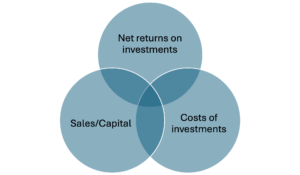
It gives a simple percentage figure which shows whether resources are utilised profitably. With regards to Technivara that is thinking of modernising its people practises, ROI would be especially applicable in evaluating the worth in digital HR systems or recruitment strategies.
To illustrate, in case Technivara invests 50,000 pounds on a digital HR solution and in one year saves 70,000 pounds in the cost that has been saved by not recruiting people, not replacing them and other efficiency benefits, the ROI would be 40%. This increase proves that the investment is subject of calculable monetary gains. Nonetheless, when the ROI is low or negative, then the company would have to reevaluate the amount of investment or implementation of the system itself. ROI thus makes sure that decisions are rationalised and connected to financial performance.
Non-Financial Performance: Employee Engagement Survey:
Employee engagement surveys are a non-financial instrument, which provides satisfaction, motivation as well as alignment of the workforce to organisational goals.

In comparison to financial metrics, they embrace people experience that has a significant impact on productivity, retention, and innovation (Ben-Joseph, 2017). In the case of Technivara, where the company is using the traditional, paper-based HR systems, engagement survey would be crucial in generating the necessary evidence of how employees view changes and what changes the company should implement.
After the implementation of a digital HR,
Please click the following icon to access this assessment in full