(Solution) 5CO02 two different ethical perspectives could influence decision-making by the People Team at Camellia (AC 1.5)
Solution
Understanding Ethical Decision-Making in HR
Ethical decision-making in people practice involves applying moral principles to guide fair, transparent, and responsible treatment of employees and stakeholders (CIPD, 2024). In Camellia, the People Team is responsible for decisions relating to recruitment, onboarding, reward, and learning. These decisions must not only be effective but also ethically sound to maintain trust, fairness, and organisational reputation. CIPD emphasises that ethical practice in HR requires professionals to balance organisational objectives with employee wellbeing, fairness, and transparency in all people decisions (CIPD, 2024).
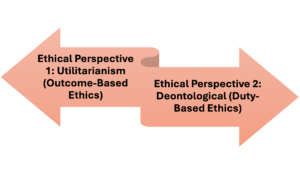
Ethical Perspective 1: Utilitarianism (Outcome-Based Ethics)
Utilitarianism focuses on making decisions that produce the greatest overall benefit for the majority of people (Savulescu, Persson and Wilkinson, 2020). In Camellia, this perspective could influence decisions such as restructuring reward systems or prioritising training programmes that benefit the largest number of employees. For example, if limited training budgets exist, the People Team may choose to invest in leadership development that improves overall organisational performance rather than individual specialist training.
The advantage of this approach is that it promotes efficiency and maximises organisational value. However, its limitation is that it may overlook minority groups or individuals whose needs are less aligned with majority benefit. This could create perceptions of unfairness, particularly if certain employee groups consistently receive fewer opportunities or resources.
Ethical Perspective 2: Deontological (Duty-Based Ethics)
Deontological ethics focuses on duties, rules, and principles rather than outcomes (Barrow and Khandhar, 2023). In Camellia, this would require the People Team to ensure fairness, transparency, and equal treatment in all HR processes, regardless of efficiency or cost. For instance, recruitment decisions must follow fair selection criteria, and employee data collected through surveys must be handled with confidentiality and consent.
The strength of…..
Please click the following icon to access this assessment in full