(Solution) 5HR03 (AC1.2) Assess the contribution of extrinsic and intrinsic rewards to improving employee contribution and sustained organisational performance
Solution
Extrinsic Rewards
Adopting the definition in CIPD (2022), rewards are tangible offered to employees for their motivation to perform and practice appropriate behaviours. The examples are monthly salary, bonus, promotion, pension scheme and fully paid leave.
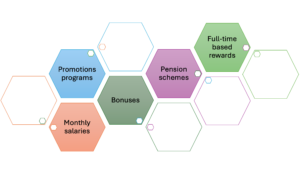
The extrinsic rewards are used to establish employee’s contribution. This is particularly in regard to financial wellbeing and recognising the employees for their motivation for meeting or exceeding level of expectations. A case example is in Eco-Insulate where issuance of bonus schemes is a motivation to the employees for improving performance with zero compromise on quality level.
Further, issuing better pay package including healthcare or paid leave could improve satisfaction in their jobs mitigating turnover. According to Emmanuel and Nwuzor (2021), the provision of well-structured extrinsic rewards enhances how they are motivated, less dissatisfied and retention enhanced.
For negatives, financial rewards offered without non-financial rewards could lead to short-term based motivation/engagement. Merging both would lead to long-term based engagement.
Intrinsic Rewards
This identifies internal factors motivating employees derived from internal employees’ satisfaction and individual fulfilment. According to CIPD (2024b), the example of this is recognition, autonomous in working and personal development. The categories of rewards enhance engagement of staff through provision of sense of fulfilment and belongingness.
As evidenced in Manzoor, et al. (2021), upon employees feeling that they are of high value with relevant opportunities granted for personalised growth, potential for effective contribution is achieved. For instance, Eco-Insulate can set a well-structured recognition strategy targeting their staff which include “paid holiday for top-performers” or “Employee of the year”. Also, Eco-Insulate enhance employee’s morale, innovativeness and increased retention by offering non-monetary rewards. The examples include appropriate job design, coaching and mentoring initiatives and career development strategies increasing staff commitment levels (CIPD, 2025).
Support for Eco-Insulate Performance
Please click the following icon to access this assessment in full