(Solution) APGLM Leadership & Management in Procurement and Supply
Solution
Executive Summary
In this business report, an evaluation of leadership and management approaches in an organisation has been provided. The organisation of focus in this report is XYZ which is a subsidiary organisation in Qatar involved in outsourcing procurement. The areas of focus in this assessment include evaluating the impact of leadership and management on organisation behaviour, likely impact of leadership approaches on job satisfaction, the sources of power within the organisation and their application and importance of equality and diversity policies in XYZ organisation. The data used to evaluate the different concepts of this business report has been sourced internally in XYZ and secondary sources used to substantiate the finding. Also, various models and tools by CIPS including STEEPLE, Mendelow Matrix among others have been used to generate appropriate findings.
The findings in this business report evidence that there are different external factors impacting the leadership and management concepts. This is with both concepts being used interchangeably. The leadership and management in place in an organisation has a direct implication on the organisation behaviours. Also, they impact on employees wellbeing in Genpact organisation. In line with CIPS Module notes, by embrace of people-centred leadership and management as opposed to task-centered, they are able to leverage on competitive advantage. For the different stakeholders involved in the leadership and management process, these impact power distribution and scope of organisation success. At the end, the equality and diversity policy is noted with different benefits accrued.
As part of this business report analysis, various gaps have been noted which can be managed by using the following recommendations;
- Capacity development for PS&M teams for improving awareness on leaders and managers roles
- Embrace application of transformational and situational leadership strategies.
- Investing in effective communication strategy to influence stakeholders functions.
- For barriers of leadership strategies, initiate a strategy for efficiently resolving them.
- Embracing technology more efficiently to improve the sourcing process.
- Define departmental functions for avoiding roles duplication amongst the leaders and managers.
Table of Contents
1.1 Organisation Background. 3
2.0 Impact of Leadership and Management on Organisational Behaviour. 4
2.1 Leadership and/or Management in XYZ Organisation. 5
2.2 Impact on Organisation Behaviour 6
3.0 Leadership Approaches Impact on Job Satisfaction. 9
3.1 Job Satisfaction Concept 9
3.2 Job Satisfaction Impacted by Leadership Strategies. 9
4.0 Sources of Power in XYZ Organisation. 13
4.1 Summary of Stakeholders Analysis. 13
4.2 Sources of Individual Power 15
5.0 Equality and Diversity Policy in XYZ Organisation. 16
6.0 Conclusions and Recommendations. 17
Figure 1:XYZ Organisation Summary of Operations. 4
Figure 2:XYZ Organisation structure summary. 5
Figure 3:RACI Matrix summary. 7
Figure 4:Diagnosis of Organisation Behaviours Impacts Summary. 8
Figure 5:Nadler-Tushman Congruence Model 9
Figure 6:Employees job satisfaction in XYZ organisation summary. 10
Figure 7:A summary of leadership impact job satisfaction in employees wellbeing. 11
Figure 8:Blake Mouton Leadership Grid. 13
Figure 9:Different stakeholders categories for XYZ Organisation.. 14
Figure 10: Figure 10:Mendelow Matrix Summary. 15
Figure 11:Summary of individual and organisation powers. 16
Figure 12:Power-Dependency Matrix. 17
1.0 Introduction
1.1 Organisation Background
XYZ is a Qatar based subsidiary of a multinational organisation which is involved in providing procurement outsourcing services. Their operations are informed by the need for revolutionising the procurement outsourcing. The organisation services include end to end tactical procurement, expediting, delivering the finals goods to client warehouse by involving different buyers, expeditors and subcontracts personnel. The outcome of their services is as summarised in the following;

Figure 1:XYZ Organisation Summary of Operations
Source: XYZ internal data
XYZ is currently a market leader in the oilfield procurement providing effective and efficient alternative to in-house management of procurement for local (Qatar Government firms) and international energy sector. Through a successful integration of global sourcing and management services with appropriate buying power and prompt responses, high-level quality services are provided by the organisation. For XYZ organisation, success in their operations are informed by existence of a strong leadership and management. As evidenced in figure 2, the organisation operate through an elaborate hierarchical structure which define their leadership and management process. A summary of their organisation structure is as illustrated in figure 2;
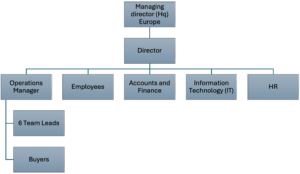
Figure 2:XYZ Organisation structure summary
Source: Summarised from the organisation internal data
1.2 Scope of Assignment
Today, success of organisations procurement and supply management (PS&M) is dependent on having an appropriate leadership and management structure. According to CIPS (2023) the need for appropriate leadership and management is to guide operations of the organisations in areas of system development, green-based sourcing and improving transparency in their operations. Hence, lack of an appropriate leadership and management lead to failure of organisations in implementing sustainable relations and interactions for holistic negotiations.
In this report, an evaluation of the leadership and management strategies in XYZ organisation has been put into account. This is with the impact of leadership and management on organisation behaviours impact of leadership approaches on job satisfaction, sources of power within the organisation and their application have been pursued. At the end, relevance of equality and diversity policies in XYZ organisation has equally been put into account.
2.0 Impact of Leadership and Management on Organisational Behaviour
Leadership and management concepts are used interchangeably in different contexts (Halkias & Neubert, 2020). However, leadership involve developing organisation vision and to inspire the followers to achieve organisation vision. The management entail translating vision to reality by guiding activities and behaviours of subordinates every day (Purwanto, 2020). In CIPS Module notes, leadership is identified as associated with the strategy adopted in influencing, encouraging and motivating the rest. According to CIPS (2023) this is with management being used in controlling, informing and implementing tactical strategies. The outcome of this is enhancing communication, feedback sourced, empowered teams, control, authority and clear processes pursued. With the lack of an elaborate definition of leadership and management concepts, different organisations face a challenge in appropriately defining them.
2.1 Leadership and/or Management in XYZ Organisation
For XYZ organisation, operating as a subsidiary of a multi-national organisation, they have both leadership and management in place. Their success in coordinating their team of professionals bringing broad wealth of industrial knowledge, technical expertise and being passionate in driving a successful customer engagement, leadership and management is relevant. For example, as identified in Dabhilkar et al. (2016) the function of the management in XYZ ensure a successful integration of global souring and management services with appropriate buying power and rapidly responding, taking pride in delivering of high-level quality outsourcing services of procurement.
For leadership process in XYZ, they are involved in ensuring that they inspire, innovate and motivate followers. In their PS&M department for instance, their leadership ensure that XYZ organisation engages different organisations in outsourcing administration services. This is part of what Statista (2023) identify as the outsourcing market in Qatar to grow with approximately 0.71% in years 2024 to 2028 leading to a high market volume of administration outsourcing market which account for a total of $36.77 million by 2028.
To support XYZ organisation leadership and management success in their operations, RACI Matrix is applicable (Lee et al., 2021). The relevance of this model is appreciating and managing different stakeholders in specified projects. For example, post COVID-19, XYZ organisation has been involved in sourcing for IT systems for organisations intended to enhance their remote working. A summary of RACI matrix factors is as follows;
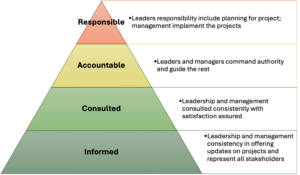
Source: Summarised from (Lee et al., 2021)
Responsible– In outsourcing of the IT systems to different companies in Qatar, XYZ PS&M director ensured that they engaged top global IT companies to outsource them. Also, people practice professionals are engaged in ensuring they source qualified employees in facilitating the outsourcing process.
Accountable– The people overseeing the entire outsourcing include the team leads, the departmental heads and director in Qatar subsidiary. Since they are accountable, success or failure of outsourcing program would be credited to them.
Consulted– Before decision making, finance teams and accountable and innovation management are involves and feasibility of outsourcing identified.
Informed– The Europe top management are supposed to be informed on the operations of the outsourcing project in terms of value for money and return on investment.
2.2 Impact on Organisation Behaviour
Considering the impacts on organisation behaviour, Haque and Yamoah (2021) identify leadership and/or management influencing people behaviours in organisations. To link the impact of these concepts, PESTLE Analysis is applicable. The rationale of this is informed by CIPS Module Notes which identify Nadler and Tushman (1980) as appropriate models for diagnosing organisation behaviour.
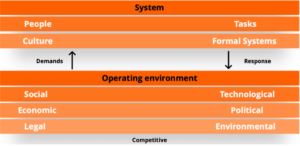
Figure 4:Diagnosis of Organisation Behaviours Impacts Summary
Source: CIPS Module Notes
Therefore, in figure 4 factors of consideration, impact on organisation behaviour depend on PESTLE analysis factors impacting demand and responding to system factors (People, Culture, Tasks and Formal Systems).
Political- The Qatar political environment is significantly stable. This is despite of the negative effects of external players in Middle East region who have a negative implication on their operations locally and internationally. Leadership and management in the organisation coordinate harmonisation of operations in all their areas of operation.
Economic- In regards to Qatar operations, as a result of COVID-19, oil and gas sector faced a significant disruption hence challenges in outsourcing process. Owing to these changes, the scope of operations of the organisation in procurement and supply sector has significantly been disrupted. Egs timely delivery to MRO products to the site/plant became challenging.
Social- In Qatar, social demographics influence on local job placement, living standards and developing their community. Also, considering XYZ case, their leadership enhance an increase in investing in obtaining best systems for their operations.
Technology- Qatar operates the Artificial Intelligence (AI) committee operating in pillars of education, data access, employment, business, research and ethics (MCT, 2023). Hence, XYZ organisation leadership ensure they embrace automated technologies and looking further to improve processes using AI.
Environment– The Director in XYZ organisation make sure their practices are informed by need to achieve Qatar Ministry of Health Remote Working Guidelines requiring application of electronic systems and smart digital applications (Al-Sharim, 2021). This is included as part of their outsourcing project terms and conditions with the clients.
Further, for evidencing implication of leadership and management in XYZ organisation, Nadler-Tuchman Congruence Model is applicable as illustrated in the following;
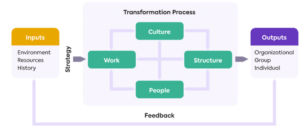
Figure 5:Nadler-Tushman Congruence Model
Source: ( Ando, 2023)
Considering the Nadler-Tushman Congruence Model, this is relevant for noting the challenges which impact performance and improvement process. In XYZ organisation, being the most appropriate strategy, management make sure appropriate tasks settings are achieved structuring and organisation culture which fit collaboration and harmonious work. This achievement means an increased performance and organisation goals achieved. The organisation leadership on the other hand initiate input used including resources and the organisation reputation. This lead to success in operating as an organisation, group-setting and personal.
Today, XYZ organisation pursue a situational leadership approach. This is evident in the organisation as it influence their performance and workplace productivity. The relevance of this is to encourage management in achieving high-level flexibility informed by issues at hand. Besides, it is important for leadership and management investing in L&D strategies to manage the disconnect of various followers and allocated job functions in this organisation.
3.0 Leadership Approaches Impact on Job Satisfaction
3.1 Job Satisfaction Concept
For XYZ case organisation, job satisfaction…….
Please click the following icon to access this assessment in full
Related to: https://www.cipstutorials.co.uk/paper/solution-cips-leadership-and-management-in-procurement-and-supply/