(Solution) Avado New 50S02- Advances in Digital Learning and Development
Solution
Task One- Written Responses to Questions
1.1 Technology in designing and delivering L&D
In the modern business environment, technology has been advancing in Learning and Development (L&D). According to CIPD (2024), the examples of technologies include internet sources, mobile telephony and systems to manage learning process. Also, for the large manufacturing organisation, technology has been advancing significantly offering training strategies in an appropriate and easy manner as opposed to the past.
Designing L&D Strategies
Developing Education Experience and Materials
With technology advancing, creation of new experience in learning and materials have significantly improved. According to CIPD (2021), the examples of this include digital tools which facilitate an interactive, multi-media approaches for engaging learners in a distinct manner. For instance, Online Simulations and virtual Reality Environment enhance creation of a highly engaging contents hence improved experience.
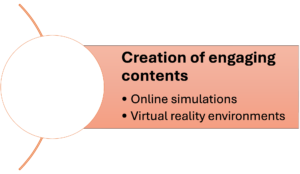
This is with hands-on approach with limited need for embrace of physical learning components. This is distinct from conventional lecturing with immense text usage. Having the emerging technologies in place, for the large manufacturing organisation, learning is involving and appealing as they allow active participation in different practices. These assist the learners maintain their interest with the learning process and accommodate interest of various learners.
Digital collaboration technology
Digital collaboration technology is a different approach which have emerged to design L&D strategy (Gulati et al., 2023). By embracing the technology, it offers the learners with an appropriate platform for engaging educators, experts in different areas, instruction design and learners for content development concurrently. In comparison with conventional strategies, two-way feedback is included in designing learning content. According to Saputra et al. (2021), learning materials are relevant for demonstrating scope in which shared knowledge and appropriate for learners needs. The collation of insights of different individuals collaborating in designing learning content lead to its success. Further, for the large manufacturing organisation, this facilitate progressive success in materials development informed by feedback from the first users (cohorts). The embrace of different learning solutions enhanced achieve overall user demand and appropriateness.
Delivery of L&D Strategies
Training methods
With the modern technology development changing, L&D initiatives have similarly improved particularly online and mobile learning. Embracing digitised approaches in delivering L&D, individuals learning possess immense freedom on when and where to source for learning since location and time is not a limitation. Also, for the large manufacturing organisation, it becomes easier to enrol in L&D initiatives while at the same time pursuing their daily workplace functions (CIPD, 2024). The rise in cloud computing similarly enhance the possibility of direct/prompt accessing to various learning environment and materials based on need in different devices.
Adaptive Technologies
For the large manufacturing organisation, provision of personalised learning experience has significant implication. According to CIPD (2021), examining the learners, different tasks completion and interests lead to dynamic systems established where relevant content and learning pathways for each learner established. Before learning technologies were adcanced, there lacked possibility of offering instution in this scope of customisation. For conventional learning, Saputra et al. (2021) note that online simulation, virtual reality, digital teamworks and adaptive learning lead to creation of good and interactive learning gains. The contemporary technology ensure significant change in the scope in which L&D develop. This is with technology significantly involved to define L&D future best practice.
1.2 Risks and Challenges of Technology-Based L&D
For Organisations
Organisations face high risk in terms of the costs of implementing and maintaining digital learning platforms and the ongoing cost of updates, licence fees and cybersecurity measures (CIPD, 2021). Digital inequality is also a challenge, in that not all employees may have access to reliable devices or internet connectivity which affects engagement and inclusivity. Furthermore, online learning can present difficulties to organisations in terms of measuring the effectiveness of their programmes, as it can be more challenging to measure knowledge transfer and behavioural change in the absence of physical observation. Managing information overload is a further challenge as learners may struggle to prioritise the right content in the midst of a wide range of digital resources.
For Learners
One of the main risks for learners is digital fatigue because of continuous screen-based interaction which can cause a lack of engagement and low motivation. In addition, many learners face difficulties on self-discipline and time management in the use of these digital resources independently, which can lead to inconsistent learning outcomes (Lancaster, 2023). Another challenge is that digital learning environments lack social interaction, which may reduce the chances of collaborative learning and networking that is usually valuable in traditional training settings. Additionally, online environment may make some learners feel isolated or unsupported which makes it harder to ask questions, get clarification or receive immediate feedback, leading to poor learning outcomes.
Addressing the Challenges
To combat these risks, organisations are investing in user-friendly, mobile optimised platforms that deliver a seamless experience across devices. Employee confidence in using new systems is built through digital literacy training. Similarly, blended learning models, involving combining digital and face-to-face sessions, are used to allow for social interaction and to reduce digital fatigue. To help manage the information overload, curated content libraries and personalised learning pathways guarantee that resources are always relevant (Klein et al., 2023). Moreover, frequent feedback and analytics allow for the monitoring of learner engagement and outcomes in order to make timely adjustments.
1.3 Impact of Emerging L&D Technologies on my Role as an L&D Professional
Traditionally, the focus of my role as an L&D professional was on organising in-person workshops, managing training schedules, and delivering classroom-based sessions (Johnson, 2025). However, with the emerging L&D technologies such as digital learning platforms, virtual classrooms, and mobile learning apps, my role has evolved to include the design, implementation, and evaluation of diverse technology-based learning solutions.
Positive Impacts
The demand to develop advanced digital skills such as managing learning management systems, using content authoring tools, as well as interpreting learning analytics, has been a key impact (Pappas, 2021). With these systems, I can monitor learner engagement, review training effectiveness and reorganise learning pathways according to their performance as well as business requirements. Focus has since moved from simply delivering content to developing high-quality, relevant resources as well as digital learning experiences.
Further, there is a benefit in terms of the flexibility with which learning can be delivered and accessed. Digital platforms, mobile applications and virtual classrooms make learning available and conducive for work at the convenience and pace of each employee (Trenaman, 2021). With this, I have been able to support a wider, more diverse learner base from various geographies. I have also shifted my role to be more strategic in nature and I partner with other departments to ensure learning initiatives support the business objectives. Available resources have grown to include video tutorials, simulations, and micro learning sessions that provide a diverse content format, supporting continuous, on-demand development.
Negative Impacts
While these advantages are present, emerging technologies have also introduced their own challenges. For example, the increased reliance on digital tools has added to my workload, requiring system management, troubleshooting, and learner support. In addition, the reduced face-to-face contact decreases the opportunities for informal coaching and relationships building (Feffer, 2020). On top of that, rapidly evolving technology means upskilling is an ongoing process and, at times, it can be stressful and time consuming. These issues show the necessity of balancing technology use with human interaction and support in learning strategy.
2.1 Types of digital learning content
Training Videos….
Please click the Download icon to access this assessment in full
Related to: