(Solution) Avado New Brief 5C001 Organisational Performance and Culture in Practice
Solution
Answer to Questions
1.1 Extent Flat Hierarchical and Hierarchical Bureaucratic Structure are Suitable for Chaffinch Group’s Ownership
An orgAnisation structure is identified as the flow of authority amongst different stakeholders in an organisation. It detail the different roles and functions of employees and organisation management in ensuring successful execution of organisation goals/objectives. In this regard, the selected organisation structures include flat and bureaucratic organisation structures. They are embraced in different scope in the organisation operations with their relevance being distinct;
Flat non-hierarchical structure
The flat non-hierarchical structure suited very well in the ownership of Kirsten. It is characterized by a low level of management hierarchy, facilitating open communication, worker participation, and faster decision-making and team-oriented workplace (Organimi, 2021). Also, it resonated with the consultative management approach she embraced and enabled a culture that fostered trust, teamwork, and employee empowerment. All 42 employees were involved in the structure that made communication and relations with Kirsten direct and rather strong.
Advantages: The structure leads to high satisfaction with employees and low turnover since it did participate actively in decisions, selection, AND providing. This informal structure also increased flexibility, whereby the team was able to attend to individual needs of residents and offer personalised care that was a focal point of Calmere House philosophy.
Disadvantages: However, the flat structure depended largely on the personal participation of Kirsten, which could have determined its scaling. Being the only decision-maker, during crisis moments or even in times of expansion, she might end up as a bottleneck.
Hierarchal bureaucratic organisation:
The hierarchical bureaucratic structure proposed by the Chaffinch Group on the other hand is more common in bigger organisations and is designed to reflect on consistency, standardisation, and accountability. It can be organised into many layers of management with formalised processes, which makes it more appropriate to manage several sites and dictate compliance as BBC (2024) attests.
Advantages: The benefits of a hierarchy-based bureau structure include clarity of the chain of command, which facilitates orderly decision-making and effective control of the organisation spread over diverse locations. By clarity in chain of command, this is evidenced by its simplistic in nature. There is zero ambiguity in how roles are executed in the organisation.
Disadvantages: Nevertheless, this structure has not turned to be suitable at Calmere House. The fixed and distant style has resulted in demotivation of the employees, high turnover rates, and a loss of teamwork spirit. This depletion of employee voice together with top-down autocratic leadership of the top management, has destroyed the supportive family-like culture leading to dissatisfaction of both staff and the residents.
Judgement
The flat hierarchy fit perfectly well in the environment supervised by Kirsten because of the strategic implications of the care-driven mission, the teamwork culture, and the number of employees. On the other end of the spectrum, the top to bottom hierarchical structure of the bureaucracy at Chaffinch does not fall in line with the original values and culture of Calmere House.
1.2 Chaffinch Group Rational Rational approach to strategy formulation
Evaluation
Implementing an evidence-based strategy in strategy formulation at Calmere House would be a strong asset to Chaffinch Group. CIPD (2023) explains that this logical approach to information involves gathering, interpreting, and implementing data as part of the informed choice that aligns with the objectives of the business and customer demands.
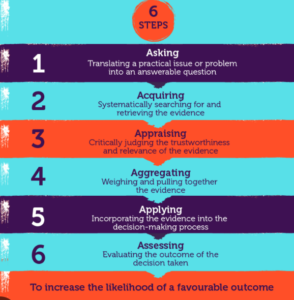
The responses of residents, employee surveys, budget/financial reports and industry standards can enable Chaffinch to determine the actual cause of the problems being currently realized by Calmere House, that is, high staff turnover, lower resident satisfaction ratings and occupancy levels.
Objectivity is one of the main potential benefits of evidence-based strategy. The decisions made are based on facts and not on assumptions or top-down decisions (CIPD, 2023a). As an example, Introduction of data may show that the residents highly regard personalised care and that experienced employees played a vital role in providing such care. Appreciation of such insights would enable Chaffinch to restructure its services and staffing patterns to bring back the personalised and high quality standards of care that Calmere House used to be.
Nevertheless, there are proposed limitations. The process of collecting valuable data might take much time and can demand the experience that is not being incorporated into the Calmere House squad at present. Also, the effectiveness of this strategy is subject to the readiness of the management to use the evidence which can be incompatible with the autocratic trend that is being followed at present (Lim, 2024).
Summary
By implementing a properly designed evidence-based plan, Chaffinch Group will be able to reposition the services of Calmere House so that they are more in line with the residents and staff needs. Based on due data that will guide the change, including bringing back personalised care, the inclusion of staff in decision-making, better recruitment, and retention, Chaffinch will be able to restore trust and quality of service.
1.3 Positive and Negative impact on the residential care industry
Negative External Factor: Rising Operational Costs
Please click the following link to access this assessment in full
Related to:https://rankedprofessionals.com/downloads/solution-new-avado-pq-cipd_5co01_24_01/