(Solution) CIPD 5CO03 Assessment ID / CIPD_5CO03_24_01
Solution
An effective people practice professional will:
- Understand the purpose and value of the people profession.
Q: With reference to the CIPD Profession Map, appraise what it means to be a people professional. (AC 1.1)
As explained in CIPD HR Professional Map, people professionals play critical functions in an organisation (CIPD, 2025). They align people resources with organisation objective/vision by effectively managing them.
Professional Behaviours
Ethical Practice– This is defined in CIPD (2024) as a strategy of people professionals embracing ethical values in organisations behaviours. This is in areas of conduct, employment strategies, sales/marketing, relations, and corporate social responsibility (CSR). As a people practice professional, there is a need for adhering to code of conduct & ethics (CIPD, 2023). This is through enhancing transparent decision making, clear execution of their functions and managing employment issues.
Valuing People– In CIPD (2025a), this is identified as an undertaking where people practice professionals “value what individuals input in their organisations and core for their roles in integrating people perspective in organisation operations”. For example, people practice professionals initiate a feeling of having shared purpose with individuals granted meaningfulness of their voice on working lives issues.
Professional Activities
Policies and practice development– People practice professionals are mandated with crafting, developing and implementing policies and initiatives for different organisation operations. According to CIPD (2024a), the policies and practices are pursued in various employment issues and assisting in an effective implementation of organisation people professionals strategy.
Developing organisations capability– This entail offering an elaborate view on what means by appropriate organisation capability in different teams, functions and organisations (CIPD, 2023a). People practice professionals achieves this through assisting other professionals/specialisms in making appropriate decisions relevant for their situation.
Value of People Professionals in Organisations
In an organisation setting, people professionals ensure that they develop a vision and goals by significant individuals interventions (CIPD, 2023b). For instance, they create awareness and knowledge development in different areas of organisation operations. Also, people professionals identify the weak areas in regard to knowledge and skills and hence initiate strategies for development in line with future best practice. This end up boosting the employees competencies. Working in my current organisation, people professionals are involved in change process, conflicts management and engagement. This create a culture in my organisation of mutual-based trust and issuing two-way feedback.
- Know own personal and ethical values and apply these consistently in their (people practice) work.
Q: Discuss your personal and ethical values (one of each), with examples of how these are evident in your work. (If you have yet to work in people practice, explore how you believe your values would inform your work.) (AC 1.2)
Personal Values- Mutual Respect
This personal value is identified in CIPD (2018) as working with others in a dignified, courteous, fair-based and valued input and points of view. A people practice professional achieve this through active listening, showing empathy and open-based communication. The outcome of this is initiating a trusted, collaborative and appropriate relations hence high-level performance and commitment. This is supported by Fernandes et al. (2021) report which note that in an organisation where respect is enhanced employees practice discretionary behaviours. This is since they feel recognised, accepted and supported in implementation of their functions.
Examples
Working as a people practice professional in Riyad Bank in Saudi Arabia (KSA), my ability to practice mutual respect is evidenced by;
Example 1– I develop a fully inclusive business environment with all people appreciated irrespective of possession of protected characteristics. In Riyad Bank, there exist multi-cultural teams where their input is always included in making decisions. By ensuring two-way feedback is initiated, I actively listen to their input and respectively agree or disagree with them.
Example 2-To manage workplace conflicts affecting customer care department in Riyad Bank due to many hours of working, I engage all the employees to resolve the challenges. I ensure that there is no bias when the employees highlight what they think need to be changed. After active consultation, I respectively agree to work with management to reduce the hours worked. According to Fernandes et al. (2021), the interactions lead to adherence to mutual respect for all.
Ethical Values- Integrity
In definition, integrity entail a people practice professional being able to uphold high-level ethics. The outcome of this is increasing equality, avoiding actions such as bribery, corruption and failure of taking responsibility. As a people practice professional in Riyad Bank, integrity is an important ethical value as it need to be passed to the rest of employees in the bank.
Examples
Example 1– Working as a people practice professional, I make sure the employees data is held with high-level of accountability with equality prioritised in decision making. In Riyad Bank, an employee in the accounts team was facing a health complication. However, I never disclosed the situation to anyone and held it with anonymity. I also protected the employee from being punished when performance review was done quarterly and threatened to be dismissed. According to CIPD (2024b), this impact on team-based working, coordination, communication and active collaboration.
Example 2– As part of recruitment/selection phase of employee lifecycle in Riyad Bank, I ensure all recruits and candidates are treated in an equal manner. As evidenced in CIPD (2024c), this lead to contribution to effective resourcing with on-time feedback advanced for successful resourcing.
- Know the importance of people professionals contributing to discussions in an informed, clear and confident way to influence others.
Q: Discuss reasons why this is important and the consequences of people practitioners not being willing or able to influence others. (AC 1.3)
For people practice professionals, contributing to discussions in an informed, clear and confident way for influencing others is essential. According to CIPD (2025b), the outcome of this is establishing two-way feedback and confident relationships.
For example, post-COVID-19 pandemic, flexible/remote working strategy was intended to be implemented. To achieve a well-informed communication, I gave out statistics of 70% reduced turnover of organisations which have invested in the remote working. To clearly communicate, I used input from the different stakeholders on their understanding of the remote working and used charts for accurate presentation of the process. Confidence is attained by consistent implementation of the flexible working strategy.
Also, an embrace of clear and confident manner successfully lead to the change process. As evidenced in CIPD (2025b), this is by actively listening, noting queries and message customisation to attain required results, increasing commitment and alignment of entire considerations. As identified in GEMBALSKA-KWIECIEŃ (2024), by embrace of clear language embracing assertiveness, this lead to harmonious people practice relationships with lower tension. I aways manage tones adjustments and presentation of the contents when communicating with the management and administration to understand the message noted and eventual implementation.
I possess different skills which ensure that I pursue discussions in informed, clear and confidentially for influencing the rest. This is best aligned with the set organisation objectives and future goals.
Consequence of ineffective communication
Failing in pursuing an informed discussion (facts, data and information guided), clear and confident influence of others, it lower reliability and confidence of final outcomes. When people practice professionals do not effectively participate in discussion and ready, competency and credibility is reduced amongst the audience/organisation. As evidenced in CIPD (2018a), this lead to an ambiguous and unsubstantiated data to guide policy management and compliance. Also, mistrust challenges are also evident to maintain relevant relations and hindering how they are facilitated and supported for their future operations.
Also, by miscommunication emerging, this lead to failure to seize offered opportunities important to shape decision making and sustainability in change. For example, if influence is not done with confidence, it is possible to misinterpret and ignore the information provided. As evidenced in CIPD (2025c) the outcome of this is misaligned objectives and discussions misaligned. Also, with the choice of word being inaccurate and lack of assertive practice in complaints sharing, team members evidence disinterests and lack of cooperation. According to CIPD (2018a), this lead to reduced professionalism and likelihood of an organisation to succeed and holistically manage faced issues.
- Know when and how to raise matters that might be unethical or illegal.
Q: Discuss, with examples, when and how you would react to both unethical and illegal matters (one of each). (AC 1.4)
Ethical Issues- Example; Existence of discrimination in recruitment/selection process
An example of this which can be illustrated is an organisation operating a recruitment/selection strategy which discriminate employees due to their age, sex and race. This is contrary to CIPD (2023) which set the code of conduct which call for fairness in recruitment/selection. To maintain an organisation brand image, recruitment/selection must be fairly executed, equality guaranteed and respecting workplace diversity.
When the identified ethical issues is in place, I would raise the matter in the following;
- I would analyse all the past recruitment/selection statistics and documents on how policies and practices are defined to support the existence of the challenge
- I would create awareness to my line manager and people practice professionals leadership by practicing whistleblowing to manage the grievance professionally and anonymously
- Setting a team made of different stakeholders in the organisation in order to enhance compliance and manage the challenge
In all the actions I would take to raise the matters, all activities would be recorded and adhere to code of conduct in noting unethical behaviours. The intention of this is to enhance all stakeholders integrity by following the set process appropriately (CIPD, 2023).
Legislation Issues- Example; Failure to Adhere to Working Times
An example of this is failure to ensure employees are working for 48 hours every week with no option to withdraw as guided by Working Time Regulations 1998 (CIPD, 2024b). The rationale of this is to safeguard employees’ interests through identification of maximum hours of work every week being 48 hours. Failure to adhere to different regulations contribute to significant impact for employees and organisation positioning to face legal injunctions and affecting their reputation.
To raise the matters, I would follow the following process;
- I would initiate a significant process for collecting evidences in terms of work time, contracts management and employees noted complaints
- After this, I would ensure that I implement grievance handling practice to ensure my appropriate position to handle the issue
- I would ensure that I schedule private sessions with the management and organisation people practice professionals to discuss the working time problem in the organisation
- In ensuing the entire discussion, I would ensure that I am presenting detailed data and information, citing different legislations and supporting evidence on basis of relevance.
In case by the end the issue has not been resolved successfully or opposition ensued, I would prefer coming up with compliant teams or involve legal teams. If extreme situation occurs, external sources would be involved to whistleblowing with the executive teams and health and safety regulators.
- Be able to make use of related theory and thinking, to argue the human and business benefits of people feeling included, valued, and fairly treated at work.
Q: Demonstrate your ability to do this with a written argument, which poses different theoretical perspectives, as well as your own. (AC 2.1)
Theory 1
Human Benefits- To explain human benefits, the Maslow Hierarchy of Needs Theory can be considered (Trivedi & Mehta, 2019).
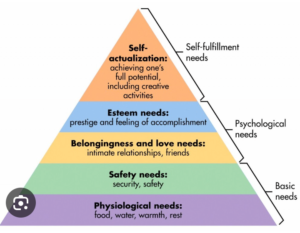
The basic assumption of the theory is that with the employees being included, valued and fairly treated, they achieve a feeling of being treated well, psychological needs attained and self-esteem. Also, they are in a position of transitioning to high-level of the model which is self-actualisation. As a result, the employees individual commitment in their organisation is enhanced with high-level involvement.
Business Benefits– The relations in the organisation is enhanced with all stakeholders working in active collaboration. This is by being loyal and committed to the organisation. The outcome of this is identified in CIPD (2025c) as increased organisation productivity and leveraging on competitive advantage in their business environment. Therefore, inclusion, high-value and fairness in employees treatment eliminate any form of conflict and morale of employees to work in such an organisation.
Theory 2
Human Benefits- McClelland’s 3 Needs Theory, also Acquired Needs Theory (ANT), the basic assumption is that humans are influenced by motivating needs of achievements, affiliations and powers (Siok et al., 2023). The need…
Please click the following icon to access this project in full
Related to:https://rankedprofessionals.com/downloads/solution-cipd-5c003-new-brief-task-one-case-study/