(Solution) CIPD Brandfield 5C001 Assessment
Task- Questions
1.1 Divisional and Matrix Structure
Divisional Organisation Structure
A divisional organisation structure involves segmenting employees on the basis of products, services or markets contrary to using job functions (CIPD, 2023). With multiple divisions in same organisation, they work separately to achieve a common good of delivering products and services to customer segments. An example of organisation using this structure is Hilton Hotel Group in UK. This is an organisation I am familiar with where its divisional structure is illustrated in the following;
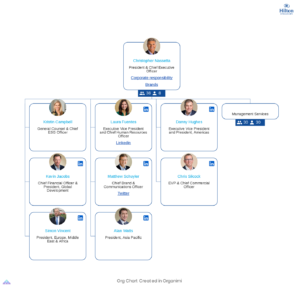
Figure 1: Hilton Divisional Organisation Structure
Source: Summarised from Hilton (2024)
For advantages, they include;
Effective specialisation– As illustrated in figure 1, the professionals work in global development, communication and commercial areas. This imply they are specialist in these areas hence efficient operations (CIPD, 2024). This contribute to Hilton being a leader in global hospitality industry.
Accountability and transparency– The different divisions in figure 1 report to president and chief executive officer. As such, it becomes easy tracking the results of each department with their results (Yanamala, 2023). Hence, any mistake done by any division is not carried by another division. This means they are transparent and held into account easily.
For disadvantages, they include;
Costly to implement– Considering the structure is made up of different divisions which work independently, they are facilitated by the organisation resources. This is cost intensive as there is often roles duplication. For instance, in figure 1, all the divisions have a receptionist department which is costly to manage.
Silo mentality– Since divisional structure have employees working independently, they do not share information or knowledge. This contributes to their low morale, ineffective workflow and negative experiences (CIPD, 2024a).
Reason for Using the Structure– In Hilton Organisation, using this structure means employees work in departments where they are specialised. Within these divisions, employees put optimum effort in delivering services to their different customer segments. With the organisation being multi-national, it is possible to coordinate the operations of similar divisions globally. According to CIPD (2024a), this assists in increasing coordination and efficiency in their operations.
Matrix Organisation Structure
This is identified as a type of organisation structure having teams reporting to many leaders (Gomo et al., 2021). The outcome of this is the organisations being more innovative in their products and services development. An example of organisation using this structure is Park Inn (my current employer). The organisation structure is as illustrated in the following;
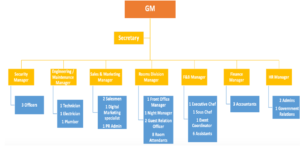
Figure 2: Park Inn Organisation Structure
Source: Park Inn by Radisson (2024)
For advantages, they include;
High collaboration– In Park Inn organisation, with different departments in the organisation, the employees work in collaboration (Chowdhury et al., 2022). There is maximum utilisation of the organisation internal resources with the expertise being readily available with project teams recruited from external teams. This also contribute to increased efficiency owing to resources sharing in all the department in Park Inn.
Improved decision making– As aforementioned, a matrix structure has the employees reporting to multiple managers. Hence, there is an appropriate opportunity offered for employees to offer their insights in decision making.
For disadvantages, they include;
Power Struggles– In Park Inn organisation structure, it is characterised by existence of project and functional managers. Often, they are found conflicting in regard to their functions and scope of operations.
Slow decision making– The need for continuous consultation of the two different levels in a matrix structure make the entire process to be slow. Prior making critical decisions, all levels must be consulted which is time intensive.
Underpinning Reason– Due to the nature of Park Inn operations in the hotel industry, with more than 100,000 employees globally, managing them effectively is an enormous task. This is with different specialisation in place in the organisation requiring different specialists. All these specialists work in collaboration to achieve Park Inn vision which is increased tourists attraction internationally.
1.2 Organisation strategy in organisations
Adopting the definition in CIPD (2024b), an organisation strategy is “set of actions and plans set for assisting an organisation in achieving their long-term objectives and goals”. It entails decision making on resources use, direction to be followed by an organisation and leveraging on competitive advantage for being sustainable in their business environment.
Identified Organisation Strategy– Park Inn organisation strategy entail initiating a highly vibrant and customer-centric hospitality services delivery aligned with needs of modern tourists. This is while embracing technology to enhance strategic positioning and market-based growth.
Another Park Inn strategy is to deliver best experiences which are stress-free, best culinary experience and eating space. This is while redesigning their entire space to be more modernised and an individualised provision of services for an optimum guest’s satisfaction.
Direct Link of Identified Strategy
For identified strategy, they are directly linked to Park Inn goals. This includes sustainability of their practices, leverage on competitive advantage and gaining an increased value. For example, the vibrant and customer-centric experiences would mean attracting international tourists both local and international representing most people in the tourism sector. Similarly, the stress-free experience and best culinary experience is part of the organisation role in ensuring UK attracts 50 million international visitors by 2030 (GOV.UK, 2024).
Meeting Customer Needs
The organisation strategy of delivering vibrant and a highly friendly hospitality experiences custom-made to the international travellers ensures they engage best clients (Sanasam et al., 2022). Comparing Park Inn with their competitors, they would be able to adequately support and offer best services to their customers.
According to Avado CIPD (2024), the organisation strategic embrace of technology and market-based growth contribute to provision of customised products/services. This is while establishing a long-term customer loyalty for their services.
External Context Analysis
Economy changes-The economic landscape directly impact achievement of the identified organisation strategy (CIPD, 2024c). With the current global economic downturn, the available resources for the implementation of the strategy are limited. As such, the organisation would be required to restructure budget for other operations re-directing it to implementation of the organisation strategy. The funds would be re-directed from opening new subsidiaries and developing new product portfolio.
A different external factor is technological advancement. This impact how the first strategy is successfully implemented. The rate in which technologies become obsolete means that more financial resources would be budgeted in replacement of technologies used to ensure customer-centric services are advanced. This would also ensure they maintain their competitiveness and target more markets.
1.3 Impact of interest rates, inflation and another external factor
Interest Rates
This is defined in Rosa (2024) as the overall costs incurred to borrow money represented by principal loan cost borrowers are required to pay to their lender on top of their loans. In UK for instance, the interest rates are noted to be almost 0.1% beginning in December 2021 and currently at 4.5% (Bank of England, 2024). Today, the borrowing costs is at 3.7% aligned with the country strategy of monetary easing for supporting an increased economic development while maintaining inflation costs at 2% target.
Priority– With the interest rates being under a continuous change, the organisation is supposed to develop financial target. As identified in Rosa (2024), this is by initiating foresight, adaptable and data guided decisions to ensure they capitalise on existing opportunities. According to Bank of England (2024), contrary to letting interest rates be controlling an entity, set of financial targets imply proactively allowing attainment of financial stability and development.
Inflation rates
Please click the following link to access this assessment in full