(Solution) CIPD ICS Learn 5HR03- Reward for Performance and Contribution
Solution
1.1 Principles of reward; organisation culture and performance management
Fairness- This principle of reward detail that rewards are informed by scope of execution of their roles. According to CIPD (2025), fairness means employees rewards are in line with assigned role, benchmarking organisations and personalised input/effort. In Eco-Insulate, the current dissatisfaction of the seniors being paid higher would be reduced and turnover mitigated. This is since unfairness in issuing rewards lead to employee’s engagement and retention reduced.
Consistency- This principle of reward means that the rewards are consistent and sustainable. With consistent rewards, Zhao et al. (2023) note that it is possible to plan adequately financially and future. For Eco-Insulate case, consistency in issuing rewards would assist in stabilising their organisation culture, reinforcing appropriate behaviour and long-term based engagement attained.
Transparency– For rewards systems which are transparent, the employees understand their pay rate and its implementation. It means employees understand the rationale of the rewards implementation. In Eco-Insulate case, this would lower uncertainties or perceptions of non-transparent reward system. This is while at the same time lowering the likelihood of equal pay claims raised against the organisation by an employee.
Reward Principles and Organisation Culture
The identified principles of reward (fairness, consistency and transparency) have a direct impact on organisation culture. Adopting the definition of CIPD (2025a), organisation culture is “shared values, belief, and behaviours defining their operations”. Hence, through reward fairness, employees would value Eco-Insulate as their employer of choice.
Also, for consistency in rewards, employees feel that they are appreciated for their input to their organisation. According to CIPD (2025a) a feeling of appreciation lead to increased motivation and engagement. In Eco-Insulate, consistently offering recognition rewards and performance-oriented rewards lead to establishment of a culture of employees being appreciated and success.
For transparency, with the rewards being transparent and aligned with the organisation objectives, this lead to an appropriate, positivity and inclusion and performance-based culture. According to CIPD (2025), through an address of misunderstanding on the rewards and enhancing transparent benefits, dissatisfied employees are reduced with teamwork improved hence long-term based commitment.
Reward Principles and Performance Management
Fair rewards are core for successful performance management since employees are motivated for achieving organisation goals. According to De Clercq et al. (2023), the unfair rewards in Eco-Insulate could lead to reduced engagement and performance.
Also, issuing consistent rewards contribute to motivation to employees in meeting their overall target, efficient operation and evidence their commitment. For Eco-Insulate case, achieving their objective of reduced carbon emissions, consistent rewards are important.
Transparency in rewards has a positive implication on improving the employee’s motivation towards excelling in their performance. This is since transparency in rewards means that employees in Eco-Insulate feel highly valued and execute their functions in optimum by becoming the best (CIPD, 2025a).
1.2 Extrinsic and Intrinsic Rewards
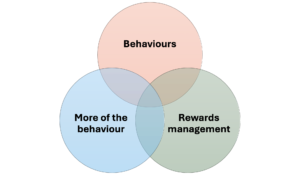
Extrinsic Rewards- These are defined as the tangible/visible offered to employees/individuals for an achievement (CIPD, 2022). Their value is hence monetary and inclusive of salaries hikes, bonuses offer, awards and public-based recognition.
Improving Employees Contribution
To evidence how extrinsic rewards improve the employee’s contribution, a bonus pay informed by productivity can be offered to Eco-Insulate employees. The purpose of this reward would for improving their productivity with no compromise of quality levels. The outcome of this would be an increased commitment and efficiency in executing job functions (CIPD, 2025b). Therefore, in Eco-Insulate, offering a well-structured extrinsic rewards have a positive impact on enhanced motivation, reduced dissatisfaction and intention to stay in an organisation for long. This is with the employee’s contribution enhanced for organisation success.
For drawbacks, extrinsic rewards alone are insufficient for enhancing long-term employees’ contribution to an organisation. Nevertheless, the best practice would be to integrate them with the intrinsic rewards for success.
Intrinsic Rewards– Adopting CIPD (2023) definition, intrinsic rewards represent psychological benefits gained by employees after developing appropriate/meaningful input in workplace. The examples of this include recognition, job autonomy, career development and health and wellbeing initiatives.
Improving Employees Contribution
An example of intrinsic rewards such as employee’s annual recognition, they enhance the staff engagement by giving a sense of belongingness and achievements. Also, CIPD (2022) note that the employees’ recognition has a positive impact of increasing their opportunity of contributing holistically. Also, for Eco-Insulate, they would initiate a well-structured recognition program for their staff recognising top performing employees. This would guarantee Eco-Insulate an increase in employee’s morale, innovativeness and reduced turnover by introducing the recognition program.
Support (Long-Term) Eco-Insulate Organisational Performance
By offering Extrinsic rewards, Eco-Insulate would achieve the long-term performance by offering employees competitive pay and production-based bonuses increasing their long-term motivation and hence performance. According to Emmanuel and Nwuzor (2021), the rationale of this is that their financial needs are prioritised and addressed.
Also, by giving the intrinsic rewards for example annual-based employee recognition and career growth opportunity, they motivate the employees hence long-term based engagement and satisfied in their functions.
The most appropriate for Eco-Insulate is intrinsic rewards. This is since the organisation has been encountering a negative culture which affect their retention capability. According to Manzoor et al. (2021), this is owing to the ability of enhancing the employee’s commitment in their functions for a long-time. In Eco-Insulate, the formal recognition initiatives or career development opportunities assists in increasing ability to have loyal employees putting discretionary behaviours in their roles.
Despite of extrinsic rewards assisting in attracting the best organisation talents, the intrinsic rewards maintain highly talented employees, innovative and commitment in an entity (Sayed et al., 2021). Therefore, they gain in an increased productivity and engagement which are appropriately balanced particularly informed by varying employees demands.
2.1 Grade and Pay Structures Differences
Formal Type- Broad-banded pay structure– This integrates various salary grades to less, broad bands hence increased reward progress. For Eco-Insulate, this is relevant for supporting various job functions, allowing internal career progress and no frequent regrading. For employers, they are empowered in rewarding their employees on basis of their performance as opposed to relying on rigidity of job classification (CIPD, 2024). Further, broad banding assists for successful capacity development by offering an opportunity for employees to move in different bands with no promotion required.
Nevertheless, elaborate data and instructions are essential for managing reward inequality in the internal organisation in the entire broad band. According to CIPD (2024), this is in a manner preventing an inconsistent and noticeable favouritism. Another drawback is that despite of being simple and flexible, challenges with pay compression emerges apart from a situation strict regulations are in place for the rewards leading to pay compression.
Informal Type- Spot Rates Pay Structure– This involve fixing particular job functions in a specific level with zero progress/adjustment or incremental allowed. In Eco-Insulate case, this is relevant amongst the production-line employees where reward is set on basis of their job functions. According to CIPD (2024a), this structure is easily crafted with transparency, easily administered and hence payroll non-complex. In Eco-Insulate case, the employees are currently paid in a fixed plan informed by their job function as opposed to how they are experienced or perform. For drawback, despite enhancing fairness, it is often demotivating for employees in further skills development.
Further, spot-rate pay structure are non-flexible and fail in encouraging sustainable commitment or pay progress reducing retention success in an organisation such as Eco-Insulate.
Differences
The spot rate pay structure is easily managed and controlled with broad-banded pay structure being flexible with career growth opportunity offered (Kang & Lee, 2021). Offering employees with broad banded pay structure, Eco-Insulate would advance their skills and transition in different pay bands with retention and commitment increased. Conversely, spot rates initiate a uniform pay strategy despite reducing motivation as acknowledgement of each employee input is lacking. Also, for broad based pay structure, they call for a continuous pay governance for the sake of avoiding inconsistent reward administration with spot rates managed easily (Kolluru, 2021).
Finally, the broad-banded pay structure complex nature is because of line managers need of following-up their fair provision in different bands with spot rates easily predicted as they lack incentive strategy.
Hence, from analysis, broad banded structure is the best to achieve long-term based success in Eco-Insulate. This is with spot rates best fit for their new sustainability projects entry levels which need simple reward.
2.2 Contingent Rewards Impact Individuals, Teams and Organisation Performance
Contingent Rewards– This is defined by CIPD (2022a) as a reward offered to employees informed by their performance. In specific, this is after achieving particular set targets or behavioural practices. Being monetary and non-monetary rewards, they include bonus-pay, recognition, promotion and benefits. Hence, organisation objectives guide employee’s input. In Eco-Insulate for example, this can be used as a reward to improve how they are motivated, engaged and perform.
Individuals
An example of contingent reward……
Please click the following icon to access this assessment in full
Related to: https://rankedprofessionals.com/downloads/solution-avado-pq-cipd-level-5-5hr03-eco-insulate-rewards/