Solution
Section One- Report
1.1 Evidence-based practice
Rationale Model
Rational approach in evidence-based practice include making decision by considering all assumptions made to maximise achievements and minimise costs incurred. According to Cristofaro and Giannetti (2021), rationale model involves ensuring that rewards are more than the costs incurred. For instance, considering Saudi Aramco organisation, this model involve defining accrued issues, identifying outcomes and deciding on their relevance.
The strengths of using this approach entail harnessing objectivity since scientific data is used to make appropriate decisions. According to Alivernini et al. (2021) emotions are eliminated which often contribute to inappropriate judgement. For drawbacks, rationale model is insufficient in terms of collecting data. Also, challenges occur owing to necessity to consider, evaluate all alternatives important to achieve a mutual agreement. Also, time factor is a huge hindrance.
The application of this method include;
Reward Issues– By use of rationale model, detailed scientific data is obtained to guide achievement of a holistic decision. This reduce the likely errors and assumptions on reward issue. In Saudi Aramco for example, rationale model make sure strategic and performance-based rewards are offered as opposed to only benchmarking which is most appropriate rationale model and effective decision making (Keßels, 2022).
Learning and Development-By use of the rationale model, there is a possibility of improving consistency in communication and evidencing relevance. Also, a relevant work agreement is made to ensure employees are dedicated towards the learning process (Abdullah et al., 2021). This assists in gap management in learning hence organisation success. For example, taking into account of Saudi Aramco, using rationale model assist to make best decision in L&D strategy. This is by benchmarking with others which is important in rationale decision making.
Critical Thinking
As evidenced in Seibert (2021), critical thinking entail objectivity in evaluation of an issue to arrive at a final judgement. The rationale of using critical thinking is to ensure that all options are prioritised and considered prior making the final decision.
According to Dill and Zambrana (2020) the main strength of critical thinking is noted as ensuring success in achieving all objectives and solving problems faced core for success in organisation practice. Also, by the various involved teams pursuing critical thinking in workplace, they gain in terms of analytical competency, improved communication, emotional intelligence and skills to solve problems. Critical thinking drawbacks include inappropriate assumptions made resulting to bad decision at the end, biasness and egocentric thinking. Also, when emotions are at play, clear and effective thinking is hindered.
The application of this method include;
Reduced staff turnover– As evidenced in De Villiers and Sharma (2020), by using critical thinking, it is possible to identify all the available options which would be used for managing the issue. Further, by embrace of critical thinking, most relevant recommendation is used as a priority. For example, in Saudi Aramco, critical thinking is used in diagnosis of the issues leading to turnover with both internal and external information prioritised.
Staff skills shortages– As evidenced in Dill and Zambrana (2020) report, there is a direct correlation of application of critical thinking and management of staff skills shortage successfully. The importance of this is informed by the fact that through critical thinking process, it is possible to identify weaknesses, threats and potential opportunities which eventually inform on learning needs.
1.2 Analysis tool and method
Analysis Tool- Porter’s 5 Forces Analysis
Porter’s 5 Forces Analysis tool is used to identify and analyse different forces which characterise business or their business environment. According to Goyal (2020), the different forces are essential for noting weaknesses and strengths of the organisation. The strengths associated with this tool include success in its use in various industries while harnessing profitability. For example, taking into account of Saudi Aramco, an analysis of their 5 forces is as illustrated below;
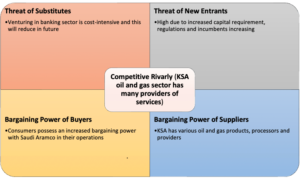
Figure 1: Saudi Aramco Porter’s 5 Forces Analysis
For the cons of using this tool, for the organisations which have different or multiple product portfolios, it is a challenge using the Porters 5 forces tool in implementing the analysis. This is since the organisation is found operating in various sectors. Further, this strategy is not universal and as such cannot be used in the same manner in all industries internationally.
Future Issues– By using Porter’s 5 Forces Analysis, it is possible to identify possible regulations which would be enacted affecting their power as a buyer. For instance, introducing Flexible Working legislation after COVID-19 pandemic impacted ability to resource qualified employees. This is identified by evaluating the bargaining power of suppliers.
Challenges– For an organisation such as Saudi Aramco, high competition in the oil and gas industry is a major hindrance towards their success. By using the Porter’s 5 Forces, it is possible to note on the different competitors and hence establish strategies for leveraging on competitive advantage.
Opportunities– By using the Porter’s 5 Forces analysis, it is possible to identify the threats of substitutes and hence invest on alternative products to meet the demand when it declines. For example, Saudi Aramco is increasingly investing in renewable energy after most of their competitors are investing in this area.
Method- Surveys
Surveys are defined in Braun et al. (2021) as quantitative approach used to collect information from a wide pool of respondents through posing different survey questions. To achieve this, the process followed include sampling individuals to be involved, data collection and analysis. The strengths of this approach include engagement of large population of data and as such possessing substantial statistical power. Also, as evidenced in Ball (2019), use of surveys enhance capacity to source detailed information and data to ensure the best practice is identified and selected. The drawbacks on the other hand entail a lot of time required for implementing the surveys, costs incurred and lack of a direct input of the researcher in the surveys data collection.
For the application of the method, they include;
Future issues- In an organisation such as Saudi Aramco, surveys are used to evaluate the employees motivation, engagement and satisfaction with their organisation. As such, potential legislations which would likely impact on their motivation such as in rewards is identified by application of surveys.
Challenges- Through the use of surveys, it is possible to identify the areas where the organisation is inadequate in terms of supporting the employees. Through this, it is possible to improve relations with employees hence increased commitment and satisfaction.
Opportunities- Surveys assists for instance to identify the learning needs. According to Braun et al. (2021), by successfully identifying the learning needs, appropriate strategies are put in place for investing in different development strategies.
1.3 Principles of critical thinking
Adopting the definition of CIPD (2023), critical thinking as a core skill of HR and people professionals, it entail capacity of thinking well and reflecting objectively on the ideas, opinions and arguments of others. The rationale of using critical thinking is to assist in solving complex issues and making appropriate decisions, clarity to confusion and increased likelihood to success when other professionals are looking forward for relevant responses.
For the principles of critical thinking, they include;
Not jumping to conclusions- In critical thinking, the best practice entail evaluating entire factors. According to Caratozzolo (2022), the process followed would include sourcing for detailed information for guidance prior decision making or final judgement.
Checking source validity- As part of critical thinking, Reynders et al. (2020) argue that this principle assists in enhancing credibility and reliability of sources used. This is important for thinking in a critical and logical manner. All contents need not to be accepted as being true or valid. Nevertheless, the best practice would need to include analysis, interpretation and information synthesis.
Considering unconscious bias– According to Monteiro et al. (2020), this is the biases in the judgement/behaviour which result from subtle cognitive processes which we are unaware of their existence. In critical thinking, they are cumulatively occurring outside/beyond the regular thought strategy and effective control.
Principles Applied to my Work
Presenting and checking facts and data- When COVID-19 pandemic emerged, in Saudi Aramco, there was a potential of implementing employees recession and others released from their functions. I was to use critical thinking to manage this issue. As evidenced in Braun et al. (2021), in critical thinking, facts and data must be presented prior making decision. For instance, the facts included financial performance of the organisation pre and post COVID-19, reasons the employees would not be maintained any longer.
Remaining objective- By being objective, it means that an individual is prioritising on the facts as presented. The views are aligned with the best practice in the organisation. For the issue of employees retrenchment post COVID-19, objectivity meant I prioritise on all sides of the employees and organisation. This is for equality and fairness based on possibility.
Providing evidence as opposed to emotion– As evidenced in CIPD (2023), the critical thinking prioritise on reasoning as opposed to emotions. In the identified issue of making employees redundancy, I ensured that I followed evidence in the direction it was leading the organisation as opposed to proving self-right. This similarly demanded honesty based recognition of self-motives, biasness and prejudice.
Principles applied to work of others
Research methods and source- One of other people ideas in Saudi Aramco involved harmonising different departments to work together. Using other people ideas, I was in a position of evaluating methods used and the source of the decisions used. According to Caratozzolo (2022), research methods and source identification is essential for guiding organisation operations.
Checking claims and presenting facts, not opinion- As evidenced in Ball (2019), ensuring other people claims and presentation of facts as opposed to opinions. For instance, in the case of aligning different departments in Saudi Aramco by the efforts of others, using objective proof for instance physical evidence, eyewitness views and outcomes of an agreed upon scientific approach.
Being aware of author’s credibility– An increased awareness of the credibility of the author offer appropriate insight into their perspective and expertise. As evidenced in Reynders et al. (2020), this could impact the information credibility in making the decision by others. For instance, the decision made on restructuring data would determine whether best practice is informing, persuading, entertaining or others.
1.4 Decision-making processes
Future Pacing– According to Wood et al. (2021) this approach of decision making involve individuals projecting their best practice in future through a specific outcome/result. The rationale of this is to prioritise on past events in order to forecast potential future best strategy. The phenomenon which is expected entail identifying a topic, noting all issues, challenges and limitations prioritised in collaboration with the rest.
The strengths of application of future pacing in decision making include appropriate opportunity provided for ensuring all audiences are promptly implemented. This is while ensuring prioritisation of feelings and expectations is achieved with decision made on scope of negative and positive outcomes achievement (Demirkan et al., 2020). For drawbacks, the approach is not detailed in regard to the success in achieving its outcomes. Also, it require significant time investment and using finance. For Saudi Aramco, this is essential for noting causative factors for employees demotivation, reduced engagement and morale.
Best fit– As a strategy of decision-making strategy, Shafaghat et al. (2022) highlight that this include determine the best professional and fit approach of making on the issues impacting an organisation. By determining/plotting the best fit, any decisions differences is managed and arising issues resolved.
For strengths, this strategy is characterised by a high scope of success in evaluating all available options to determine the most appropriate strategy for making decision. The decision made is noted as the best fit. In regard to their drawbacks, this method is ineffective in terms of identifying the best decision which is best fit being made.
Reframing Matrix– This is a decision-making process identified in Lempert and Turner (2021) as inclusive of adoption of a strategic thinking approach. The relevance of this is appreciating different issues and reframe them to become the best strategy managed in a real-time basis. Considering the strategies and processes which are pursued, a detailed approach for managing all emerging issues is attained. For example, in Saudi Aramco, this is applied in evaluation of employees retention challenges with most fitting decision reframed for their improvement and management.
1.5 Ethical perspectives
Utilitarianism
This represent an ethical theory….
Please click the following icon to access this assessment in full
Related to:https://rankedprofessionals.com/wp-admin/post.php?post=588&action=edit