(Solution) CIPD Level 5 AnchorBridge employee involvement and employee participation, and how they build relationships (AC 1.1)
Solution
1.1 Employee involvement and participation
Employee Involvement
Employees involvement is defined as a process of engagement in making decisions in workplace and practices with management having final say (ACAS, 2021). As part of involvement, they initiate ideas, suggestion and participating in undertakings involving plans for day-to-day workplace operations. According to CIPD (2024), this assists to build relations since staff and management are involved, create appropriate job satisfaction and trust amongst staff and management.
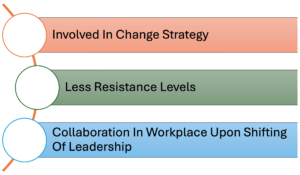
For instance, considering the case provided, a well-developed work councils and annual voice surveys are initiated pertaining to thinking of employees in AnchorBridge. The outcome of these strategies is identified in CIPD (2024a) as assisting staff in feeling involved in change strategy, less resistance levels and collaboration in workplace upon shifting of leadership.
Employee Participation
This is defined in Torlak et al. (2022) as a strategy where employees are engaged in making final decision contrary to only being involved to offer their input. The participation is more than consultation as part of decision making formally by involvement of trade unions, joint consultative and boards representation. According to van Assen (2021), the participation process initiates mutual-based respect, accountable for all and trust amongst staff and management.
Further, the employee’s participation in making policies and workplace decision surge potential of staff to support organisation objectives and harmonious co-existence. According to Cini et al. (2022), the involvement of work councils is relevant for increasing how the employees are influenced by different policies in AnchorBridge. The outcome of this is the employees having a feel of their voice is being heard and of high value. The overall uncertainties and sustainability are eliminated with stability and appropriately coordinated work environment (CIPD, 2025).
Differences
The employee’s involvement and participation are different on basis of decision-making strength and scope of engagement in AnchorBridge. Contrary to employee’s involvement guided by management and consultation-based, participation is guided by management offering direct-based influences to make core decisions in AnchorBridge. As identified in van Assen (2021), involvement is basically linked to feedback sourcing by use of questionnaires/engagements with participation having the employees engaged for collective bargaining and negotiating on employees’ representatives.
Another difference relates to informal and voluntary for employee’s involvement with the participation inclusive of formal-based structures including trade unions involvement and advisory teams such as “The Bridge”. Sourcing for input of the employees by engagement strategies evidence their involvement with voice offered to make core decisions evidencing an increased participation such as “Quick Liz”. Nevertheless, Azevedo et al. (2021) identify employees’ participation as being holistic in changes in entities evidencing sustainable stability.
For more insights, please click the following link
Related to: https://rankedprofessionals.com/downloads/solution-cipd-new-brief-5hr01-public-sector-organisation-merger/