(Solution) CIPD Prime L&D 5HR03 Reward for performance and contribution
Solution
Report – Questions
| AC 1.1 Explain the principles of reward and its importance to organisational culture and performance management. Word count: Approximately 400 words |
| Reward Principles
Fairness This principle entails rewarding employees on basis of what they contribute to their organisation or how they are capable. In Eco-Insulate, they lack an elaborate structure for rewards therefore limiting fairness in issuance of rewards. According to CIPD (2021), fair rewards is appropriate evidence of building trust relations hence increased commitment. Transparency The rewards offered must be clearly understood in terms of relevance and rationale. According to CIPD (2024), transparency in issuing rewards led to feeling of appreciation amongst all employees irrespective of their positioning. For Eco-Insulate context, they are supposed to be clear to their current and potential employees in rationale for rewards, issued bonus pay and benefits. Equity By embracing equity in issuance of rewards, the employees are assured that they are in line with how they are experienced, skilled, knowledgeable and input. Similar to CIPD (2022) recommendations, their reward strategy ought to mitigate any feel that there are inequalities specifically for top executive employees granted specialised schemes. Organisation Culture By offering fair, transparent and equity in pay, an organisation culture ‘how things are done here” is appreciated by all employees. In line with Hounsell (2024), the culture is identified as employer brand and organisation of choice amongst all the stakeholders. For instance, with rewards being characterised with equity, just-base culture is initiated as there are no favours in issuance of rewards but their input and efforts. Also, where the rewards lack transparency, this is linked with dissatisfied employees and disengaged with culture of reduced input for their functions evident. In transparent rewards, a culture of transparency and understanding with all teams working in collaboration would be achieved. This is with the rewards appropriately aligned with the organisation set goals/objectives. Performance Management The provision of fair-based, transparent and equity in rewards, an appropriate culture of motivated teams and highly engaged is attained. This successfully enhance effective performance management levels. In Eco-Insulate context, there are issues with fair-based rewards and not transparent as senior executives are the priority which affect the culture of practicing discretionary behaviours. In SME Bank for example (my employer), the provision of fair-based rewards assists in maintaining highly performing staff with essential motivation and performance levels. Also, transparent rewards facilitate the staff with an opportunity of aligning performance scope and rewards issued hence a performance-based cultural practice. By enhancing equity, Mizra (2024) recommend employees rewards informed by their input avoiding a sense of being disengaged. An inappropriately set rewards strategy impact performance and will for obtaining linked outcomes.
|
| AC 1.2 Assess the contribution of extrinsic and intrinsic rewards to improving employee contribution and sustained organisational performance. Word count: Approximately 400 words |
| Extrinsic Rewards
These are identified as “tangible rewards offered to employees with an intention of motivating them to excel in their performance and appropriate behavioural tendencies” (Francis, 2024). In Eco-Insulate, the examples can be monthly pay, bonus, succession planning, retirement pension pay and rewarded even when out of work/leaves. The input of the employees evidenced by readiness of exercising discretionary behaviours. For instance, for Eco-Insulate manufacturing department could be issued with performance-based bonuses increase manufacturing capability. Also, for the Eco-Insulate employees working in the risk-averse departments (machines operators), covering them from accidents policy would be instrumental. In SME Bank, extrinsic rewards as identified in AIHR (2024) are equally instrumental for having motivated, engaged, satisfied and committed in their roles. For drawbacks, extrinsic rewards cannot be used independently. Their integration with intrinsic motivators is core for enhancing all stakeholders’ commitment. Intrinsic Rewards These are defined in Cotton (2020) as rewarding employees in line with internal factors motivating to employees. They are meant for enhancing internally developed satisfaction and individual satisfaction. In Eco-Insulate, the examples would include annual/quarterly recognition, autonomous co-existence and individuals’ development. The identified rewards are core for improving satisfaction of employees by enhancing their sense of belongingness and success. Upon assuming a feeling of being of high-level value and opportunities for individual development. For example, due to the current situation in Eco-Insulate, they can come up with a well-planned recognition initiative targeting their employees. A good example of this is the “Employee of the Month” which is customised to best performing employees. The strengths of this would include increasing the morale of the employees, fostering innovativeness and reducing turnover. As identified in Indeed (2022), meaningfulness of job, mentoring sessions and career growth. Supporting Eco-Insulate performance The sustained Eco-Insulate performance need both extrinsic and intrinsic rewards to be in place. The examples of extrinsic rewards include giving competitive pay and performance-based bonus. According to CIPD (2024), the rationale of this is gaining feeling that their interests are prioritised. Conversely, intrinsic rewards for example quarterly recognition in general meetings and career growth motivate and contribute to sustainable performance. According to CIPD (2016), with Eco-Insulate currently impacted negatively by inappropriate culture and turnovers, issuance of intrinsic rewards is core for gaining highly committed staff. In Eco-Insulate, the existence of a formal-based recognition program and creation of relevant chances for growth purposes could assist in enhancing loyal employees and practicing discretionary behaviour. Intrinsic rewards are most appropriate by enhancing their employee’s motivation, gaining innovativeness and commitment to their functions. This is with extrinsic rewards being able to attract best talents. Hence, increasing employee’s productivity and engagement lead to appropriate balancing of rewards and employees’ goals. |
| AC 2.1 Explain differences between types of grade and pay structures.
Word count: Approximately 400 words |
| Formal Type of Pay Structure
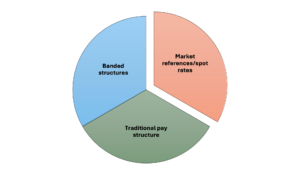
An example of this is the Broad-Banded Pay Structure. This is used in integrating the different pay grades to lower; broad bands which enhance flexible rewards progress. The identified structure is relevant for Eco-Insulate as they enhance support scope advanced in their job functions for allowing internal career growth.
According to CIPD (2024), the embrace of broad band lead to empowerment of leaders in structuring employees’ rewards on basis of their productivity and not to rely with rigidity in classification of job roles. In Eco-Insulate, this would be a source of their employees increased talent development as they would be in a position of transitioning from one band to the other. Nevertheless, for limitations, Taqi (2024) note necessity for elaborate support for managing rewards disparity in internal organisation in different bands in a manner mitigating inconsistent and favouring others. Another limitation is that despite of their simple in nature and flexible, pay compression challenges are common apart from a situation pay increase is under strict regulations. Informal Pay Type An example of this is the Spot Rate Pay Structure. This type of reward links a particular job function with specified scope of progress or stepwise adjustments. In Eco-Insulate, this strategy is relevant for the manufacturing department with the structure being informed by pieces produced/percentage efficiency. The use of this structure is direct, characterised with transparencies, easily administered hence reduced payroll complexities. In Eco-Insulate, this type of structure would be informed by their roles as opposed to how they produce/perform. The limitation of this is the failure for being motivational to the employees in enabling execution of their functions. Nevertheless, they are inflexible and are not encouraging sustained progress or being committed to their functions hence reduced turnover. Differences For the Spot Rate Pay Structure, they are easily managed with costs controlled. Conversely, Broad-Banded Pay Structure is flexible in nature with varying career growth opportunities advanced. In Eco-Insulate, offering a broad-banded structure, Weeks (2024) highlight freedom enhanced for skills growth and transitioning in various rewards bands. Also, Spot Rate Pay Structure is uniform despite reducing motivation as they are hesitant in acknowledging input of each employee. Further, rewards governance in broad bands are essential to avoid any inconsistency with spot rates administered easily and active management. Finally, Broad-Banded Pay Structure attract significant administration costs as the line managers must be engaged in ensuring fair-based practice in different bands with spot rates predicted easily with no incentivising. Broad band structure is hence appropriate when there is a need to foster long-term based engagement in Eco-Insulate with spot rates relevant for entry level employees which demand simplified rewards (Binder, 2024).
|
| AC 2.2 Explain how contingent rewards can impact individual, team and organisational performance. Word count: Approximately 400 words |
| Contingent Reward Definition– A contingent reward represents performance-oriented incentive offered to employees after achieving specified target or expected behavioural tendencies evidenced. In Lindberg (2022), the financial and non-financial to staff examples being bonus-pay, recognised, promoted and benefits, input of employees are in alignment with objectives. For Eco-Insulate case, contingent rewards are appropriate for enhancing how motivated, engaged and performance-oriented employees.
Individual Performance By issuing contingent rewards, Eco-Insulate would be in a position of improving how motivated they are and performing. Targeting the factory-based staff for the organisation who have met and surpassed efficiency, this would be encouraging to employees increasing their results and managing scope of quality. Contingent rewards would both enhance hard work for employees and also cultivating a feel of success and individualised efficiency. For limitations, according to Raschi (2023) fair-based rewards and being transparent in measuring performance is important for mitigating dissatisfied teams. Eco-Insulate could popularise a performance-based culture linked with rewards essential for ensuring individuals contributions appreciation, satisfied in roles and retention enhanced. Teams Performance In Eco-Insulate, issuing contingent rewards which include group bonuses enhance collaboration and performance scope. For example, incentivising production department employees who have achieved or exceeded performance goals could enhance how collaborative they are and teams’ motivation towards sharing the best strategy therefore promoting team-based working. Also, competition internally would be lowered and simultaneously initiating a feeling of shared responsibilities. For negatives, with contingent rewards appropriate, there are potential limitations with teams having more capability that the rest hence lacking sufficient recognition contributing to emergence of conflicting interests and resenting. For managing the identified limitation, Eco-Insulate is supposed to make sure performance criteria is elaborately shared and good balance used. These assists in encouraging collaborative working which enhance role play hence cohesive teams. Organisation Performance The contingent rewards are relevant for driving organisation success. In Eco-Insulate, the contingent rewards offer an opportunity for employees to gain in terms of knowledge and skills hence continuously assisting their organisations to learn and innovate. The organisation business environment changes would be best embraced by the employees therefore high-level efficient and quality-levels. For negatives, when they are inappropriately structured, contingent rewards could contribute to gaps in rewards and unreasonableness on expected rewards. A strategic alignment of contingent rewards with organisation objectives assists Eco-Insulate in cultivating performance-based organisation, strengthening employee’s potential and leveraging on competitive advantage in their business environment.
|
Please click the following icon to access this assessment in full