(Solution) CIPS Formal commercial negotiation plan PIN
Solution
Table of Contents
1.1 QatarEnergyLNG Organisation Background. 5
2.0 Pre-Negotiation Preparation. 7
2.1 Gathering of Data and Analysing. 7
2.1.1 Porter’s 5 Forces Analysis. 8
2.2 A Stakeholders and Bargaining Power Analysis. 10
2.2.1 Stakeholders Analysis. 10
2.3 Main Issues and Priority. 12
2.4 Planning Approach and Tactics. 12
2.5 Alignment of Teams Positions. 12
2.6 Preparation for the Meetings. 13
3.0 Negotiation Plan Analysis. 14
3.1.3 Kraljic Matrix Analysis. 18
3.1.4 Suppliers Preferencing Matrix. 20
3.1.5 Achievement of BATNA Negotiation Preparation Process. 21
3.1.6 Negotiation Approaches. 22
4.0 Opening Phase of Negotiation. 23
5.0 Testing Phase of Negotiation Process. 24
6.0 Proposing Phase of Negotiation Plan. 25
8.0 Agreements and Negotiations Closing. 28
9.0 Developing of Contracts. 28
10.0 Conclusion and Recommendations. 29
Figure 1:Summary of QatarEnergy LNG major operations. 5
Figure 2: Porters 5 Forces Analysis Technique. 8
Figure 3: Different Categories of Stakeholders for QatarEnergyLNG.. 10
Figure 4: Negotiation Cycle. 15
Figure 5:QatarEnergyLNG Kraljic Matrix Analysis. 19
Figure 6:Suppliers preferencing matrix. 20
Figure 7: BATNA in Negotiation.. 21
Figure 8: Thomas-Kilmann Conflict Model Instrument (TKI). 22
Figure 9: Triple Bottom-Line Model 25
Figure 10: 4R’s Model in Negotiation Plan.. 26
Figure 11:Principles of procurement and supply management 27
Table 1: QatarEnergyLNG Sourcing Approaches. 6
Table 2: Porter’s 5 Forces Analysis Summary. 8
Table 3: Mendelow Matrix Analysis Summary. 11
Table 4: Risk Register Summary. 13
Table 5: SWOT Analysis Summary. 16
Table 6:STEEPLED Factors Analysis Analysis. 17
Executive Summary
In this final assessment, a commercial negotiation plan project has been provided. This is by focusing on QatarEnergyLNG Information Technology (IT) spend category. Post-COVID-19 pandemic and the different projects that the organisation has been investing on, IT represent a significant area of spend/expenditure. By managing their digitisation through procuring IT, this represents a significant area for sustainability and achievement of Vision 2030. In this report, it has focused on reference on main/key facts, QatarEnergyLNG organisation data and techniques appropriate for negotiation strategy referenced. The identified IT category is a core segment of oil and gas organisation sourcing. This have cumulative QAR50 million in hardware and QAR60 Million in software having a direct implication on end-users, controlling operations efficiencies in entire Qatar oil and gas sector. The negotiation plan is found to be responding to strategic goals/objectives inclusive of necessity for modernising costs management, improved sustainable value, resilient teams in the global supply chains and supporting sustainable practice and alignment socially. The findings identified past practice in QatarEnergyLNG as involving embrace of National Pricing Matrix (NPM) leading to saving on costs by volumes-oriented discounting. This is currently limiting Procurement and Supply Management (PS&M) flexible level, restricting oil and gas demand and fail in advancing innovativeness and technology embrace. Another key fining is that QatarEnergyLNG have market dominance in the oil and gas and digitisation process with immense suppliers bargaining power. This is in medium-level, guided by consolidating markets, costs volatilities and significant brand loyalty in the oil and gas sector. The findings in Porter’s 5 Forces Analysis note the organisation as having competitiveness in their supplier landscape with less dominating suppliers’ teams such as Oracle who exert major impact. The findings further from Stakeholders analysis (Mendelow Matrix) note QatarEnergyLNG Procurement Supply Chain Management (PS&M), regulators, Qatar Government, finance and innovation department has possessing higher power, stakeholders’ interest high/enormous and demand holistic inclusion in negotiation plan.
From the gaps identified, suggested recommendations would include;
- Eliminate the current NPM with embrace of negotiation guided by multi-factor value oriented costing plan with suppliers
- Revising Terms and Conditions with the different suppliers with quarter sustainable reports demanding annual-based products proposing for innovativeness
- Integrate appropriate Key Performance Indicators (KPIs) in contract management demanding monthly delivery in timely of 14 days in times of emergencies
- Initiate quarterly reviewing of performance engagement with suppliers enhanced through embrace of formalised KPIs prioritising on costs, timelines, qualities and sustainable practice
1.0 Introduction
1.1 QatarEnergyLNG Organisation Background
In this report, QatarEnergy LNG organisation has been selected to develop the findings. The organisation is a global energy operator characterised with uniqueness in regard to their size, service-quality and reliability level since 1984. As identified in QatarEnergy LNG (2025), the organisation operates upto 14 liquefied natural gas (LNG) trains producing upto 77 million tonnes annually. As such, the organisation is ranked as the leader in LNG production globally from world’s non-associated natural gas field. The organisation operations are informed by need for achieving safety, sustainable environment practices, uninterrupted delivery of projects, reliable and efficient production facilities. The organisation plays a critical function in Qatar economy and the country goal of leading internationally in LNG sector. A summary of the organisation statistics of operations is as illustrated in the following;

Figure 1:Summary of QatarEnergy LNG major operations
Source: Summarised from QatarEnergy LNG (2024)
The 77mln (metric) tonnes identified in background section are intended to be increased to 142 MT in year 2030 representing 90% increase. According to Middle East Council on Global Affairs (2024) report, the outcome would be positioning Qatar as a leader in the international LNG industry leveraging from a capacity of controlling upto 25% of the entire global market.
1.1 Category of Spend
In the major QatarEnergyLNG operations (see figure 1 illustration), they procure an upward of 200 IT hardware products (QatarEnergyLNG, 2024). A summary of QatarEnergyLNG IT hardware sourcing is as illustrated in the following table;
Table 1: QatarEnergyLNG Sourcing Approaches
Source: Summarised from QatarEnergyLNG Internal documentation
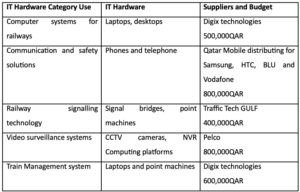
In the context of QatarEnergyLNG, they operate towards dominating 90% of the Qatar oil and gas industry and over time expand their operations in the entire Middle East Region. For achieving this, their competitiveness is informed by their scope of embrace of the different IT hardware illustrated in the table.
Further, QatarEnergyLNG identify most appropriate approach to source their spend areas imply having a direct PS&M operations control. According to Alhammadi et al. (2023), this is guided by their targets of harmonising their demand and supply dynamics in their overall value chain.
2.0 Pre-Negotiation Preparation
This is identified as an important stage/phase of the commercial negotiation plan. According to Wakelin (2022), this is important for making sure the appropriate data, encountered risks, stakeholders’ analysis and choices assessment are thorough prior formally discussing.
For QatarEnergyLNG tasked with a responsibility and commitment towards safe, environment sustainable, flawless projects implementation, reliable and efficient production facilities. With 70% of shareholders being the government and the rest QatarEnergy, they ensure that their sourcing process manage government finances, safeguarding natural resources and adhere to Qatar laws on procurement (QatarEnergy et al., 2025).
With strategic relevance of sourcing IT systems and the scope of annual spending in QatarEnergyLNG, negotiations with their potential suppliers are essential. This is while prioritising on market-based dynamic, expected stakeholders’ interests and contract risks management having immense operation and finance demands. The pre-negotiation phase is essential for the organisation clarifying their goals, anticipation of supplier’s management needs, identifying value creation segments past costs. According to ADR Times (2021), this is while prioritising on alignment of active decision making past the single positioning.
2.1 Gathering of Data and Analysing
A detailed process used to source data and analyse anchor success in formal commercial negotiation plan. In QatarEnergyLNG case, a management of s spend area which is of immense value and sensitive which is IT category need a detailed appreciation of the internal procurement strategies, how suppliers execute their functions, market place factors and risks externally. The different phases as identified in Chmielecki (2025) make sure commercial negotiation decisions are informed by accuracy, not outdated and appropriate data.
In the internal data of QatarEnergyLNG, this can entail an analysis of spending data, pricing data used, forecasting volumes, suppliers Key Performance Indicators (KPIs) and the historical data on orders placed. The findings note QatarEnergyLNG as having 95% of the oil and gas industry in Qatar and as such regarded as a major buyer of IT in oil and gas industry. Similarly, from existing audits reporting, oil and gas demand and client’s data for assessing how they perform, reliable and comply to contracts terms and conditions (T&Cs).
In external environment, market intelligence is sourced by use of Porter’s 5 Forces Analysis for appreciating how competitive they are in their market, suppliers bargaining power and encountered risks in volatility of costs specifically with software and hardware.
2.1.1 Porter’s 5 Forces Analysis
Porter’s 5 Forces technique is used for market analysis for ascertaining how industries are attractive and competitiveness guiding negotiation. According to Gratton (2025), this is while assisting in mapping buyers and suppliers successfully. A summary of these forces is shown in the following;
Figure 2: Porters 5 Forces Analysis Technique
Source: Summarised from CIPS (2025a)
Considering the operations of QatarEnergyLNG, the different forces are as illustrated in the following;
Table 2: Porter’s 5 Forces Analysis Summary
Source: Summarised from QatarEnergyLNG internal Documents
| Factors of the Forces | Level of Classification | Key Explanations |
| Competitive Rivalry | Medium to High | There exist 9 suppliers working in provision of IT systems with some dominance with QatarEnergyLNG having 97% dominance of oil and gas sector |
| Bargaining Power of Suppliers | Medium Level | Oracle and different suppliers of IT systems gain from a strong brand loyalty, controlling sourcing of IT systems. With QatarEnergyLNG having 98% dominance possess strong buyer positioning |
| Bargaining Power of Buyers | High Level | Their suppliers are aggregating demand scope of IT systems allowing for significant leveraging on costs, qualities and sustainable-based commitment |
| Threat of New Entrants | Low Level | Immense capital invested, stringent regulations and suppliers brand preference hence immense barrier of entry in IT systems industry |
| Threat of Substitutes | Medium to Low Levels | The special IT software in the oil and gas industry impact on the substitutes in place. This is despite of the other sectors having options leading to immense substitute risk. |
To conclude, the Porter’s 5 Forces Analysis note the different market dynamics as having an influence on QatarEnergyLNG negotiation positioning in their IT category. As illustrated in the table, with suppliers bargaining power moderate, this is informed by brand loyalty and controlling compared to specialised IT hardware with QatarEnergyLNG gaining from immense buyer power by its 97% of dominance in IT industry. Further, threat of new entrants is low owing to immense regulation and level of entry hindrances with risk to substitute less owing to oil and gas sector less competition. The evaluation affirms QatarEnergyLNG is in strong positioning in eliminating National Pricing Matrix Model in place while securing appropriate value and operations flexibilities.
2.2 A Stakeholders and Bargaining Power Analysis
2.2.1 Stakeholders Analysis
Adopting the definition in Bellen (2025), a stakeholder is “person/organisation interested albeit the scope or impacted by manner decisions and or initiatives are pursued”. This is impacting projects, projects and services ventured. The importance of stakeholders is broad and could significantly impacting success scope of an initiative hence need for appropriate stakeholders’ management.
In CIPS Module Notes, the stakeholders are noted to be classified to Internal, External and Connected informed by their relations with projects, products and services offered. Informed by Rodgers (2025), a further summary of the classification is illustrated herein;….
Please click the following icon to access this assessment in full
Related to: https://rankedprofessionals.com/downloads/solution-effective-negotiation-in-procurement-and-supply/