(Solution) CIPS leadership and management practices at ROSHN
Solution
Executive Summary
This report evaluates the leadership and management practices at ROSHN. As an organisation governed by the vision 2030, ROSHN integrates strategic national goals with commercial performance, necessitating leadership and management systems that balance between innovation and accountability.
The analysis reveals that ROSHN follows a divisionalised structure, where transformational leadership at the executive level encourages alignment with national goals, and transactional management enforces compliance in functions like procurement and construction. The report demonstrates how leadership influences organisational behaviour by creating collaboration, pride, and compliance using models like Kotter Leadership vs. Management, Hersey and Blanchard Situational Leadership, and McKinsey 7S Framework. According to employee feedback obtained through a structured survey, leadership support, teamwork, recognition, and wellbeing initiatives are the key drivers of job satisfaction at ROSHN. Nevertheless, there are still challenges in terms of timely feedback, promotions, and consistency across middle management. Leadership styles, especially a combination of transformational and transactional styles, were found to have a strong influence on engagement, motivation, and wellbeing.
Regarding power dynamics, ROSHN demonstrates five bases of power as described by French and Raven, with legitimate and expert power being the most dominant. The influence of stakeholders, analysed through Mendelow’s Matrix, indicates that government and customers are key players, requiring close strategic management. ROSHN’s equality and diversity policies are consistent with the inclusivity agenda of Vision 2030, which encourages innovation and cultural awareness. Nevertheless, women underrepresentation in leadership and lack of unconscious bias training represent some areas of improvement.
Recommendations include:
- Leadership training for middle managers to strengthen consistency.
- A transparent recognition and promotion system to enhance retention.
- Development of expert and referent power through workshops and cross-functional projects.
- Expanded diversity initiatives, including unconscious bias training and ERGs.
Contents
1.0 Introduction and Organization Background. 4
1.2 Organization Background. 4
2.0 The Impact of ROSHN’s Leadership and Management on Organizational Behaviour 6
2.1 Distinction Between Leadership and Management at ROSHN.. 6
2.2 Factors Affecting ROSHN’s Leadership Style and their Impact on Organisational Behaviour 8
2.3 Internal Factors Affecting ROSHN Organisational Behaviour 9
2.3 External Factors Affecting ROSHN Organisational Behaviour 10
2.4 Improving the Current Leadership Situation at ROSHN.. 11
3.0 Likely Impact of ROSHN Leadership Approaches on Job Satisfaction. 12
3.1 Job Satisfaction at ROSHN.. 12
3.2 Impact of Leadership Approaches on Job Satisfaction. 17
3.3 ROSHN Leadership Concern for Wellbeing. 18
3.4 Improving the Current Situation on Job Satisfaction. 19
4.0 ROSHN’s Sources of Power and How they are Used. 19
4.2 Sources of Individual Power 21
5.0 Importance of Equality and Diversity Policies at ROSHN.. 22
5.1 Benefits of Cultural Diversity. 22
6.0 Conclusion and Recommendations. 23
Figure 1: Mintzberg’s Organisational Configurations Model 5
Figure 2: The Nadler-Tushman Congruence Model 6
Figure 3: Kotter’s Leadership vs. Management Model 7
Figure 4: Hersey and Blanchard’s Situational Leadership Model 8
Figure 6: PESTLE Summary of External Factors Affecting ROSHN Organisational Behaviour 10
Figure 7: Goleman’s Emotional Intelligence Framework. 12
Figure 8: Herzberg Two Factor Theory. 13
Figure 9: Components of Job Satisfaction. 14
Figure 10: ROSHN Employees Feedback on Leadership Support 15
Figure 11: ROSHN Employees Feedback on Career Development 16
Figure 12: ROSHN Employees Feedback on Work Life Balance and Wellbeing. 16
Figure 13: ROSHN Employees Feedback on Organisational Culture & Recognition. 17
Figure 14: Blake and Mouton’s Managerial Grid. 18
Figure 15: ROSHN Stakeholder Categories. 20
Figure 16:Mendelow’s Stakeholder Matrix. 21
Figure 17: French and Raven Five Bases of Power 21
1.0 Introduction and Organisation Background
1.1 Introduction
The aim of this report is to evaluate leadership and management practices in ROSHN, one of the top developers of real estate in Saudi Arabia. The strategic mandate of ROSHN influences its operations and culture and necessitates sound leadership and management practices to balance business results with national goals. As a procurement professional, who has to deal with the tendering process, including its preparation, evaluation, and award, I have first-hand experience of the impact of leadership styles on compliance, collaboration, and organisational behaviour.
The difference between leadership and management is vital in this assessment where the leader determines vision and motivates teams, whereas the manager maintains order and control of operations. The report will look at four main areas: how leadership and management affect organisational behaviour; how leadership styles can affect job satisfaction; the sources of power within the organisation and their application; and the role of equality and diversity policies in shaping organisational culture. Lastly, the report gives recommendations on how to strengthen the leadership practices at ROSHN to improve organisational performance.
1.2 Organization Background
ROSHN is a national real estate developer in Saudi Arabia charged with the responsibility of supporting Vision 2030 through the provision of modern, integrated, and sustainable communities throughout the Kingdom. The organisation is transformative in terms of redefining the standards of urban living, with its projects aimed at supporting homeownership, sustainability, and improved quality of life (Mngigroup, 2025). The organisation functions in a dynamic setting, balancing its mandate to provide large-scale housing and the necessity to be commercially competitive and satisfy its stakeholders.
Based on Mintzberg’s Organisational Configurations Model in Figure 1, the management and leadership system of ROSHN may be said to be in the Divisional Form in which the authority and strategic direction is centralized at the executive level, with operational functions of day-to-day responsibilities being delegated to specialised units (Fripp, 2023).
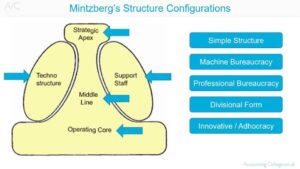
Figure 1: Mintzberg’s Organisational Configurations Model
Source: Francis (2024)
The board and executive leadership team at ROSHN, as per the mandate of the Public Investment Fund (PIF), establish strategic priorities based on the Vision 2030, including the promotion of homeownership and provision of sustainable communities. Under this, there are functional departments, including procurement, construction, design, sales, and customer experience, which are semi-autonomous and have to achieve project-specific goals.
According to Grzegorzek (2025), this structure allows flexibility and responsiveness in divisions and overall cohesion with long-term strategic objectives of ROSHN. Leaders mostly use a transformational style, motivating employees by connecting their roles to the overall national mission, while managers use transactional practices to ensure that there is compliance with governance, procurement policies, and performance metrics. The visionary leadership and structured management help ROSHN to balance between innovation and accountability (Amelia, 2024).
2.0 The Impact of ROSHN’s Leadership and Management on Organizational Behaviour
According to Kopp (2025), organisational behavior (OB) is the study of how individuals, groups, and structures behave within an organisation and how that affects the performance of the organisation. At ROSHN, OB is Important for balancing large-scale housing delivery with Vision 2030 goals. Using the organisational metaphors, ROSHN operates as a machine, emphasising efficiency through compliance and structured procurement, and also as an organism, adapting to housing demand and sustainability pressures.
To further understand how different elements of ROSHN align to shape organisational behaviour, we will use Nadler and Tushman’s Congruence Model as illustrated in Figure 2;
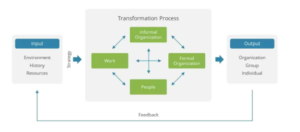
Figure 2: The Nadler-Tushman Congruence Model
Source: Francis (2024)
This model shows how alignment between tasks, people, structure, and culture drives effective organisational behaviour. At ROSHN, leadership inspires culture through Vision 2030, while management ensures structure and systems enable housing delivery.
2.1 Distinction Between Leadership and Management at ROSHN
The difference between Leadership and management is explained by Gavin (2019) who point out that leadership is vision-oriented, inspirational, and people-oriented influence, while management is control-oriented, structural, and focuses on executing tasks through processes and policies. The two roles are present at ROSHN, although transformational leadership is more emphasised. The executive-level leaders motivate employees by linking their efforts to the Vision 2030, to make them have a sense of national pride and purpose. On the other hand, managers adopt well-organized practices like procurement compliance systems, performance appraisal, and project delivery milestones.
In order to differentiate the two, we can use Kotter’s Leadership vs. Management Model. Kotter emphasises that managers plan, budget and control whereas leaders set direction, align people and motivate (See Figure 3).
Figure 3: Kotter’s Leadership vs. Management Model
Source: Topper (2022)
Using this model, ROSHN demonstrates a hybrid approach, with executives serving as leaders in culture and long-term goal development, and functional heads serving as managers in operations accountability. Such system has a positive influence on the organisational behaviour in that it enhances innovation, compliance, and collaboration. Nevertheless, Hall (2023) points out that tension may arise when transactional management practices are too strict, and this may limit creativity. Overall, the leadership-management balance at ROSHN has developed alignment, efficiency, and motivation among employees throughout the organisation.
2.2 Factors Affecting ROSHN’s Leadership Style and their Impact on Organisational Behaviour
The organisational context and national priorities determine the leadership style at ROSHN. Among them is the strategic alignment of the company with Vision 2030, where the leaders must adopt a transformational approach to motivate employees to meet the ambitious housing and sustainability targets (Ugochukwu, 2025). Such a context creates an environment within which leaders perform as role models, focusing on innovation, national pride, and accountability. Another factor that influences the leadership style is the procurement and construction environment in which ROSHN operates, which is highly regulated. Governance standards and compliance requirements require aspects of transactional leadership, in which managers enforce rules, track performance, and reward efficiency (Betz, 2025). Such a blend of transformational and transactional styles helps shape the organisational behaviour by promoting innovation and maintaining regulatory alignment.
Hersey and Blanchard’s Situational Leadership Model offers additional insight. According to this model, leaders change their style based on employee readiness and the complexity of tasks (Murphy, 2025). This is illustrated in Figure 4;
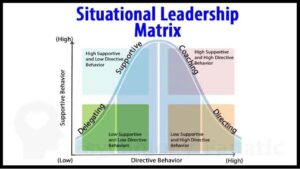
Figure 4: Hersey and Blanchard’s Situational Leadership Model
Source: Kenton (2024)
At ROSHN, leaders need to switch between a supportive, coaching approach when dealing with new employees, and a directive approach when dealing with tight procurement or project delivery deadlines. This flexibility has a direct influence on the organisational behaviour as it makes employees feel supported and at the same time, accountable.
2.3 Internal Factors Affecting ROSHN Organisational Behaviour
At ROSHN, internal forces like culture, structure and communication directly influence the organisational behaviour. Through the McKinsey 7S Model (Figure 5), we observe how the strategy, structure, systems, style, staff, skills and shared values interact to shape organisational behaviour (Jurevicius et al., 2025)…………
Please click the following icon to access this assessment in full
Related; https://rankedprofessionals.com/downloads/solution-roshn-leadership-and-management-cips-assignment/