(Solution) CIPS module Sourcing Essentials
Solution
Executive Summary
In this third CIPS module assessment titled “Sourcing Essentials”, the focus is to evaluate relevant sourcing strategies. This is by focusing on spend categories embraced by Bell Company (BCE) from Canada. The spend area is construction services for their different technology installations. This is instrumental as the organisation is leading in provision of 5G+, 5G, 4G LTE and more. For the sake of analysis in sourcing essentials, data for Bell Organisation has been used and external technology data with subsidiary in Oman. Additionally, CIPS data and various contents have been referenced in the current report. This is with examples of tools such as Mendelow, Kraljic matrix and business hierarchy of needs.
The main findings in this report entail appropriate sourcing strategies put into account which are single, sole, dual and multiple. The findings highlight the single sourcing as appropriate to engage only one supplier. The multiple sourcing entail multiple suppliers existing in procurement and supply industry. This is with sole sourcing involving one supplier in place and involved in their operations. Finally, this project has identified the dual sourcing as noting two different suppliers in place and involved in the process.
The last finding from the analysis identify suppliers appraisal as noting their construction spend category by using Carter’s 10Cs model with appraisal made. With BCE pursuing new investments, construction spend area is essential and its appraisal relevant for identifying process for selecting multiple sourcing.
In the end, in line with gaps identified in findings, the recommendations are;
- Every spend category need to be aligned by most relevant sourcing strategy
- Develop relevant policies in alignment with Oman legislations including Omanisation for success
- Involving different stakeholders in the sourcing strategies for holistic inclusion in the process
- Digitise the overall sourcing strategy for improved operations as part of broadening the appraisal process
1.0 Introduction
1.1 Bell Company (BCE) Organisation Introduction
Bell Company Canada (BCE) is currently ranked as the Canada most popular communications organisation. It is currently involved in leading the fiber internet installation, enterprises solutions and digitised media platforms (https://www.bce.ca/about-bce/bce-overview). A summary of their services in Canada is as illustrated in the following;

Figure 1: Summary of BCE Services in Canada
Source: Summarised from https://www.bce.ca/about-bce/bce-overview
For the organisation competitiveness in their business environment, they have been scaling their subscriber base in growth services. As evidenced in (https://investingnews.com/bce-outlines-strategic-plan-to-drive-sustainable-free-cash-flow-growth-and-long-term-shareholder-value/#:~:text=Bell%20anticipates%20scaling%20its%20subscriber,versus%20our%20next%20leading%20competitor.) they have been operating approximately 14 million in 2020 and expect to reach 20 million as at 2028. Their fibre installation is currently the leader in the Canadian market with more than 60% market share in different locations with the remaining being held by their competitors. For the purpose of scalling their operations and maintaining their competitiveness, BCE works towards engaging different suppliers. This is with their market dominance in country supply chain and procurement industry. With a budget of $50 million quarterly in their procurement and supply, operating the best sourcing approaches is instrumental for the organisation.
2.0 Spend Category Analysis and Positioning
In second quarter of this year, BCE has expanded on their profits with 40% to reach $2,605 Million (https://www.bce.ca/news-and-media/releases/show/bce-reports-2024-q4-and-full-year-results-announces-2025-financial-targets#:~:text=Adjusted%20EBITDA%20was%20up%201.5,from%2039.7%25%20in%20Q4%202023.). This is while BCE’s adjusted EBITDA margin increasing with 0.9% to reach 40.6% from 39.7% in Q4 of 2023. This is with a significant percentage of this amount being used by the organisation as spend area. In construction, a summary of their spend is as illustrated in the following;
Table 1: Summary of BCE Spend in construction
Source: Summarised from https://www.bce.ca/news-and-media/releases/show/bce-reports-2024-q4-and-full-year-results-announces-2025-financial-targets#:~:text=Adjusted%20EBITDA%20was%20up%201.5,from%2039.7%25%20in%20Q4%202023.
| Construction spends categories summary | Sub-classifications | Suppliers and budget allocated |
| Projects management | Plan, organise, execute and monitor | Tramore Group, Deloitte and Gna Consulting
$3.4 Million |
| Quality management | Regularly investing new projects, evaluate and inspect | ITI Consulting, Greenlight Guru, Averna and Architech
$2.9 Million |
| Risks management | Schedule risks, budget set and managing total qualities | Enviro-Capital, 360-privacy for digital protection, nexus risk management
$6.2 Million |
| Costs-based management | Investing, costs control and projects implementation | Tramore Group, Deloitte and Gna Consulting
$8.4 Million |
For the construction spend area, they account for 40% of their entire operations project in the digitisation of technology and communication infastructure in Canada (https://www.bce.ca/about-bce/bell-ventures). From the summary, BCE involve multiple sourcing strategy in the spend categories.
Also, PS&M strategies are initiated in line with sorucing strategies being embraced by the organisation. This is in line with budgetary allocation, expectation of stakeholders and demand and supply.
2.1 Kraljic Matrix Analysis
As part of the selection of a relevant sourcing approach, this tool is relevant for identifying and minimising overall risks evident in their entire supply chain network (https://www.cips.org/intelligence-hub/supplier-relationship-management/kraljic-matrix). This is summarised herein;
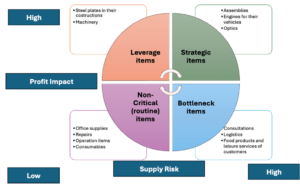
Figure 2: Summary of the Kraljic Matrix Analysis
Source: Summarised from CIPS Module Notes and BCE
Leverage items– Their machines in operations, steel materials for construction engage multiple supleirs. Hence, it is is instrumental owing to the significant risk and profitability. In BCE, it is core to manage competitiveness in their construction initiatives. This is intended to enhance costs negotiations and value for money.
Strategic items– Their motor vehicles (MVs) sourced, engines and also optics belong in this category. They are naturally existing hence engage single suppliers as opposed to dual or sole. This is to maintain confidential, supply chain relationships for less risks.
Bottleneck items– Considering logistical, consultation spend area is core in uncertainties with HS&E similarly belonging to the category. As identified in Okeagu et al. (2021), sole sourcing is most relevant to guarantee technical support strategy.
Non-critical (Routine) items– For the various spend areas including stationary, repairing, operations and consumable have multiple suppliers in place. Therefore, BCE prioritise on embrace of single sourcing for value for money and costs savings. The multiple and dual sourcing is preferred with specialists are needed and immense quality.
2.2 Stakeholders Analysis
In the case of BCE sourcing approaches, the stakeholders relationships is core (CIPS, 2025). The rationale of this is that stakeholders are defined in the CIPS Module notes as the individuals directly impacting on contracts implementation and active practice. Specifically, Mendelow Matrix Analysis is used;
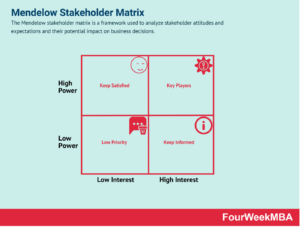
Figure 3: Mendelow Matrix Analysis
Source: Summarised from CIPS Module “Sourcing Essentials”
Keep Satisfied– This is made of different suppliers in various spend areas. They are required to be involved in selection of most appropriate sourcing approach.
Key Players– BCE PS&M experts, employees and end-users (communication services users) are engaged in ensuring that sourcing process succeeds. The rationale of this is leveraging on varying interests areas and expectations.
Keep Informed– The regulators and BCE Board of directors dictate the amount budgeted for the sourcing process. It is the resources that determine most relevant sourcing approach.
Low Priority– This category include the Canada government where BCE operates involved in setting legislations and policies guiding sourcing. Hence, the approach used entail success in achieving demands and organisation focus.
Further, from the Mendelow Matrix Analysis outcomes, it is essential to further analyse the stakeholders by using Do (2025) Peter Block Grid Leadership Model. The classification is as illustrated herein;
Figure 4: Peter Block Grid Leadership Model
Source: CIPS Module Notes
Allies- The different stakeholders who include managers, PS&M and UAE administration are expected to actively be shring vision for success in the sourcing strategy. By opting for multiple sourcing strategy, their interests are aligned well.
Fair Weather Friends- Form the beginning, different stakeholders agree on success with trust reduced amidst their operations. Therefore, in sourcing, they determine sustainability of their relations therefore communicate on most appropriate sorucing process.
Adversaries- Here, the negotiation has failed and as such placed to the point of final resort. Therefore, use of multiple sourcing is relevant for identify input and projections.
Opponents– This classification is characterised by less disagreements and trust scope. Hence, a clear awareness of the sourcing approach embraced is relevant. This is with honesty and transparency in sourcing communicated.
2.3 SWOT Analysis
In BCE organisation case, opting for either sole, single, multiple or dual sourcing approaches is appropriate. According to CIPS (2025a) this is by evaluating strengths, weaknesses, threats and opportunities;
Figure 5: SWOT Analysis Summary
Source: https://support.bell.ca/aboutbell?step=1#step1
To conclude, for the SWOT analysis, choice for most appropriate sourcing approach is informed by existing stakeholders relations. Further, through engagement of multiple suppliers by BCE organisation in sourcing, multiple sourcing is best choice. With significant costing and risks management in place, customised sourcing strategy is appropriate and guided by choice for sourcing.
3.0 Multiple Sourcing
Adopting CIPS (2025c) definition, this entail “engagement of many suppliers to source same or different goods and services”. In multiple sourcing, majority of entities preference is on multiple sourcing considering it accommodates different demands.
In their construction spend category, BCE have….
Please click the following icon to access this assessment in full
Related to;
https://rankedprofessionals.com/downloads/solution-cips-emaar-properties-sourcing-essentials-pse/