(Solution) Hertfordshire and West Essex (H&WE) ICS NHS Final Project APGPM
Solution
Executive Summary
This project aim is evaluating best strategy for leveraging on technology for optimising procurement strategies for Hospital beds in Hertfordshire and West Essex (H&WE) ICS NHS organisation in United Kingdom (UK). This focus is informed by the fact that H&WE operate a basic modernised platform where they are conventional impacting success of stakeholders relations in the overall supply chain network. By embracing technologies, they would lead to success in H&WE procurement and supply chain process. This evaluation has been pursued through a focus on Hospital Beds in H&WE in broader “Bed Management Category”. Appreciating the critical relevance for leveraging on technology in sourcing of Hospital beds, the anticipated results entail;
- Improved engagement of different stakeholders in tendering process of contracts process
- Increased costs savings by reducing communication barriers and also reducing the number of employees working in tendering process
- An effective data management and recording for ensuring success in evaluation and use of the data for contracts tendering process metrics
- Effective management of issues in the contracts evaluation and recommend best strategies in their mitigation during tendering process
- To effectively pursue trend analysis to understand the history of evaluations and effectively use the data in managing tendering process
In this project, data was sourced by use of primary data by use of questionnaire and interviews (quantitatively and qualitatively respectively). Also, secondary research by use of desk research has been pursued to identify success in leverage on technology to optimise procurement strategies. The key findings evidence that with an increased leverage on technology, H&WE would achieve 70% savings with losses managed successfully. Another key finding includes increased efficiencies and effectiveness in stakeholders relations. Also, processes would be streamlined with real-time inventory management for improving operational efficiencies.
In line with key findings obtained, a set of recommendations have been suggested including;
- Improved use of digital procurement tools and systems to enhance costs management, saved time and developing knowledge
- Successful category management for hospital beds sourcing
- All stakeholder’s inclusion for effective decision making
- Offering holistic capacity development opportunities for understanding how to leverage integration of technology
- Set priority on capacity development strategies to improve entire skills, competencies and talents development
- Prioritising on collaboration amongst vendors to secure best systems
- Approve budget for risks evaluation
Table of Contents
1.3 Analysis of External Environment 11
2.1 Hertfordshire and West Essex (H&WE) ICS NHS organisation Background. 12
2.2 Why this Project Matters; Objectives. 14
2.3 H&WE and Leveraging on Modern Technology. 18
3.1 H&WE Modernisation of Procurement System.. 22
3.2 Leveraging on Technology for optimising procurement strategies for Hospital beds. 27
3.2.1 Kraljic Matrix Analysis. 28
4.2.1 Stakeholders Analysis and Management 35
4.2.2 Leveraging on Technology Implementation in Hospital Beds Sourcing by H&WE. 39
4.2.3 Cost Management and Demand Forecasting for Leveraging on Technology in H&WE. 42
4.2.4 Implementation of Leveraging on Technology in PS&M Strategy. 43
5.0 Analysis, Interpretations and Conclusions. 46
5.1 Stakeholders Mapping Strategy. 46
5.2 Cost Management and Demand Forecasting for Leveraging on Technology in H&WE. 48
5.3 Technology to Leverage in PS&M of H&WE Hospital Beds Procurement 51
5.4 Implementation of Leveraging on Technology in PS&M Strategy. 53
5.4.1 John Kotter’s 8 Phases of Change. 54
5.4.3 Belbin Team Roles in Project Implementation. 57
5.4.3 Gantt Chart Project Implementation and Cost Analysis. 59
6.0 Conclusion and Recommendations. 61
Appendix 3: Process Map: HPFT Dynamic Mattress and Cushions. 74
Appendix 4: Summary of the data in Hospital Beds sourcing. 74
Figure 1:Procurement Phases in H&WE impacted.. 7
Figure 3:Wastes of Lean in External Environment. 11
Figure 4:Summary of the HWE Trusts. 12
Figure 5:Hertfordshire and West Essex ICS NHS Procurement Services (HWE) governance structure 13
Figure 6:Areas of Change management and forms. 14
Figure 7:Bologun and Hope Model Summary. 15
Figure 8:5 Rights of Procurement 16
Figure 9:Summary of the Spend Categories. 17
Figure 10:Matrix Structure. 17
Figure 11:Procurement Team Organisation Structure in H&WE.. 18
Figure 12:Category Management Model 19
Figure 13:Areas of improvement in the project implementation.. 20
Figure 14:Product Lifecycle Implementation and Leveraging on Technology. 22
Figure 15: BCG Matrix for Strategic Business Unit. 25
Figure 16:Kraljic Matrix Analysis summary. 27
Figure 17: Areas of Supply Risks and their Mitigation.. 28
Figure 18:Saunders Research onion.. 31
Figure 19:A summary of stakeholders classification. 32
Figure 20:Need for leveraging on technologies for optimising procurement strategies. 34
Figure 21:Indicators for Success in Leveraging on Technologies. 36
Figure 22:PS&M Improvement cost management and technology leverage. 38
Figure 23:Challenges/barriers of leveraging on technology. 39
Figure 24:Leveraging on technology opportunities. 40
Figure 25:Summary of Stakeholders Mapping in Change. 41
Figure 26:Stakekeholders Mendelow Matrix Analysis. 42
Figure 27:Triple Bottom-Line of Sustainability Factors. 46
Figure 28:Complexity Analysis Radar. 47
Figure 29:John Kotter 8 Phases of Implementing Project Change. 48
Figure 30: Tuckman’s Team & Group Development Model 50
Figure 31:Belbin Team Roles in Project Implementation.. 51
Table 1:Linet hospital beds sourcing consideration. 21
Table 2: Potential Challenges of the Change Process. 23
Table 3:Providers of Leverage on Technology. 24
Table 4:Summary of Risk Register. 30
Table 5:A summary of stakeholders classification.. 33
Table 6:A summary of SWOT Analysis. 43
Table 7:STEEPLE Analysis Summary. 44
Table 9:Change process implementation in the project and process. 53
1.0 Introduction
1.1 Project Title
A continuous development/restructuring of Procurement and Supply Management (PS&M) is core for modern organisations. According to CIPS (2024), this is since it influences its efficiencies, operation costs reduction and effectiveness. Also, improvement of PS&M in an organisation enhances ability of leverage on competitive advantage and dominate market of operation. Specifically, post-COVID-19 pandemic, the need for altering the PS&M particularly for healthcare organisation is instrumental (Sudan & Taggar, 2021). Prior COVID-19, Sharma et al. (2020) report had ranked healthcare industry below 20% in terms of being able to modernise their PS&M systems and structures in place. With budget being constrained today in different categories of spend, investing in modernisation is essential for maintaining competition and efficiency.
For H&WE, they use Oracle systems and ensure suppliers are accredited with International Organisation for Standardisation (ISO) 9001, Quality System Management (QSM) and Environmental Management System (EMS) and in line with ISO, MDSAP and MDR (BSI Group, 2024). Nevertheless, they have lagged behind in terms of full leverage on technology in their sourcing. This would be instrumental for the organisation to leverage on competitive advantage and lead the UK National Health System (NHS) amidst ranging competition from private sector organisations. This is owing to efficiency in sourcing products and services (beds) in a timely, right products and relevant quality and quantity. In particular, the improvement areas would target the following;

Figure 1:Procurement Phases in H&WE impacted
Source: H&WE internal documents
In summary, as illustrated in figure 1, a leverage on technology would prioritise on hospital beds demand and replenishing requisition approach. This is for suppliers’ delivery, managing repetitive sourcing in automation and trigger pay bonus for real-time signalling delivery of hospital beds. According to CIPS (2024a), a leverage on technology/modernisation in PS&M would lower costs with upto 20%. This is owing to the increased stakeholder’s safety from challenges linked with accessing, on-time provision, document well and approaches hence reducing entire costs. Hence, there is a need for putting into account of the extent in which leverage on technology in PS&M is an attribute of H&WE success in their sector. This is in figure 1 stage of implementing the sourcing, reviewing all contracts and performance measurement strategies.
A successful leverage on technology would have an impact on the following areas in H&WE hospital beds sourcing;
- HS&W processed orders account for upto 30,000 every year
- All orders processed have 40% valued less than £300 with 60% accounting for £600
- SAP/Oracle system is currently in use for matching all invoices and disbursement of owed finances with linking back to main saver a requirement
- Owing to prevalence of limitations, Mainsaver interface in Oracle and SAP systems with only 2,000 invoices on-time reimbursed hence 10% on-time payment
- The administration burden and frustration of stakeholders is evident
- There is no common platform for all stakeholder’s collaboration hence creating a gap with mistrust and missing costs savings evident
- 5 RIGHTS of procurement currently a challenge in H&WE which need improvement
- In summary, operation inefficiency, low-cost savings and lack of collaboration hence stakeholders dissatisfaction need to be considered
Hence, owing to the identified issues, H&WE focuses on exploration of opportunities for improving their PS&M practices. The best practice would enhance their operational efficiencies, lower likely errors and seamless but collaboration-based sourcing process.
1.2 Project Scope
As part of H&WE, part of their broad strategy would be to lower waiting of more than 78 weeks for planned treatments, review plan with hospital trusts. Nevertheless, H&WE (2024) report had noted that in 2024, the performance was lower than in 2023 with 2.2%. Efficiencies of more than 5% would be essential for system achieving NHS planning and prioritising on guidance inclusive of achievement of financial balance. As illustrated in figure below, this is in their different trust which they directly manage;
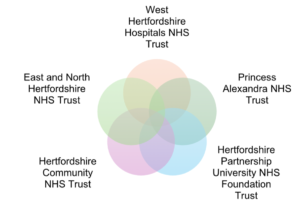
Source: Summarised from H&WE
Owing to the extensive level of operations as illustrated in the figure, an efficient management of supply chain is core. Further, in today transitioning to giving priority to people, planet and profit, priority is to improve supply chain network for embracing best strategy (Ivanov, 2021). An appropriate strategy would be for leveraging on technology in their operations positively influencing cost management, efficiency enhanced and effective supply chain for maximum organisation growth.
The focus of this project is investigating and later recommending initiatives and techniques for leveraging on technology in hospital beds procurement by H&WE. According to CIPS (2023), this would be with an intention of achieving an improved practice, standards set and optimisation owing to complexity linked with management of procurement in healthcare industry. Being the best strategy, leveraging on technology would mean that H&WE successfully and effectively implement their PS&M department promoting scope of value in automation improving efficiencies, transparencies, costs management and improved organisation value in the healthcare sector.
1.3 Analysis of External Environment
In this project, external environment analysis is pursued with an intention of identifying the factors which impact PS&M and broad organisation operations (CIPS, 2023). Considering H&WE for example, having more than 50 users, external environment is core as investment in technology can influence various stakeholders. Part of evaluation is to evaluate factors of Volatility, Uncertainty, Complexity and Ambiguity (VUCA) aspects (Cernega et al., 2024). Hence, external environment analysis is identified in (CIPS, 2023a) as most appropriate strategy for technology advancement, coordinate entire operations and controlling all initiatives which are critical to evaluate. This is while pursuing an evaluation of extent of support advanced from category managers, admin and management with PS&M and technology experts involved. By leverage on technology, external environment evidence extent of integration of opportunities, visibility and gain in cost saving (CIPS, 2024b).
Being best strategy, H&WE investment in technology would require prioritising on spend analytics, e-Sourcing strategies, category management and streamlining hospital beds PS&M. The H&WE strategy is; “improving the health and wellbeing of our people, protecting, and improving our environment, supporting the sustainable and responsible growth of our county, and providing excellent services that are accessible for all”. This can only be attained by managing overall supply chain complexity. This is since H&WE immense size and geographical location in UK and strong supply chain network, transaction and leverage on suppliers and existing bottlenecks. Further, the PS&M department in the organisation would be well placed to enhance an increased value for money outcomes. The external environment wastes which would be managed are as illustrated in the following;
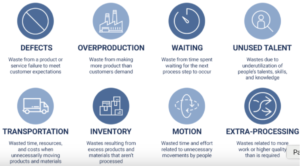
Figure 3:Wastes of Lean in External Environment
Source: Summarised from (Piotrowicz et al., 2023)
By leveraging on technology, time waste in transportation, available resources and costs incurred in the exchange of products and services. The inventory wastages would similarly be controlled, more processing and defective practices impacting how H&WE execute their operations. This would be dependent on the success in project management with all the phases progress to source required hospital beds with technology appropriately integrated.
2.0 Background
2.1 Hertfordshire and West Essex (H&WE) ICS NHS organisation Background
Hertfordshire and West Essex ICS NHS Procurement Services (HWE) is a United Kingdom (UK) based organisation operating in health care sector (HWE, 2023). The organisation operates by offering strategic and transactional procurement services and on-site materials management. This is offered to their 5 NHS Trust within the Integrated Care Services (ICS) pathway which are as illustrated in figure 2;

Figure 4:Summary of the HWE Trusts
Source: Internal documents
With the evident changes in the NHS operations and broad landscape of health sector in UK and internationally, the organisation ensure that procurement plans progressively deliver more for less. This is achieved by working in collaboration with all levels with their customers and regional and national agencies for delivering optimum value for their Trusts for spend on goods and services. The role of the learner in the organisation is a tactical and transactional buyer in within the Operational category. The areas are value savings, supply chain management and sustainability. Further, for aligning contracts within the ICS, they ensure they are identifying potential areas for standardisation, improvements and increasing efficiencies. The success of HWE in their operations in NHS is an attribute of its leadership and management structure. In figure 3, by using a hierarchical structure, leadership and management is clear. Specifically, following the economic recession post COVID-19, multiple issues faced have been handled by their effective leadership and management.
Figure 5:Hertfordshire and West Essex ICS NHS Procurement Services (HWE) governance structure
Source: NHS (2023)
2.2 Why this Project Matters; Objectives
Today, with an integrated commitment, expertise and resources partnering with 28 organisations, successful PS&M management is critical. In this project, a leverage on modern technology has been identified as an example of a strategy to be adopted. According to Corallo et al. (2024), leverage on technology would mean modernising all processes and sub-processes in procurement starting with sourcing and terms negotiation, placement of orders, receipts and reimbursing pay. Also, contracts and stakeholders’ relations would be prioritised. Hence, the outcome of this project would assist H&WE in integrating technology to improve how they requisition, procure, receive, pay and account for sourced products and services.
In affirming the need for leverage on technology in hospital beds sourcing in H&WE, CIPS Module Notes recommendations on change management can be considered. In Module 5 & 6 for example environmental, market demands, entire entity and cultural practices have been noted. This is with political environment as part of H&WE are working in line with UK government influencing leadership and prioritising their interests as illustrated in the following;
Figure 6:Areas of Change management and forms
Source: CIPS Module Notes (5&6)
As illustrated, success in change management by H&WE, culture change is essential for influencing cultural acceptance scope. According to CIPS (2022), in UK, the modernisation of PS&M is still unpopular as most of office work including procurement and supply management involve paperwork. Therefore, the culture of leveraging in technology is not popular and its use in H&WE. Therefore, use of modern technology, timely delivery, comply with contract terms, being responsive and reduced costs imply successful operation internationally. For aligning these areas with change management in this project, CIPS Module Notes identify use of Balogun and Hope Model to identify the best practice to integrate change in culture and evolve as explained herein;
Figure 7:Bologun and Hope Model Summary
Source: CIPS Module Notes
In background information, the mission and vision of H&WE is “building a brighter and healthier future for everyone” informed by need to enhance efficiency and on-time services delivery. Also, as evidenced in H&WE (2024a) report, H&WE has been investing on £25 bullion for promoting all their units supply chain network success. The application of manual system in their PS&M and only relying on basic Oracle system would be hindering success. This inform need to reconstruct their technology system for manage all errors incurred and inefficient while maintaining valued resources in their operations. Hence, by initiating leverage on technology as an improvement of their traditional system, success would be guaranteed.
There is a need for H&WE to invest on the leverage on technology for achieving the following 5 Rights of Procurement Model;
Figure 8:5 Rights of Procurement
Source: Summarised from H&WE internal documents
As earlier identified in this project, 5 Rights are not achieved in PS&M operations in H&WE. As illustrated above, there would be a necessity for engagement of multiple stakeholders for leverage on technology (Monczka et al., 2021). The success of this would be informed by consolidating data, amount of spend, gaining an approval, compliant and managing all supply groups. This would be achieved owing to the fact that by leveraging on modern technology, all operations would be integrated in a single platform with any likely disruption eliminated due to application of traditional procurement systems. As part of this project recommendation, best budgeting to ac hive the 5 Rights would be recommended as it is not being achieved now. This has led to H&WE being left behind comparatively with other players in the health care sector and UK government institutions.
2.3 H&WE and Leveraging on Modern Technology
Please click the following icon to access this assessment in full
Related;https://rankedprofessionals.com/downloads/solution-apgpm-mena-syndicate/