(Solution) CIPS PIN Effective negotiation in procurement and supply
Solution
Table of Contents
2.1 Organisation Background. 4
2.2 ROSHN Organisation Procurement/Commercial Role. 5
2.3 Identification of Selected Spend. 5
3.0 Formal Commercial Negotiation Plan. 7
3.1 Bailey et al. Negotiation Plan Model 8
4.0 Post- Negotiation Review.. 28
5.0 Conclusion and Recommendations. 30
Figure 1:ROSHN Projects Distribution Summary. 3
Figure 2:ROSHN PS&M department structure. 4
Figure 3:Major EV’s development in KSA. 5
Figure 4:Summary of Bailey et al Negotiation Plan Stages. 7
Figure 6:ROSHN organisation Mendelow Matrix Analysis. 10
Figure 7:Summary of the RACI Matrix Components. 11
Figure 8:External environment analysis. 12
Figure 9:Porter’s 5 Forces Analysis Summary. 14
Figure 11:5 Rights of procurement model 23
Figure 12:4R’s Model Analysis. 24
Figure 13:Thomas Kilmann Model 26
Figure 14:Kolb’s Learning Cycle. 28
Figure 15:Post-Negotiation Activities. 29
Table 1:EV Charing Points Sub-Categories 5
Table 2:ROSHN Stakeholders role in EV’s charging points sourcing. 11
Table 3:STEEPLED Factors Analysis. 15
Table 4:Kraljic Matrix Analysis. 16
Table 5:Negotiation team members. 17
Table 6:Negotiation Agenda Summary. 19
Table 7:Concession points in the negotiation process. 26
1.0 Executive Summary
In this integrated assessment, it focuses on development of a commercial negotiation plan. By focusing on ROSHN organisation background, a strategic commercial negotiation plan is developed. This is in the sourcing of Electric Vehicles (EV) chargers in ROSHN area of operation. The data and information used in developing the commercial negotiation plan have been obtained from internal organisation data and external sources. This has been done through the embrace of different modules and theories including Mendelow Matrix, Porter’s 5 Fores, PESTLED, SWOT analysis and others.
The key findings in this report have evidenced Bailey et al. negotiation plan. The findings note the model as involving preparation, opening, testing, proposal & bargain and final agreement achieved. Another key finding evidence a holistic negotiation plan as contributing to generating a stabilised, win-to-win relations with suppliers. This is with majority of focus being on quality factor and efficiency on-time delivery, high quality services and controlling the overall process of procurement management. This is with the key findings highlighting the process as guiding stakeholders’ risks management successfully. The findings also highlight the information as guiding a commercial negotiation plan for assisting ROSHN successful operations. This is specifically in sourcing the EV charging points spend category.
The gaps which have been identified in developing the commercial negotiation plan can be evaluated by use of the following recommendations;
- Develop an Integrated Digital Procurement System (IDPS) for effective negotiation tracking and adhering to different key performance indicators (KPIs)
- Pursue Comprehensive Supplier Training Program (CSTP) for improved stakeholders’ relations and aligning with organisation set objectives
- Be able to implement every quarter supplier performance evaluation for assessing how they comply with set targets to improve their performances
- Initiate a risk assessment protocol for the purpose of increasing risks management
2.0 Introduction
2.1 Organisation Background
In this integrated assessment, ROSHN has been focused as the organisation of interest. It operates as a leader in the real estate industry in Saudi Arabia (KSA) over the past 3 years (ROSHN, 2025). Over the years, the organisation has been ensuring access to residential living spaces for KSA citizens. Their operations are guided by the need to achieve vision 2030 (ROSHN, 2025a) which stipulate on the need for integrating real estate and housing solutions in alignment with KSA goal of increasing homeownership to 70%. To evidence the scope of the organisation operation, their active investments range upto SAR37 billion and have already offered upto 7,500 residential units. The projects distribution is as illustrated in the following;
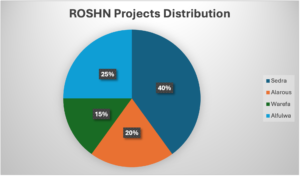
Figure 1:ROSHN Projects Distribution Summary
Source: ROSHN (2018)
The organisation target to construct approximately 395,000 residential units in their 100 million square meters of acquired land. This is supported in ROSHN (2024) report which note the ROSHN organisation as investing approximately SAR312 Billion in KSA economy creating upto 388,000 job opportunities in a direct and indirect manner. Having projections of an increased growth with upto 9% by year 2030, this would represent a 5.1% KSA GDP growth with 12.8% non-oil GDP growth. The core purpose of the growth is having an approximately 70% increased growth of home ownership in the entire kingdom and successfully.
2.2 ROSHN Organisation Procurement/Commercial Role
An illustration of ROSHN Procurement and Supply Management (PS&M) is as illustrated in the following;
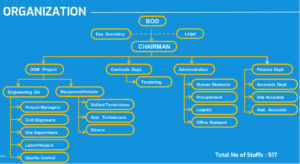
Figure 2:ROSHN PS&M department structure
Source: Summarised from ROSHN (2024a)
From the illustration, the hierarchical organisation structure in ROSHN is independent and distinct from the rest of the organisation. It is fully fledged operating through its own budget. Currently, the PS&M department is assigned upto SAR20 billions of budgets for enhancing the organisation operations. Their priority is to run the operations of infrastructural development, procuring public-private projects to enhance their operations. The scope of PS&M operations is targeting the Oasis valleys, Sandstone Mounts and conventional culture heritage investments focusing on PS&M strategies.
2.3 Identification of Selected Spend
The selected spend category is the Electric Vehicles (EV) charging infrastructure in the different ROSHN projects in Saudi Arabia (KSA). This is in line with SetupinSaudi.com (2025) report which note that 30% of the vehicles in KSA would be electric with $50 billion in EV manufacturing and infrastructure developed. The major EV achievements in KSA include the following;
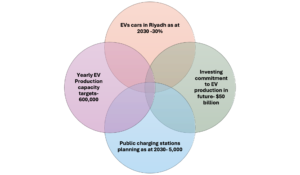
Figure 3:Major EV’s development in KSA
Source: SetupinSaudi.com (2025)
In the different ROSHN construction projects, they are investing upto SAR150 Million in the charging ports in their different projects invested. This has a positive implication in enhancing the efficiency of the EVs use. Also, sustainability is enhanced with a long-term based modern electric vehicle being used. A summary of the EV charging points sub-categories, budgetary allocation and likely suppliers is as illustrated herein;
Table 1:EV Charing Points Sub-Categories
Source; Summarised from Sharma (2024)
3.0 Formal Commercial Negotiation Plan
A commercial negotiation plan can be defined as a strategy used to establish the terms and agreements of a vendor/seller/supplier and a buyer in terms of quality, timeline delivery, quantity and price (CIPS, 2025). In this case, this is relevant for sourcing the EV’s charging points by ROSHN organisation. In particular, a commercial negotiation plan is instrumental for the charging points sourcing owing to the scope in which technology becomes obsolete within a short timeline. As part of negotiation, the focus is on costs and implementation informed by how predictable projects are and preference of their customers (Lenarčič et al., 2023). Part of the negotiation plan is informed by the security nature of the EV charging points different data in contemporary business environment with data sensitivity. The commercial negotiation plan similarly prioritises on the factors of collaboration of the vendor/supplier and the buyer/organisation in the entire project implementation to the exit phase when contract implementation is done.
3.1 Bailey et al. Negotiation Plan Model
For success in the commercial negotiation plan in ROSHN sourcing of EV’s charging points, Bailey et al. Negotiation Model is applicable. A summary of this model stages is as illustrated in the following;
Figure 4:Summary of Bailey et al Negotiation Plan Stages
Source: SRStrategic (2025)
The different stages of the negotiation cycle are to ensure the negotiation process is clear and all partes operate in collaboration actively. A brief summary of these stages include;
Preparation– At the start, clear definition of prevalent need, customers relations and level of challenges encountered. For example, in the EV’s charging points procurement, this entail understanding the scope of negotiation. This is by evaluating stakeholders’ relations, demand and objectives. Also, statutory regulations which are essential for the negotiation put into account.
Opening– In this stage, it entails emphasising on formal relations and guaranteeing clearly set expectations from the beginning. In EV’s charging points sourcing, this would engage consultations for explaining the scope of their instalments, their usage and relevance. According to CIPS (2025a), a holistic and unemotional relations initiate workplace conditions for interactive engagement while eliminating potential issues.
Testing– At this stage, they identify the different stakeholders’ expectations, set objectives and challenges. In EV’s charging points, this prioritise on need to validate how feasible they are for their different solutions, examine customer budgeting and discuss timelines relevance. The questions posed are intended in clarification of what they expect for service level agreements and scaling long-term based operations (Mwagike & Changalima, 2022).
Proposal and Bargaining– Here, the EV charging points have the different consultants presenting relevant solutions customised to customers’ demands and their negotiation factors. These include rewards strategies and potential intellectual property rights. The bargaining areas entail work level, custom-made practice and timeline of the contract. This is with consultants working towards balancing customers’ demands and viable project outcomes.
Agreement– At the end, collaboration ensure formalisation of the contract. This is with different EV consultants gaining from exit clause, protection of data management and consistent reviews for adapting to partnerships in their evolving demands. As evidenced in Chin and Zhao (2022), the eventual agreement/plan is aligned to results expectations, responsibility and Key Performance Indicators (KPIs).
Hence, for ROSHN, in sourcing for EV’s charging points, adherence to the different stages would guarantee successful relationships with all stakeholders. This is with complexities of their project mitigated, aligned stakeholders’ expectation with long-term partnership initiated.
3.1.1 Preparation Stage
Step 1: Internal and External Data
In sourcing for the EV’s charging points by ROSHN, the internal data analysis is important for optimising how resources are allocated, costs managed, and service quality agreement achieved. A summary of areas of consideration include;
Source: Summarise from CIPS Module Notes
History of spend analysis– This entails an in-depth review of previous areas of spend on EV’s charging points in different ROSHN projects implemented. This is in terms of patterns of spend, assessing suppliers/vendors performance and cost variation (CIPS, 2025b).
Analysis of demand and supply– With the expectation of ROSHN developing 70% house ownership in KSA, consideration of the movements is needed. This informs need for the EV’s charging points procurement. The success of this would be informed by establishing sustainable relations with all stakeholders, secure continuous-based facilitation competitively and lowering reduced demand for short-term agreement (Johnsen et al., 2021).
Verifications and analysis– This component of preparation entail gauging on the expertise-scope, experiences held and adhering to industrial best practice in managing data, being compliance levels and service quality agreement. The rationale of this is guaranteeing service providers in achieving set ROSHN standard for EV’s charging points sourcing.
Further, for adequate preparation, analysis of stakeholders relations in EV’s charging points procurement is put into account. This can be achieved by use of Mendelow Matrix analysis for segmenting the different stakeholders on basis of their power and interest (CIPS, 2025c). The different stakeholders would be involved in making decisions in the negotiation plan, relating with all and ensuring alignment with PS&M goals. This enhance negotiation strategy efficiently as PS&M is in alignment with organisation objectives hence increased stakeholders’ relations in the EV’s charging points procurement lifecycle. The analysis is as illustrated in the following;
Figure 6:ROSHN organisation Mendelow Matrix Analysis
Source: Summarised from CIPS Module Notes and ROSHN Internal Data
High Power; High Interest (Manage Closely)- For accounts teams in ROSHN and design services department, they are actively involved in negotiation. They design the charging points with accounts/finance determining the entire costs incurred in negotiation plan.
High Power; Low Interest (Keep Satisfied)- The suppliers, community and regulators possess significant function in the negotiation plan. In the entire phases of negotiation, they are involved in determining its success and progress.
Low Power; High Interest (Keep Informed)- The construction teams in ROSHN and their board of directors ensure that the negotiation plan is holistic and impacting on their relations. They leverage on immense power on their negotiation process success.
Low Power; Low Interest (Monitoring)– The KSA government regulating transportation sector and also the PS&M teams are engaged in the negotiation process. They support the process hence there is no need for the negotiation plan to face different barriers.
Further, from the Mendelow Matrix Analysis, the outcome can further be analysed using RACI Framework (CIPS,2025d). The component of the model is illustrated herein;
Figure 7:Summary of the RACI Matrix Components
Source: Summarised from CIPS Module Notes
For the different factors, the analysis is as evidenced in the following;
Table 2:ROSHN Stakeholders role in EV’s charging points sourcing
Source: Khan and Quraishi (2014)
| Stakeholder Task | PS&M | Finance | Design Services Department |
| Project planning | R | R | I |
| Allocating budgets | A | R | C |
| Task assignment | C | I | I |
| Reviewing charging points | I | C | A |
| Testing of effectiveness | C | A | R |
| Documentation; evaluating and review | I | R | C |
In summary from the analysis, responsible people include the P&SM to plan project, document for finance and testing and effectiveness by design department. They would guide the negotiation process by ensuring all standards and terms and conditions are prioritised. Also, in being accountable, negotiation plan ensure that the process is unitary and best decision being made at the end. The budgetary allocation, review of charging points has people accountable and involved in negotiations. The consulted including PS&M would guide all stages of negotiation and ensure quality of the process is achieved. Those Informed and not actively getting engaged in negotiations include the PS&M on negotiations, design department in task assignment and finance teams on task assignment.
Step 2: External Environment Analysis
Please click the following icon to access this assessment in full
Related;https://rankedprofessionals.com/downloads/solution-cips-formal-commercial-negotiation-plan-pin/