(Solution) CIPS Procurement function produce value for money
Solution
Executive Summary
This report explores how ROSHN, one of Saudi Arabia’s leading real estate developers, manages procurement in the Information Technology (IT) category. IT resources such as laptops, software licenses, hardware, and subcontractor manpower, play a vital role in enabling the company to deliver its large-scale residential, retail, and community projects. Rather than being a support function, IT has become the backbone of day-to-day operations, directly influencing efficiency, project timelines, and stakeholder confidence.
The report findings highlight the importance of IT procurement across all levels of the organisation. Employees and project managers depend on reliable systems for productivity and collaboration, while regulators and investors look for compliance, cost control, and transparency. Market analysis also revealed that Saudi Arabia’s ICT sector is experiencing rapid growth under Vision 2030, with particular strength in software and IT services. This creates opportunities for innovation and cost savings, but also brings challenges such as stronger competition among suppliers, cybersecurity risks, and the need to keep pace with fast-evolving technologies. Using strategic tools, the findings highlighted several gaps. Porter’s Five Forces showed high supplier competition, limiting long-term price stability. SWOT analysis revealed overreliance on international vendors, exposing ROSHN to supply chain disruptions. PESTLE analysis identified legal and cybersecurity risks, requiring tighter compliance. The review of current cost management showed that while bulk purchasing and framework agreements achieve economies of scale, subcontractor dependence risks inconsistent service quality.
To address these gaps, the report recommends the following actions:
- Launch a phased cloud migration program to reduce hardware costs and enhance operational efficiency.
- Strengthen partnerships with Vision 2030-certified Saudi IT providers for faster delivery and alignment with national localisation goals.
- Establish in-house IT support teams for critical functions to improve consistency, long-term cost efficiency, and knowledge retention.
- Establish strategic vendor partnerships to enhance bargaining power and lower procurement costs.
Table of Contents
1.1 Organisation Background. 4
1.2 Selected Category of Spend. 5
2.0 Importance and Impact to ROSHN’s Stakeholders. 6
2.1 Importance of the Spend Category. 6
3.0 Market Analysis and Securing Cost Savings 12
3.1 Relevant Trends in the Market 12
4.0 Ways ROSHN Manages Prices and Costs for IT Spend. 17
5.0 Ways Market Conditions Can Help ROSHN Achieve Savings 19
6.0 Conclusion and recommendations 20
Figure 1: A summary of ROSHN Stakeholders 7
Figure 2: The Mendelow’s Matrix. 8
Figure 4: French and Raven’s Five Bases of Power 11
Figure 5: Saudi Arabia ICT Market Forecast 12
Figure 6: Saudi Arabia Software Market Size. 13
Figure 7: Saudi Arabia IT Services Market 14
Figure 8: Porter’s Five Forces 15
Figure 10: The Kraljic Matrix 18
Table 1: A summary of ROSHN’s Products and Services: 4
Table 2: Products and Services Under the IT Category of Spend. 5
Table 3: A Summary of the RACI Matrix. 10
Table 4: PESTEL Analysis for ROSHN. 17
Table 5: A Summary of the Kraljic Matrix for ROSHN’s IT Spend. 19
1.0 Introduction
1.1 Organisation Background
ROSHN is a real estate developer founded in 2020 by the Public Investment Fund (PIF). It was created to support Saudi Arabia’s Vision 2030 by increasing homeownership, raising living standards, and building modern, integrated communities. From its headquarters in Riyadh, ROSHN has grown into one of the Kingdom’s most important developers, delivering large-scale projects that combine housing with retail, education, healthcare, and leisure facilities (ROSHN, 2025).
The company’s ambition goes far beyond building homes. It is creating full communities where residents can live, work, and enjoy quality services without leaving their neighbourhoods. Over time, ROSHN has also expanded into retail, hospitality, logistics, and even major destination projects like ROSHN Front and the future ROSHN Stadium (ROSHN, 2024). This expansion makes ROSHN not only a housing developer but also a key contributor to the Kingdom’s economic growth, job creation, and social development. Table 1 below highlights the company’s products and services.
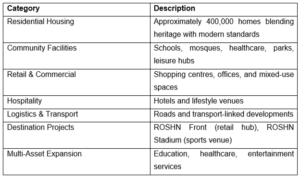
Table 1: A summary of ROSHN’s Products and Services
Source: ROSHN (2025)
As illustrated in Table 1, ROSHN’s product and service portfolio extends well beyond housing, covering community facilities, retail, hospitality, logistics, and major destination projects like ROSHN Front and ROSHN Stadium. This diversity positions ROSHN as a developer of complete urban lifestyles rather than just homes. Such a wide scope increases the need for reliable IT systems and effective procurement, ensuring smooth operations, cost efficiency, and strong stakeholder confidence across all developments.
1.2 Selected Category of Spend
For this report, the selected category of spend is Information Technology (IT), with a focus on laptops, related equipment, software licenses, and subcontractor manpower. In ROSHN, IT is a vital enabler of daily operations. Thousands of employees and contractors across multiple project sites depend on reliable devices and systems to design, plan, communicate, and deliver projects efficiently (ROSHN, 2025a). Under this category of spend, there are specific products and services as summarised in table 2 below;
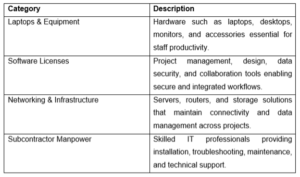
Table 2: Products and Services Under the IT Category of Spend
Laptops and equipment form the foundation of staff productivity, allowing architects, engineers, and managers to access and share project data in real time. Software licenses, including project management, design, and collaboration tools, are essential for integrating workflows and maintaining data security. Meanwhile, subcontractor manpower provides the technical expertise required for system setup, troubleshooting, and ongoing support, ensuring that operations are uninterrupted.
As ROSHN expands its portfolio into residential, retail, and destination projects, the demand for IT resources will continue to grow. Procurement in this category directly influences efficiency, cost control, and innovation. Therefore, strategically managing IT spend can help ROSHN equip its workforce with the tools needed to meet delivery timelines, safeguard quality, and maintain a competitive edge in the real estate sector.
2.0 Importance and Impact to ROSHN’s Stakeholders
2.1 Importance of the Spend Category
The selected IT category of spend is crucial for ROSHN because it directly supports the company’s ability to deliver large-scale, integrated communities across Saudi Arabia. With projects spread nationwide, the organisation relies heavily on laptops, software, and digital infrastructure to coordinate operations, manage data, and ensure effective communication (Narayanan, 2023). Without reliable IT systems, project delivery timelines, quality standards, and stakeholder confidence could be compromised.
2.2 Impact to Stakeholders
Stakeholders are individuals with vested interest in ROSHN and can affect or be affected by its operations and performance (Fernando, 2024). ROSHN’s stakeholders can be grouped into three main categories. Internal stakeholders include employees, project managers, engineers, and executives who depend on IT tools for productivity and decision-making. External stakeholders include contractors, suppliers, and government bodies who interact with ROSHN’s systems for approvals, reporting, and project collaboration. Connected stakeholders such as customers, investors, and community members are indirectly impacted, as effective IT use ensures timely project delivery, transparency, and trust (CIPS, 2020). See a summary in Figure 1;
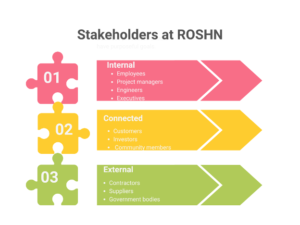
Figure 1: A summary of ROSHN Stakeholders
Source: ROSHN (2023)
Each group in Figure 1 has different levels of interest and influence. Employees and contractors require daily IT access to perform their roles efficiently. Investors and government stakeholders view IT procurement as a means of reducing risks, controlling costs, and demonstrating operational excellence. For customers, efficient IT usage translates into better service delivery and timely access to their new homes, reinforcing ROSHN’s reputation as a trusted developer. To understand this better, following is a Mendelow’s Matrix used to analyse stakeholder groups based on their power and influence (Francis, 2024).
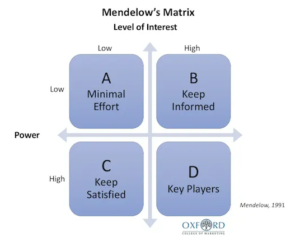
Figure 2: The Mendelow’s Matrix
Source: Manuel (2024)
Minimal Effort: These are stakeholders with low power and low interest, such as distant community members or the general public who are not directly impacted by IT choices. They require minimal monitoring, as IT procurement has limited visibility for them.
Keep Informed: These stakeholders have high interest but low power. ROSHN employees and subcontracted IT staff fall here. They rely on IT systems daily and need regular updates on tools and support available. While they may not directly influence spending decisions, keeping them informed ensures productivity and satisfaction.
Keep Satisfied: These are stakeholders with high power but low day-to-day interest. Examples include government regulators or external investors. They are not concerned with the technical details of IT, but they care about compliance, cost efficiency, and overall project delivery. Clear reporting and assurance keep them aligned.
Key Players: High power and high interest stakeholders include ROSHN’s executive leadership, project directors, and strategic partners. They are directly involved in approving budgets, setting IT strategy, and ensuring procurement delivers value for money. They must be engaged closely, consulted frequently, and treated as decision-makers.
After having an overview of stakeholders’ relative power and interest in ROSHN’s IT procurement, the RACI framework goes a step further by defining the exact roles and responsibilities of these stakeholders (Matthews, 2025). This ensures that those identified as key players, those to be kept informed, and those to be consulted are systematically integrated into the procurement process with clear accountability as shown in Figure 3;
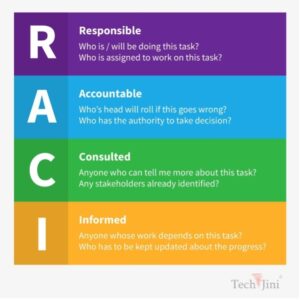
Figure 3: The RACI Matrix
Source: Johnston et al. (2025)
For ROSHN, these can be summarised as follows;
Responsible: These are parties who carry out the work, such as the IT department managers for requirements gathering, procurement officers for vendor selection, and IT support for deploying laptops and software. Their role is action-oriented and execution-focused.
Accountable: These are parties ultimately answerable for outcomes. The CIO and Head of Procurement oversee the process, while the CFO ensures financial compliance and budget approval. They provide final sign-off and carry the authority to validate decisions.
Consulted: These are stakeholders who contribute expertise and feedback. End users, project managers, finance, and legal teams fall here, ensuring that IT purchases align with operational needs, budget constraints, and regulatory standards. Their input strengthens decision quality and reduces risks.
Informed: These stakeholders are kept updated without being directly involved in execution. Executive leadership, board members, and regulators are regularly briefed to maintain strategic oversight, transparency, and alignment with ROSHN’s housing development goals.
These can further be summarised below;
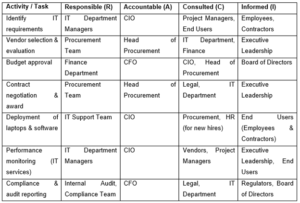
Table 3: A Summary of the RACI Matrix
Table 3 highlights clear accountability and role separation within ROSHN’s IT procurement process. The Procurement Team is responsible for vendor engagement and contracts, while the CIO and Head of Procurement hold overall accountability for IT decisions. The Finance Department and CFO ensure cost efficiency, while Legal and Compliance safeguard regulations. End users such as employees and contractors are consulted to ensure requirements are aligned with operational needs, and executive leadership remains informed for strategic oversight. Through clarification of roles, this matrix minimises overlap, reduces delays, and ensures efficient coordination across stakeholders. It also supports transparent governance, aligning IT procurement with ROSHN’s large-scale housing projects.
Alongside this, French and Raven’s Five Bases of Power offer deeper insight into the sources of these stakeholders’ influence as seen in Figure 4;
Figure 4: French and Raven’s Five Bases of Power
Source: Drew (2023)
For ROSHN, executive leadership derives its power from legitimate authority, while finance and procurement teams exert reward power through budget control. IT specialists hold expert power based on technical knowledge, and regulators may apply coercive power through compliance requirements. Meanwhile, employees and end users exercise referent power, since their acceptance or resistance directly impacts the effectiveness of IT systems. Stakeholder interest, on the other hand, is driven by their reliance on IT outcomes, ranging from productivity for employees to governance and compliance for regulators, making IT procurement a category of strategic importance across ROSHN’s ecosystem.
3.0 Market Analysis and Securing Cost Savings
3.1 Relevant Trends in the Market
Saudi Arabia’s ICT industry continues to expand rapidly, reflecting the Kingdom’s Vision 2030 focus on digital transformation. As illustrated in Figure 5 below, the overall ICT market stood at USD 43.46 billion in 2024 and is forecast to grow to USD 71.58 billion by 2033, at a CAGR of 5.25% (Imarcgroup, 2025).
Please click the following icon to access this assessment in full
Related to; https://rankedprofessionals.com/downloads/importance-and-impact-to-your-organisations-stakeholders/