(Solution) CIPS ROSHN formal commercial negotiation
Solution
Executive summary
In this integrative assignment, a formal commercial negotiation is established for ROSHN organisation. This is by focusing on sourcing of laptops to facilitate their operations in real estate sector. In order to come up with an appropriate formal commercial negotiation plan, different sets of information, illustrations, desk research and external data has been used in guiding negotiation. For the laptops sourcing spend category, theories, models and techniques have been evaluated for understanding the best practice in the commercial negotiation (PESTLE, Kraljic, Mendelow, SWOT, STEEPLE among others). It has been established that as ROSHN is transitioning to modern technology operations, they are increasingly investing on laptops and other hardware technology. With their operations expanding with multiple facilities to be managed, ROSHN sourcing of laptops is increasingly popular.
The key findings in this report indicate that the process followed in negotiation is in line with the CIPS Module Notes guidelines. This is by preparing, evaluating, proposing, negotiating, settlement and closure. For the entire identified stages, they demand immense resources to be put in place for improving negotiation strategy. A different main finding is that stakeholders are instrumental to be engaged in their sector of operations. Another finding is that the negotiation plan is important to be implemented in line with expectations of these stakeholders. For ROSHN Negotiation plan to be successful, the findings evidence need for embrace of BATNA, MLA and battle of the forms managed from harmonising T&Cs.
From the findings and gap identified in this negotiation plan, different strategies have been recommended for their management. These include;
- To conduct a holistic planning process for negotiation strategy for ensuring all stakeholders involvement while prioritising their interest
- Effectively embrace modernised tools for improved communication and engagement of all players in the negotiation
- Enhance the quality of documentation used for maximum inclusion of entire stakeholders and for managing conflicts of interest in negotiation
- To make sure that custom-based negotiation plans are initiated in the various spend categories contrary to only embracing one negotiation strategy for all their spend areas
Table of Contents
1.1. ROSHN Organisation Background 5
1.2. Background of Category of Spend 5
For this negotiation plan, the main objective include; 5
2.0 Commercial Negotiation Plan. 6
2.1 Preparation and Planning 6
2.1.2 Stakeholder Analysis Summary. 8
2.1.3 SWOT Analysis Summary 10
2.1.5 BATNA in Negotiation Achievement 12
2.1.5 Strategies of Negotiation. 14
2.2 Opening stage of Negotiation 15
2.3 Testing Stage in Negotiation Process 17
2.4 Proposing Stage of Negotiation Strategy 19
2.4.1 4R’s Tool and Analysis. 20
3.0 Development of Contracts Analysis. 23
4.0 Conclusion and Recommendations. 24
Figure 1:Negotiation Cycle Summary. 6
Figure 2:RACI Matrix Components. 7
Figure 3:Summary of ROSHN Stakeholders 9
Figure 4:Mendelow Matrix Summary. 10
Figure 5:Summary of SWOT Analysis in negotiation. 11
Figure 6:Laptops negotiation BATNA and ZOPA. 13
Figure 7:Summary of the Negotiation Approaches intuition and influence. 14
Figure 8:5 Rights of Procurement model 15
Figure 9:4R’s Components Summary. 20
Figure 10:3P’s of Triple Bottom Line Process. 21
Figure 11:Supplier preferecing model 22
Table 1:ROSHN STEEPLED Analysis. 11
Table 2:Laptops analysis, suppliers potential and amount allocated. 16
1.0 Introduction
1.1. ROSHN Organisation Background
ROSHN Real Estate company a national community developer powered by the Public Investment Fund and established to develop high-quality residential communities for the people of Saudi Arabia (ROSHN, 2024). As one of the largest real estate development companies in the Kingdom. The organisation commitment is towards attainment of the KSA Vision 2030 for achieving 70% of home ownership in Saudi Arabia (KSA). Founded in 2018, the organisation currently holds 20% of the market share in the country real estate industry (Arab News, 2023). To evidence its growing level, they are today implementing 8 giga contracts which are worth SR8 Billion ($2.1 billion) for the development of modernised infrastructure and facilities in the entire projects in KSA. Their plan is intended to enhance construction of approximately 400,00 homes, 1,000 kindergartens and schools and more than 700 Mosques.
1.2. Background of Category of Spend
Laptop is one of the most important aspect in corporate procurement in ROSHN. Choosing right laptop enhance the productivity for the workers. Laptop is a competitive procurement process which there are many suppliers in the market however, the demand is high which makes shortage in the market to supply laptops. We are making a framework agreement with suppliers secure the price and delivery time for a period of time also right quantity. Framework agreement is a good procurement activity with laptops due to ordering a lot of quantity from suppliers which is repetitive procurement process. Framework agreement secure time, price, quantity, location and quality of laptops. We have a lot of local suppliers to deliver us laptops and making a framework agreement with them which benefit both parties in a good way.
1.3. Scope of the report
For this negotiation plan, the main objective include;
- To develop an appropriate commercial negotiation plan for laptops category of spend by ROSHN organisation
The success of achieving this objective would be for ROSHN capitalising on the real estate market and leveraging on competitive advantage. The need for the negotiation plan is to determine on the varying stakeholders interests, cost management, quality evaluation and value for money outcomes (Mwagike & Changalima, 2022). The need for the commercial negotiation is to promote engagement with all stakeholders with success. For the current integrative assessment, negotiation plan is developed as a basis for commercial negotiation. The rationale of this is mutual agreement is attained as primary in negotiation aligned to Key Performance Indicators (KPIs) and the Service Level Agreements (SLAs) important for negotiation (Ahmad et al., 2020).
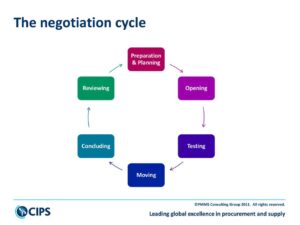
Figure 1:Negotiation Cycle Summary
Source: CIPS Module Notes
Hence, as illustrated in figure 1, this integrated assignment intend to develop a commercial negotiation plan for ROSHN. This is by analysing existing data, statistical data, facts and CIPS notes.
2.0 Commercial Negotiation Plan
2.1 Preparation and Planning
This is the first step of the negotiation plan. An appropriate foundation is initiated for negotiation where negotiation objective (part 1.3) is anchored on basis of engaged stakeholders and business environment (internal & external). Hence, Better Alternative to negotiated Agreement (BATNA) is as a consequence established as evidenced from the CIPS Module. The importance of this is guided by awareness that in the initial negotiation phase, ROSHN lacks an appropriate knowledge pertaining to the BATNA and Zone of Possible Agreement (ZOPA). As a best practice to note on the BATNA and ZOPA in negotiation plan, stakeholders accountability and responsibility identification is important.
2.1.1 RACI Matrix Model
In this negotiation plan, using this model would guide identifying the stakeholders mandated to execute various functions. Their roles in negotiation process is illustrated in the following;
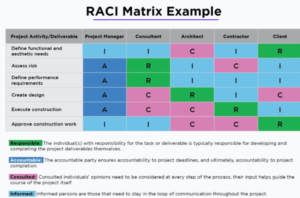
Figure 2:RACI Matrix Components
Source: Project Management (2024)
Responsible- The laptops would be used by different end-users in ROSHN who are mandated with the responsibility of executing different functions and also the rest of the employees in the organisation . Also, the accounts departments are tasked with the role of ensuring they appropriately budget for laptops sourcing. This is in terms of their number and determining the amount of resources budgeted for their sourcing. They are critical to determine their usability and effectiveness of their use.
Accountable- In implementing the negotiation process, the accountable stakeholders would be involved to determine their relevance in the operations of ROSHN in their energy sector. Accountable individuals in the negotiation include senior managers in PS&M who account for all the decisions made and best practice in this procurement process. The accountable people is the end-users and players in the different locations where ROSHN has based on their operations.
Consult- Consultants are engaged in all ROSHN operations. Hence, they would need to be engaged actively. The consultants ensure that the negotiation process is successfully implemented by ROSHN. The IT department in ROSHN would be engaged in determining the quality level of the laptops which would be procured as part of negotiation. As part of recommendation, including technology in negotiation would ensure all stakeholders are actively engaged.
Inform- As part of negotiation, ROSHN management teams and admin would need to be informed on the need for implementing the process. In the stakeholders analysis, this is monitoring classification where they would promote the process implementation based on the commercial negotiation plan. Also, regulators for ROSHN projects would be engaged successfully by communication and awareness. The laptops would be negotiated based on the expectation of these stakeholders.
2.1.2 Stakeholder Analysis Summary
Based on the findings presented in the RACI framework summary, it is important to further identify the impact of stakeholders in the negotiation process. Adopting the definition of CIPS (2024) “a stakeholder is a person or body of people affected by project implementation or provision of products and services”. In the context of ROSHN negotiation for the laptops spend category, the influence of the stakeholders is to ensure the process is strategic, operational and tactical manner with detailed facilitation and committed. A summary of the stakeholders is illustrated in the following;
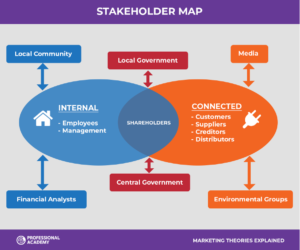
Figure 3:Summary of ROSHN Stakeholders
Source: CIPS (2024)
As part of negotiation, different groups of stakeholders influence the supply chain practice and negotiation strategy. This is for the IT teams and employees who would be using the laptops in their operations. The various categories of stakeholders (see figure 3) are actively engaged in influencing negotiation process. Laptops being a technology part of the business environment, it influence modernisation of their operations, communication and innovation.
The different categories of stakeholders can further be analysed based on power and interest. This can be achieved through the application of Mendelow Matrix (see figure 4);
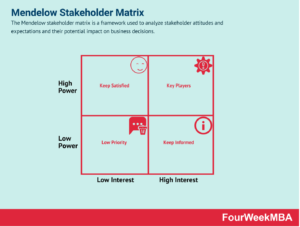
Figure 4:Mendelow Matrix Summary
Source: CIPS Module Notes
Keep Satisfied- This category is made up of the KSA admin and also the ROSHN PMI which enhance their operations and hence laptops types of negotiations would be in detail. During negotiation, they are supposed to be supported and good environment in negotiation.
Key Players- These are the organisation PS&M teams who hold the maximum influence on the negotiation process. They determine the T&Cs used and ensure that they manage battle of the forms by reviewing their suppliers terms. Similarly, the employees would be involved in the negotiation to establish the specifications of the laptops they need.
Keep Informed- With a high interest but low power, the government institutions, management in ROSHN only need to be informed on the implementation of the negotiations. They do not directly participate in negotiation process.
Low Priority– With low interest and low power, their competitors in the real estate sector are not supposed to be prioritised in the process. For ROSHN, they ensure that for these stakeholders, a review on how they source their laptops is the only area of consideration.
2.1.3 SWOT Analysis Summary
In preparing for negotiation process, analysis of SWOT is important to understand ROSHN internal environment (CIPS, 2023). For achieving the BATNA, communication and management of ideas conflicting is essential. The analysis is summarised in figure 5;
Figure 5:Summary of SWOT Analysis in negotiation
Source: Summarised from ROSHN Internal documents
In summary, from the SWOT analysis findings, it is evident ROSHN pursue sustainability in laptops sourcing from different suppliers. For success in negotiation, professionals in ROSHN in IT department would provide their services for achieving ZOPA. The opportunities to leverage on include effective negotiations, appropriate brand image, good reputation and leverage on competitive advantage. Threats noted would be delaying to the negotiation success hence need for prioritisation and consideration.
2.1.4 STEEPLED Analysis
As part of negotiation preparation, using STEEPLED Analysis (CIPS, 2023a) would be essential for strategic planning. This is for discovering, evaluating, organising and tracking external risks. A summary of STEEPLED analysis for ROSHN is illustrated in the following;
Table 1:ROSHN STEEPLED Analysis
Source: Summarised from the study
| STEEPLED Analysis Factors | Analysis |
| Social | Negotiating for Laptops would be influenced by Gen Z and Millennials who are part of ROSHN employees
Negotiation scope directly impacted |
| Technology | Laptops are part of the organisation modernisation process for success in their real estate sector |
| Economy | KSA economy transitioning from oil and gas dependent to other sectors such as real estate hence opportunities for negotiating better laptops prices |
| Environment | KSA Vision 2030 is informed by need to manage carbon emissions which is managed by use of laptops |
| Political | The fair and good political environment in KSA inform on available opportunities |
| Legal | IT implementation legislations influence negotiation for laptops sourcing |
| Ethical | Negotiations would be guided by being ethical, moral and just in entire process |
| Demographic | Increased population in KSA positively impact need for modernising operations by use of IT to leverage on more opportunities |
2.1.5 BATNA in Negotiation Achievement
For this preparation/planning phase of negotiation, setting the objectives to be achieved is essential. The objective settings is guided by need of achieving Best Alternative to Negotiated Agreement (BATNA) a choice as opposed to MIL offering an opportunity to bargain in negotiation (Verma, 2022). Hence, in negotiating for Laptops, to achieve BATNA, the focus would include;
- Identify and highlight all alternatives in the beginning of negotiation to identify best strategy in negotiation failing
- For laptops, with different suppliers in place (hP, Apple, Dell), the value and worth of all alternatives would be noted
- Information sourcing from alternative quotations to get the best option that has maximum value
- Calculating lowly valued option which is basically executed after all the BATNA strategy has been successful
Considering the laptops negotiation by ROSHN, PS&M department is supposed to be aware of all expectations and recognising necessity for achieving BATNA and hence be powerful and negotiation success. In ZOPA (Zone of Alternative Agreement), prioritising is given to overlap of different vendors and users settling negotiation challenges. This is offered as an alternative of buyer settling the costs which is important for ROSHN as buyer of the laptops;
Figure 6:Laptops negotiation BATNA and ZOPA
Source: CIPS Notes
Not a physical place, the zone of possible agreement or bargaining range is considered an area where two or more negotiating parties may find common ground. It is this area where parties will often compromise and strike a deal.
In order for negotiating parties to find a settlement or reach an agreement, they must work towards a common goal and seek an area that incorporates at least some of each party’s ideas. (A definitive guide to contract performance in 2023). In ROSHN when we negotiate, we have a benchmarked from a cost control team which will provide us an estimation rates for each item we procured which that helps us for ZOPA to know what it the sellers range which we can negotiate with a reasonable way.
BATNA is an acronym that stands for Best Alternative To a Negotiated Agreement. It is defined as the most advantageous alternative that a negotiating party can take if negotiations fail and an agreement cannot be made. In other words, a party’s BATNA is what a party’s alternative is if negotiations are unsuccessful. The term BATNA was originally used by Roger Fisher and William Ury in their 1981 book entitled “Getting to Yes: Negotiating Without Giving In.” (Batna (2023) Corporate Finance Institute.)
When a buyer negotiation with a supplier to get his specific price if not agreed with the seller then the buyer has an alternative solution which is another supplier to bid with. In ROSHN we issue a competitive tender which we have a multiple source which we have other different alternative which we can procced with due to high volume of the market. This is most effective on a multiple source tender.
2.1.5 Strategies of Negotiation
Similarly, as part of planning and preparing in negotiation strategy, identification of appropriate approaches applicable is important. The approaches used are found guiding persuasiveness of different parties with earlier noted stakeholders. Hence, the approaches which can be used informed by intuition and influence are as follows;
Figure 7:Summary of the Negotiation Approaches intuition and influence
Source: CIPS Notes
Bargaining- in most of negotiation processes by ROSHN, tradeables would be essential for guiding engagement with entire issues noted for mutual-based agreement Having high intuition and low influence means negotiation of laptops would be to the after-sale service where their maintenance would be guaranteed. With likelihood of battle of the forms, the TCs would be understood from the beginning.
Emotion- This is preferred when there is a need to engage different stakeholders in negotiation for interaction purposes (Pérez-Yus et al., 2020). For ROSHN, managing emotions would mean using laptops which have the same specifications for employees working in similar departments and levels. A termination of contract for the previous laptops providers would end up being implemented.
Compromise- This is the simplest approach and entail getting the alternative as best choice in negotiation (Brutger, 2021). For ROSHN, this is not appropriate since sufficient plan is done from the start.
Logic– for ROSHN, they can implement their negotiation process based on facts and data available. This has a high influence scope and as such make sure that facts, textual data and numbering are used for core decisions. For the website developers in ROSHN , they are preferring use of Apple Laptops as opposed to hP laptops. This is due to their capability and longevity even under heavy usage. For receptionists, negotiation process would base on need to get monitors and non-complex laptops.
2.2 Opening stage of Negotiation
From the different considerations in previous section (planning/preparation), opening is essential for successful negotiations (Pedersen, 2020). Opening entail the beginning of the negotiation with the TCs to be used evaluated with any battle of the forms also noted. In opening, 5 Rights of Procurement Model is summarised in the following;
Figure 8:5 Rights of Procurement model
Source: CIPS Note
Price- In sourcing for laptops, the overall budget is approximately SAR10 million annually. Hence, as part of negotiation, ROSHN ensure that costs offered by suppliers is appropriate and determined by a committee set for pre-qualification purpose. Negotiation is intended to ensure that ROSHN gain value for money outcomes in sourcing laptops. A summary of the laptops sourcing and their estimated costs are as shown in table below;
Table 2:Laptops analysis, suppliers potential and amount allocated
Source: Summarised from ROSHN internal data
| ROSHN Laptops categories | Suppliers involved | Budget allocated (SAR Million) |
| ROSHN Websites and social media management | Locally and internationally | 1 |
| Receptionists | Locally | 3 |
| Employees in different departments | Locally | 1 |
| Administration and management offices | Internationally | 4 |
| Security teams laptops | Local and international | 1 |
In line with table 2 summary, negotiation process would ensure that the suppliers with value for money and specific suppliers are engaged. There would be a need for continuous after-sale services of the laptops for installation of software purposes.
Quality- The laptops sourced by ROSHN are from their manufacturers directly. Depending on the customisation of the laptops required, there would be a need for locally manufactured suppliers. Negotiations would be guided by evaluating their quality and reducing costs incurred in their sourcing.
Quantity- Based on approximation, in the different areas for laptops usage, upto 500 laptops are procured annually.
Time- As part of the contract TCs they would need to review on the timelines for supply of the laptops. The timeline set would need to be strictly adhered to and enhanced at the entire sourcing process.
Place– Considering laptops spend area by ROSHN, they would need to be provided to their offices and proximity. The rationale of this is to ensure that even after-sale services are facilitated successfully.
The Kraljic Matrix is a strategic tool used by procurement and supply chain professionals to identify and minimise supply risks as part of opening stage in negotiation. Using the tool to classify the importance of suppliers’ products and services can highlight supply chain weaknesses, support strategy development, and minimise supply disruption. (Cips.org.)
The four key quadrants in the Kraljic Matrix:
- Non-critical items:
This item the impact of the matrix is low risk and low impact to ROSHN. For example, the purchase requisition that purchasing business cards for ROSHN employee has low risk and low impact. Because we can get a scanned barcode business cards or we can get rid of it not using it with no any impact against ROSHN.
- Leverage items:
Leverage items is a competitive bid such as request for quotation. The risk impact is low due to alternative bidders. The cost profitably is high due to the competitive bid. Here is the buyer has the power to negotiate in terms of cost, delivery, contract and specification.
- Bottleneck items / Minimize risk:
Bottleneck item is the opposite of leverage items. Which is the high risk and low cost. This source mostly for sole sourcing which is only one bidder in the market which is have the power to negotiate.
- Strategic items
Strategic items have high risk and high profit which that is critical to ROSHN. ‘’These items are only represented or made by a handful of suppliers. Ensuring an effective and predictable supplier relationship is the key to the future of the purchases of a company. (Aquino, E. (2022).
2.3 Testing Stage in Negotiation Process
Please click the following icon to access this assessment in full;
Related;https://rankedprofessionals.com/downloads/solution-cips-roshn-syndicate-effective-negotiation/