(Solution) Effective Negotiation in Procurement and Supply
Task
Select a category of spend from your organisation. Develop and discuss a plan using the knowledge
gained from this programme which could form the basis of a formal commercial negotiation. Your
assignment should include an explanation of the key facts, data and approaches that you will use in
the negotiation.
Remember, the negotiation does not have to be just about price. Other considerations could
include quality, delivery schedules, timing and amendments/variations etc
Solution
Executive Summary
This report presents a background of a formal corporate negotiation that has been formulated for Alaraby Tv Network, operating in Arabic-language media and broadcasting industry. To achieve the intended aim of this report, the data used has been sourced from information, figures, desk research, external data which guide the negotiation process. The selected category of spend is media and broadcasting services. Further, with various projects being pursued by Al Araby TV Network in media and broadcasting, negotiating for high-quality media and broadcasting services is essential. Hence, over the years, Al Araby TV Network’s demand for diverse media services has been increasing. As part of the negotiation process, Al Araby TV Network involves experts, basing it on terms and conditions, an adequate plan, and optimized supply chain and procurement management.
The report findings demonstrate that Al Araby TV Network engages in a series of negotiations that are led by CIPS module models. The process has several stages: preparation, evaluation, proposal, negotiation, settlement, and closing. Due to the resource-intensive nature of these phases, it is necessary to engage in a thorough negotiation. Furthermore, the results presented in this report clearly demonstrate the necessity of engaging many stakeholders to achieve a successful execution of the negotiating process. It is crucial for them to effectively manage their competitiveness within their industry. Additionally, the report findings emphasise the necessity of tailoring the negotiating approach to align with the diverse expectations of various stakeholders. The success of the negotiation depends on how effectively the organisation handles BATNA, MLA, and any conflicts arising from different forms used by the parties involved. Achieving positive outcomes in these areas is crucial for optimal success.
In accordance with the conclusions and summary of the findings provided, the following recommendations are proposed:
- To execute a thorough preparation approach during the negotiation process to guarantee that all parties are included and that their interests are prioritised.
- The effective application of innovation and technology to the negotiating plan process.
- To make sure that customised negotiations are pursued in their many spend categories rather than utilising a single negotiation strategy.
- To enhance the documentation of their operations for the best possible involvement of all stakeholders and to manage conflicts of interest in negotiation.
1.0 Introduction
1.1 Alaraby TV Organisation Background
Alaraby TV Network is involved in providing comprehensive/detailed multimedia based news coverage of the Arab and International events and offering an access to diverse network of political and social programs. Through the existing platforms, it becomes possible to follow the programs on the screen at time of viewers option (Alaraby TV Network, 2024). As a subsidiary organisation of Faadat Media, the organisation has been in active operation since 2021 being the 6th Anniversary of the Faadat Media operations in Qatar. As part of their operations, the organisation actively offer latest news and reports on different areas of politics, economy, society, sports and technologies in contemporary based formats. These formats offers an integrated information through an integration of written text, images and videos. To achieving its intended organisation vision and mission, the organisation operates an innovative, creative and self-development strategy through a holistic adoption of digital technologies. Also, the organisation operates through a diverse group which is fully inclusive, commitment in progressive development of diverse and equal work teams. This is through encouraging of initiatives achieving inclusion and offering supportive environment for entire employees.
1.2 Introduction of Category of Spend
For Alaraby TV Network, more than 100 Technologies hardware are sourced from different suppliers by the organisation. The need for the different technologies sourcing such as computers, phones and videography equipment harness Alaraby TV Network efficiency, prompt operations in the media sector and cost effective practices (Imagine Communication, 2023. For ensuring success in procurement of the hardware of the IT systems, Alaraby TV Network make sure they appropriately adopt various sourcing approaches and effective supply chain appraisal.
Further, with Alaraby TV Network noting on most appropriate sourcing strategy for their spend categories, this imply an effective and appropriate controlling of PS&M strategy (CIPS, 2020). This is informed by their expectations, demands and supply chain insights as part of the suppliers value chain network. Since there are no technology hardware manufacturers within Qatar, Alaraby TV Network has to rely on suppliers who act as distributors. This highlights the importance of effective negotiations between Alaraby TV Network and its suppliers. If Alaraby TV Network does not negotiate well, the suppliers will have the upper hand, which could lead to unfavourable terms and conditions. Therefore, it is crucial for Alaraby TV Network to apply the best negotiation strategies to ensure that it gets the best possible deal from its suppliers. By doing so, Alaraby TV Network can maintain its competitive edge and continue to provide the best services to its clients.
In the media and broadcasting services spend category, Alaraby TV Network budget approximately Qatar Riyals 50 Million yearly for facilitating their purchasing, leasing and also maintenance.
1.3 Purpose of this Report
The objectives of this negotiation plan are based on the recognition that a negotiation strategy is crucial in business negotiations, as it enables an organisation to use its competitive advantage and establish dominance in its field of expertise (CIPS, n.d). The negotiations facilitate the prioritisation of stakeholders’ interests, cost management, quality evaluation, and ultimately, the achievement of value for money outcomes. Moreover, commercial negotiation plays a crucial role in effectively improving communication with all parties. The goal of this integrative assessment is to develop a negotiation plan that will serve as the foundation for commercial negotiations (Poell et al., 2022). This occurs when all parties involved in the negotiation reach a mutual agreement. Figure 2 presents a brief summary of the negotiation plan’s requirements, which are in line with Key Performance Indicators (KPIs) and Service Level Agreements (SLAs). This aspect of negotiation is given significant consideration (Kiruthika et al., 2020).
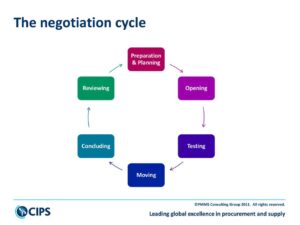
Source: Summarised from CIPS Module notes
The Alaraby TV Network would receive a suitable negotiating strategy from this integrative assignment. The accessible data, statistics, factual information, CIPS Module Notes, and tools would serve as the basis for this.
2.0 Commercial Negotiation Plan
2.1 Preparation & Planning
The goals of the negotiation are aligned with the stakeholders and the environment (internal & external) during this initial phase of negotiation, which lays the foundation for the entire process. As demonstrated by the CIPS Module notes, this makes it feasible to arrive at the Best Alternative to a Negotiated Agreement (BATNA). The justification for this is that, when the negotiation process first began, Alaraby TV Network was unsure about their BATNA and Zone of Possible Agreement (ZOPA). As part of carrying out the negotiation plan, it is crucial to identify the parties who will be held accountable and responsible for the different stages of the negotiation process in order to comprehend BATNA and ZOPA (CIPS, n.d).
2.1.1 RACI Model
The RACI model is utilised in the negotiation strategy to specify the stakeholders accountable for various aspects of the negotiation process ( Lance & Haworth, 2024).
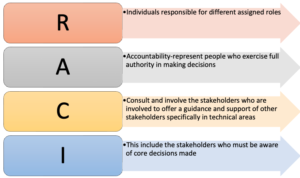
Figure 2:Summary of the RACI Matrix
Source: Summarised from Lance & Haworth (2024)The parties involved in identifying their relationships are essential to the negotiation plan’s success and include;
Responsible- At this stage, the people assuming different roles are taken into consideration. To procure media and broadcasting services, the contract and procurement teams are involved. All stakeholders receive specific tasks from the senior management teams. For example, in order to source high-quality media services, admin and media professionals must be engaged to determine negotiations on the scope and quality of services required.
Accountable- This goes beyond previous choices that have to be made to guarantee inclusivity. All parties involved in the Al Araby TV Network’s sourcing of media and broadcasting services must take responsibility for the way their operations are carried out. Negotiations are carried out by the top teams in Procurement and Supply Management (PS&M). In order to guarantee that the negotiation process is fruitful and compliant with applicable legislation, media services planning is included (Ricci, 2022). To decide on the quality level to be negotiated with their suppliers for the media services category of spend, Al Araby TV Network’s management and administrative team must give their approval.
Consult- Various consultants are involved in the implementation of media and broadcasting projects at Al Araby TV Network. Being involved in their industry, they help to improve negotiation efficiency. To determine the quality of services being supplied, Al Araby TV Network’s end customers of its media services should be consulted. Since Al Araby TV Network procures media services mostly through iSourcing, this may involve obtaining prompt input on enhancements (Alaraby TV Network, 2024).
Inform– Stakeholders in the negotiation must be informed and made aware of the procedures (McGovern & Rubenstein, 2019). These fall under the monitoring category, as the stakeholder analysis has shown. It is necessary to notify the appropriate authorities, including broadcast standards quality assurers and media regulators. By doing this, they aim to make sure that their activities meet the standards set by the media and television industry.
2.1.2 Stakeholders Analysis
According to RACI Model tool analysis, stakeholder’s analysis is crucial. A stakeholder is “an individual/body of persons impacted by implementation of a project/offering products and services in their required format” (CIPS, 2021). Engagement of stakeholders allows strategic, operational, and tactical negotiation with appropriate support and commitment. The following summarises the AlAraby stakeholders:
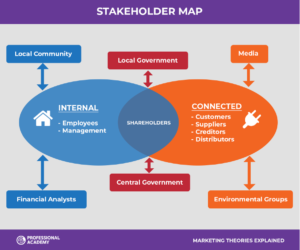
Figure 3: AlAraby TV Stakeholders Groups Stakeholders Groups
Source: Summarised from CIPS Module Notes
Due to the media services spend category, stakeholder categories (figure 4) influence supply chain operations and the negotiating process, including customers, media teams, and operations. Stakeholders directly affect ways to negotiate. This applies especially to complex globalisation, innovation, and communication difficulties (Chygryn et al., 2020). Media services spend category negotiations involve stakeholders with diverse interests and influence. This impacts their negotiating and handling.
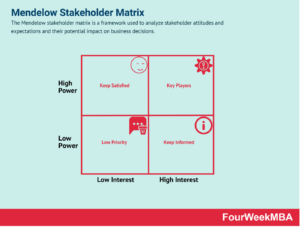
Figure 4:Mendelow Matrix Analysis
Source: Barrington (2024)
Low Interest; High Power- The government and media authorities have little involvement in Al Araby TV Network media service negotiations. They mostly help Al Araby TV Network negotiate successfully by providing a conducive environment.
High Power; Low Interest-At Al Araby TV Network, the management groups and CEO/Directors hold considerable power over all matters pertaining to the acquisition of media services. They carefully go over the list of services to make sure the appropriate providers are hired and there are no inefficiencies.
High Power; High Interest- Al Araby TV Network’s PS&M department is heavily involved in negotiations about the media services spend category, giving them a lot of influence. The kind of media services that are acquired is also heavily influenced by the network’s customers, regulators, and staff, which directly affects the negotiating process (Martin-Raugh et al., 2020).
Low Power; High Interest– The sourcing of media services involves various players in the media and broadcasting sector. In the negotiations, their interest is to ensure Al Araby TV Network gets the best deal from this process. Additionally, with Al Araby TV Network’s projects directly impacting communities, accessing these communities would influence the negotiations for the media services to be procured.
2.1.3 SWOT Analysis
In order to achieve BATNA, good communication and managing conflicting ideas are essential (Prassa & Stalikas, 2020). The internal environment of Al Araby TV Network is evaluated using a SWOT analysis in advance of the negotiation to identify the strengths, weaknesses, opportunities, and threats they have at the start of the negotiation ( Haan, 2024). A summary of the analysis is as follows;
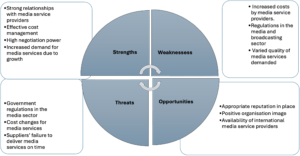
Figure 5:SWOT Analysis summary
Source: Summarised from Al Araby TV Network internal documents
In summary, the SWOT analysis indicates that Al Araby TV Network relies on long-term partnerships with its media service providers for its operations; professionals including media specialists, legal experts, and IT experts are necessary for successful negotiation in order to easily achieve ZOPA; opportunities include leveraging competitive advantages, having a strong brand image, and a good reputation; threats could potentially cause delays in the negotiation process, but they would be prioritised and dealt with appropriately.
2.1.4 STEEPLED Analysis
This tool is identified in CIPS Notes as appropriate in scanning external environment for identifying implication of different factors influencing the media services negotiation process at Al Araby (CIPS, 2021a). The analysis is as shown in the following;
Source: Summarised from CIPS (2021a)
| STEEPLED Factors | Summary |
| Social | For media services negotiations, it is influenced by Al Araby employees, who are primarily comprised of Generation Z and Millennials. With the speed at which the business environment is changing, this affects the scope of the negotiation and how the desired quality is achieved. |
| Technology | Al Araby’s need to source different media services is informed by the current technological changes in their business environment. These changes impact the scope of the organisation’s sustainability in the media industry, hence technology defines the negotiation scope. |
| Economy | Following COVID-19, there is currently an economic recession worldwide, and the state of the RSA economy has been terrible. The money allocated for sourcing media services has decreased as a result; therefore, better terms with suppliers and vendors must be negotiated.
|
| Political | The political environment in Qatar is favourable, providing a good opportunity for holistic negotiations with both local and international stakeholders. |
| Legal | Laws governing the media business have been passed by the Qatar government. Suppliers of diverse backgrounds are given preference, especially during negotiations, to guarantee compliance with Qatar regulations.
|
| Ethical | Requirements for being fair to others during negotiations by upholding moral principles, justice, and honesty are crucial.
|
| Demographics | The prevailing young generation has an impact on the negotiation process due to the generational transition. They want a quicker procedure, which might be difficult for Al Araby to implement.
|
2.1.5 Porters 5 Forces
Compared to nations with developed media industries, the cost of obtaining these services is higher in our region because there are no local media service providers. In addition, there are shortages of media services and equipment in the worldwide supply chain. This has an impact on businesses like Al Araby TV Network, which must invest a large sum of money to acquire the services and tools required to run efficiently. The chart below illustrates the recent rise in international shipping costs. When I met with different suppliers to request media services for the Al Araby TV Network, they informed me that they were short on stock and could not guarantee prompt delivery. Additionally, we mostly have distributors and agents in the area. Many of these providers approach procurement in old-fashioned ways, which makes it challenging to post tenders for media services on our platform. They frequently want us to transmit tenders by email, which makes document archiving more difficult and causes delays in reaching service-level agreements with end customers.
Figure 6:Porter’s 5 Forces Model
Source: Gratton (2024)
Porter’s Five Forces Model is significant in determining the influence suppliers have in negotiations, considering many elements such as time, session, and the distinction between local and international suppliers. Furthermore, the workload and the reputation of the organisation or provider are also important factors. However, these forces also have a significant influence in determining the negotiating power of customers.
Bargaining power of suppliers:
Media services for Al Araby TV Network give suppliers power for several reasons. First, the region has mostly media agents and distributors. High-quality media services are in demand, especially with new media projects and expansions. This boosts supplier demand and power. Second, specific media services frequently have one major agent, which we must buy from. We usually get referred to the primary agency by wholesalers, thus suppliers have the power. Finally, huge firms like Al Araby TV Network have strict supplier approval standards, therefore suppliers may be hesitant to deal with them.
Bargaining power of customers:
Al Araby TV Network has a lot of influence, which is why providers are willing to take part in any relevant tender for a number of important reasons. First, Al Araby TV Network has a solid financial base and substantial investment support. Second, suppliers are encouraged to work hard to obtain our contracts since Al Araby TV Network enjoys an excellent reputation in the industry. Last, suppliers are eager to win our projects since working with Al Araby TV Network’s leadership is highly respected and will increase their credibility when bidding on contracts with other businesses. This instills confidence in most businesses to trust Al Araby TV Network’s recognised suppliers.
Competition among existing competitors:
In the region, there has been a recent surge in big projects, resulting in intense rivalry to secure the top media service providers in the market. Furthermore, there is currently a higher demand for media services of superior quality than there is supply, especially considering ambitious projects such as Qatar Vision 2030.
Threat of substitute products and threat of new entrants:
Since the threat of new entrants is high, we must make sure that our media service providers are paid on time in order to retain excellent partnerships. Every business aspires to be the greatest and establishes strategic alliances with suppliers.
2.1.6 Achieving BATNA in Negotiation
Objective setting is crucial for achieving success
Please click the following icon to access this project in full
Related;