(Solution) ICS Learn 5HR02 1.2 Impact of Labour Market Changes on Resourcing
Solution
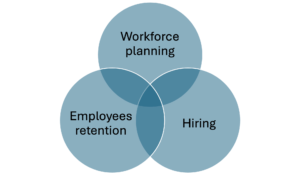
Shifting labour market conditions heavily affect ParcelCare’s resourcing strategy, specifically workforce planning, hiring, and staff retention.
Labour markets are either tight or slack, reliant on the demand for and availability of workers with the required skills (Boys, 2024). Both tight and slack labour markets have differing challenges and call for specific interventions to enable the organisation to attract and retain workers.
In a tight labour market, where demand for labour is higher than supply, ParcelCare will experience increased competition for staff (CIPD, 2022). This may be due to a shortage of skills in the logistics industry, increased wages, or new entrants with improved terms of employment.
In such a scenario, ParcelCare would need to refine its model of hiring through more remunerations, better benefits, and better work environment to win the loyalty of potential employees. Furthermore, the enterprise may need to invest in in-house training agendas to hone internal talents razor-sharp to reduce dependence on external sourcing.
Employer branding also becomes increasingly important, because differentiating ParcelCare from the rest on grounds of robust company culture, career progression opportunities, and employee engagement opportunities can assist in attracting and retaining top talent.
Alternatively, in a loose labour market situation where workers are in surplus as far as needs are concerned, ParcelCare would enjoy more flexibility when it comes to making the resourcing arrangements (Madgavkar et al., 2024). The firm can draw from an increased number of applicants and negotiate lower remuneration but yet maintain a competitively priced output. Yet,
Please click the following icon to access this assessment in full