(Solution) ICS Learn 5HR02 3.3 The Impact of Dysfunctional Employee Turnover at ParcelCare
Solution
Dysfunctional employee turnover is defined as the loss of employees that are high-performing or play a critical position in an organisation, and dysfunctional turnover can greatly affect the operation of the organisation (Peters, 2024). Dysfunctional turnover can have a number of adverse consequences in ParcelCare, whose central concern is operational effectiveness as well as client satisfaction.
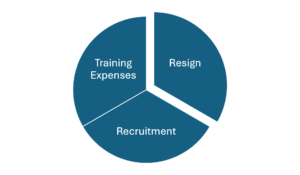
Dysfunctional turnover has direct costs that are very high. It involves the cost of recruitment of key persons in the hiring process, advertising for job positions, interviewing, and finally employing and bringing in new members (Hall, 2019).
When an outstanding employee exits, these costs are exacerbated since it is hard to substitute skilled and experienced personnel. Training new members also piles up with costs. Time and funds need to be spent in order to properly train new employees in upholding the standards of the organisation.
For ParcelCare, for instance, if a warehouse supervisor were to resign, recruitment and training expenses would be higher because of the specialist knowledge involved in such a position;
Apart from the direct costs, there are also indirect costs that can adversely affect the organisation. Excessive staff turnover, and particularly of good performers, has the potential to destabilise teams. Remaining personnel might be forced to assume increased workloads to make up for the vacancies, which can cause burnout and reduced morale. Loss of staff who are vital to the functioning of the company also affects processes, causing slowness and ultimately failure to deliver targets or late delivery of services. In the case of ParcelCare,……..
Please click the following icon to access this assessment in full
Related to: https://rankedprofessionals.com/downloads/solution-ics-learn-5hr02-3-2-approaches-to-retaining-people/