(Solution) Leadership in a Changing Context HRMM058 Individual written report
Solution
Table of Contents
2.1 The Concept of Employee engagement 3
2.2 Dimensions of Employee Engagement 4
2.5 Impacts of Cultural Differences on Engagement Strategy. 6
2.6 Managers’ Role in Supporting Employee Engagement 7
2.7 Management Training and Development Program.. 7
3.1 Cost of Recommendations. 9
3.2 Recommendations Delivery Responsibilities 10
Table 1:Cost Associated with Recommendations. 9
1.0 Introduction
Today, in the interconnected business environment where organizations like Barclays have largely expanded their presence in international locations, employee engagement is one of the most important measures for sustained success at the organization. Being in culturally diversified markets like India, China, and United Kingdom, the expectations and leadership dynamics at Barclays are different and should be effectively addressed for the company to strengthen its engagement.
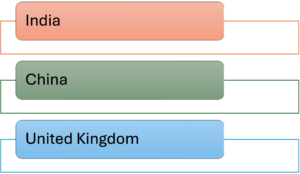
The aim of this report is to explore how the organization can mitigate critical cultural and operational challenges in the three locations and enhance employee engagement. It also suggests a strategic training and development program so that managers are able to develop skills necessary in promoting engagement in all cultural contexts. To provide a structured method of boosting motivation, collaboration and performance at Barclays, the report integrates frameworks such as Kahn’s (1990) dimensions of engagement and Leader Member Exchange (LMX) theory.
2.0 Literature Review
2.1 The Concept of Employee engagement
Employee engagement is defined as the extent to which employees are emotionally, cognitively, and physically committed to their work and organization (Sun & Bunch 2019). Different scholars have defined it in various ways. For example, Chandani et al. (2020) define engagement as a reflection of employees’ willingness to physically, emotionally, and mentally invest their full selves to their work roles thus resulting in greater effort and job involvement. Another definition by Susanto & Sawitri (2023) state that engagement is about the enthusiasm, satisfaction, and dedication employees demonstrate in their roles from a psychological and motivational aspect. Similarly, Boccoli et al. (2022) define it as a dynamic state where employees have a sense of purpose, connection and fulfilment in their work, positively impacting productivity and retention. Engaged employees not only fulfill their responsibilities well, but they are also willing to participate in workplace innovation and collaboration (Yadav et al., 2022).
Engagement is strongly associated with autonomy, career progression and transparent leadership in the UK. The collectivist culture in India encourages mentorship, team cohesiveness, and leader-employee relationships (Saarikallio et al., 2020). Conversely, in China, where there is a significant emphasis on hierarchy and loyalty, structured leadership, trust, and a long-term career stability are used to reinforce engagement (Tang, 2024). Improving engagement in these locations for Barclays means having culturally aligned strategies through leadership development, recognition systems, and tailored communication methods (Nguyen et al., 2020; Abdulrahman et al., 2022). Managers should be equipped with cultural intelligence and engagement techniques through training programs that help them manage employees across diverse regions, enhancing motivation and commitment.
2.2 Dimensions of Employee Engagement
Employee engagement involves several dimensions, that shape an individual’s connection to their work. Following Kahn (1990) framework, the core aspects include: cognitive engagement, emotional engagement and physical engagement. Cognitive engagement involves an employee’s mental investment, including problem solving, innovation, and alignment with the organizational goals (Davis & Van der Heijden, 2022). Emotional engagement can be defined as the extent to which an employee is connected with their role, their colleagues and the company culture, mostly driven by motivation, enthusiasm, and job satisfaction. Physical engagement is defined as the energy and effort employees put into their work, often expressed through active participation. Similarly, Kuzior et al. (2022) outlines involvement, fulfillment, and passion as the key engagement dimensions. Involvement is the dedication of an employee to the task, fulfillment results from job satisfaction, and passion leads employees towards proactive behaviors (Davis & Van der Heijden, 2022).
2.3 Engagement Strategy
The Global Engagement and Cultural Alignment strategy is meant to create an environment where employees in India, China and the UK feel valued, motivated and aligned with the business goals. Specifically, this strategy brings together culturally responsive engagement initiatives that are customized to each location’s unique workforce dynamics (Shonfeld et al., 2021; Yuan et al., 2024). In India, structured leadership training programs and mentorship programs will increase trust, respect, and teamwork (Vos & Boonstra, 2022). Similarly, in China, engagement efforts will be based on leadership, clear career path and trust building initiatives that match hierarchical expectations of the workspace (Jiatong et al., 2022). In the UK, the emphasis will be on autonomy, professional development and inclusive leadership, in order to empower employees (Rogozińska-Pawełczyk, 2023). Implementation of engagement initiatives relies on leadership, to ensure alignment with local cultural values (Ababneh, 2020; Marschlich & Ingenhoff, 2021). Further, an ongoing feedback mechanism will be used to continuously assess levels of employee satisfaction, allowing Barclays to adapt its strategy to evolving employee needs.
2.4 Issues and Challenges
In the Indian context, hierarchical workplace structures shape leadership practices and employee relationships that tend to limit open communication (Haque & Yamoah, 2021). This may discourage employees from challenging authority or openly voicing their concerns, further limiting innovation (Sahadevan & Sumangala, 2021; Sampat et al., 2022). Moreover, language diversity or variation in workplace etiquette in different regions complicates the collaboration. Engagement strategies are also influenced by cultural expectations about long working hours and the nature of leader-employee relationships (Zanellato & Tiron-Tudor, 2021).
In China, workplace dynamics are shaped by collectivist values and hierarchical structures which emphasize devotion to loyalty, obedience and structured leadership (Koczkás, 2024; Zhu et al., 2019). The multiple levels of approval required in decision making significantly affect organization’s adaptability in fast-paced industries. Engagement strategies are further complicated by language barriers, indirect communication styles, and business etiquette expectations (Tenzer et al., 2021). Relationship building, especially through guanxi (personal networks), is of great importance in professional interactions and international managers will therefore be expected to learn to work within the context of complex social structures (Gong et al., 2020).
The UK faces engagement difficulties due to managing a multicultural workforce with varying expectations. While workplaces value autonomy and open communication, cultural differences in leadership styles can create tension, particularly in employees who come from more hierarchical backgrounds (Chua et al., 2023). There are also differences in expectations when it comes to work life balance, where some enjoy flexibility, while others believe in working longer hours as a sign of commitment. Furthermore, global workforce communication is also influenced by the cross-cultural negotiation styles and decision-making approach used which can result in misunderstanding (Aldamen, 2021).
In addressing these challenges, Barclays requires a tailored engagement approach that takes into consideration the cultural expectations, as well as preferred communication methods and leadership styles (Iheanachor et al., 2024). Cross-cultural training, inclusive leadership, and localized engagement strategies will aid in dealing with these challenges and retain a motivated and cohesive workforce across India, China and UK (Setti et al., 2020).
2.5 Impacts of Cultural Differences on Engagement Strategy
Barclays’ Global Engagement and Cultural Alignment strategy is greatly influenced by cultural variations in India, China, and the UK (Lückmann & Färber, 2019). Because of hierarchical workplace structures and regional diversity in India, an engagement approach that strikes a balance between leadership authority and inclusivity is necessary (Connell et al., 2022). Trust building and structured leadership are key in China, a country which runs on collectivism and hierarchy. Long term stability is what employees value and strategies need to focus on loyalty driven recognition and clear career pathways. In the UK, a highly diverse workforce necessitates an inclusive engagement approach (Hollebeek, 2018). Engagement is fueled by open communication, autonomy and employee empowerment so leadership must be transparent in decision-making and flexible in work policies. With cultural competence training, managers will be equipped to effectively handle interactions with people of different cultures (Lückmann & Färber, 2019). Understanding these cultural differences, Barclays can tailor their engagement strategy to enhance motivation among the global workforce.
2.6 Managers’ Role in Supporting Employee Engagement
As key players in the workforce, managers help create employee engagement through establishment of workplace culture, motivating employees, and linking employee goals to the organization’s objectives (Taneja et al., 2020). Kahn’s Engagement Theory states that managers impact the employee’s cognitive, emotional, and physical engagement by creating a supportive environment in which they feel motivated and empowered (Huang et al., 2022). This is further emphasized by the Leader-Member Exchange theory, which state that strong relationships between managers and employees develop trust, increase job satisfaction and discretionary effort (Omilion-Hodges & Ptacek, 2021). Managers in India enhance engagement through mentorship and structured leadership, where respect and professional development is reinforced. In China, hierarchical structures are prevalent, which means managers need to build trust, create stability and make sure workers feel secure in their role (Chua et al., 2023). Engagement in the UK works on the basis of autonomy and open communication, which requires manager to provide empowerment and growth opportunities. Managers can develop recognition systems, feedback mechanisms and professional development initiatives that support engagement across regions by adapting leadership style to cultural expectations (Tenzer et al., 2021; Gong et al., 2020).
2.7 Management Training and Development Program
Managers need to lead and engage employees from different cultures which requires a comprehensive management training and development program (Ismael et al., 2021). The focus of this program would be on cultural awareness, communication strategies as well as leadership adaptability in reaching out to employees in different regions (Aruldoss et al. 2021).
India’s training should be geared toward hierarchical workplace structures and collectivist values. Trust and professional growth of a manager can be developed using coaching in cross cultural communication, mentorship and structured leadership (Sampat et al, 2022; Zanellato & Tiron-Tudor, 2021). The trainings will include empathy training and adaptability workshops that will help employees to navigate through the cultural expectations, and this will be a motivation and engagement factor for employees.
Collectivism and hierarchy are very deeply rooted in Chinese culture, and therefore relationship building and trust should be the focus areas in leadership training. Training for managers should involve guanxi (network-based relationship management), indirect communication and structured decision-making (Zhu et al., 2019). Engagement strategies will also be strengthened through interactive workshops on team harmony and long-term employee commitment.
In the UK, due to the importance of inclusivity and autonomy in driving engagement, training must incorporate multicultural communication, inclusive leadership and delegation techniques. Managers need to develop the skills that allow them to maintain a balance between allowing employees to establish their independence, while also increasing collaboration, in implementing work life balance initiatives and recognition programs (Aldamen et al., 2021). Cross-cultural competence will be supported through cultural intelligence training, immersive simulations, and continuous feedback across all locations (Kour and Jyoti, 2021).
3.0 Recommendations
Please click the following icon to access this assessment in full
Related to: https://rankedprofessionals.com/downloads/solution-managing-operations-as1-aramis-project/